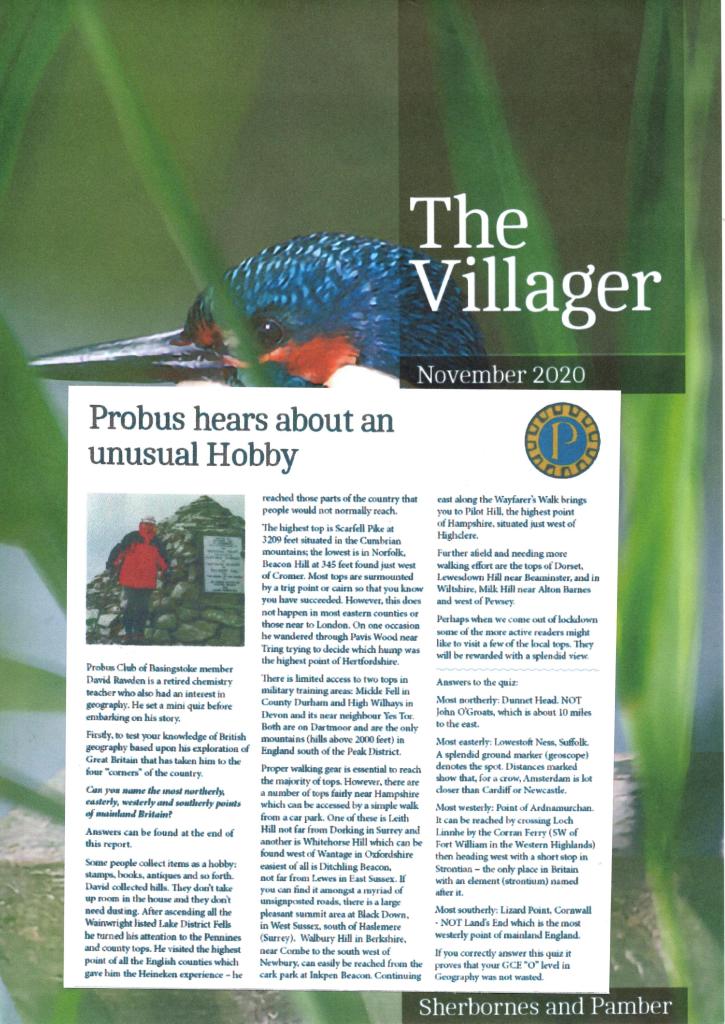
Here are the results of our publicity in the local magazines that appeared in December. A good month for coverage with most taking the Dave Kitson Windmill story. He was probably pleased that his local magazine for Sherborne St John, the Villager, used a complete page for this report. The page was reduced for the sake of scanning it on to our site.
Because the production of the quarterly Brighton Bell was running late it proved possible for them to also include the Windmill story.
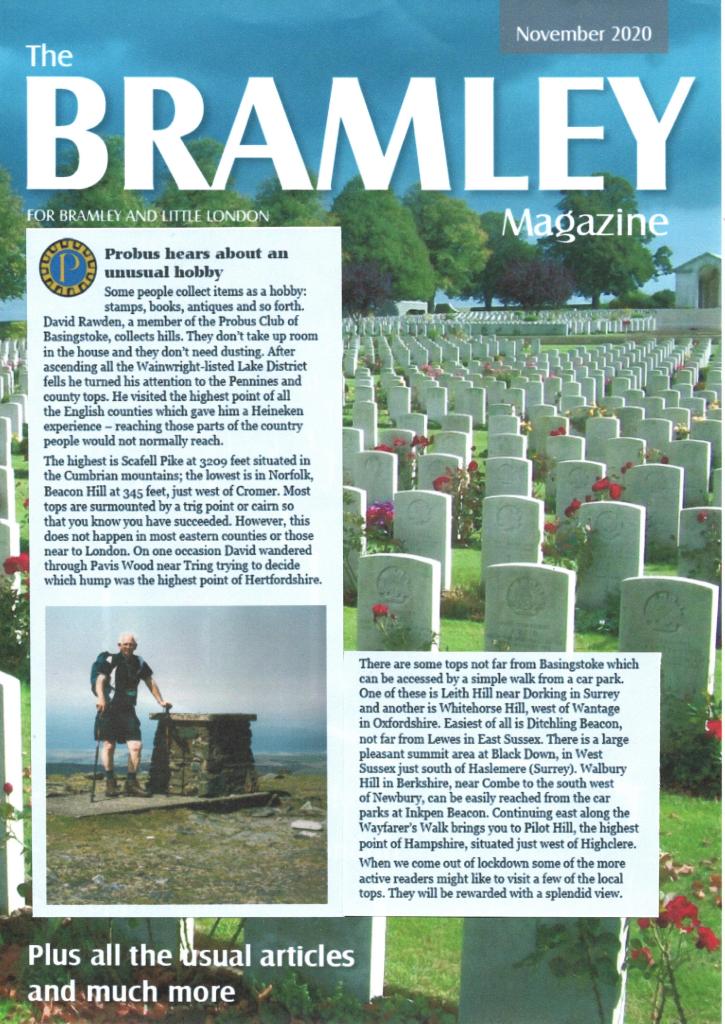
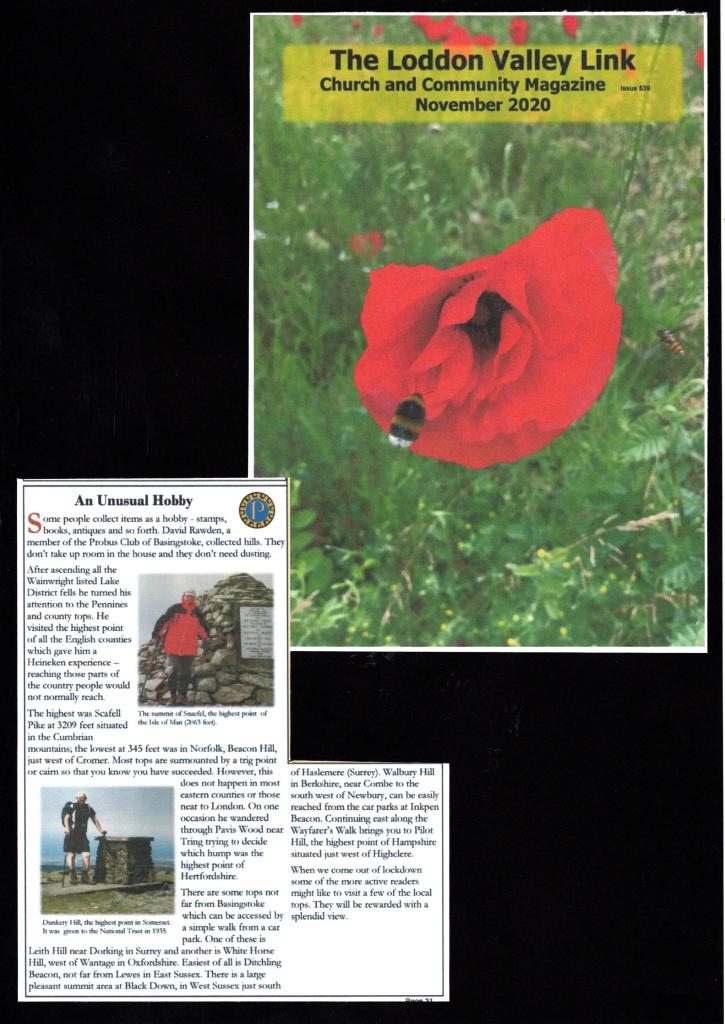
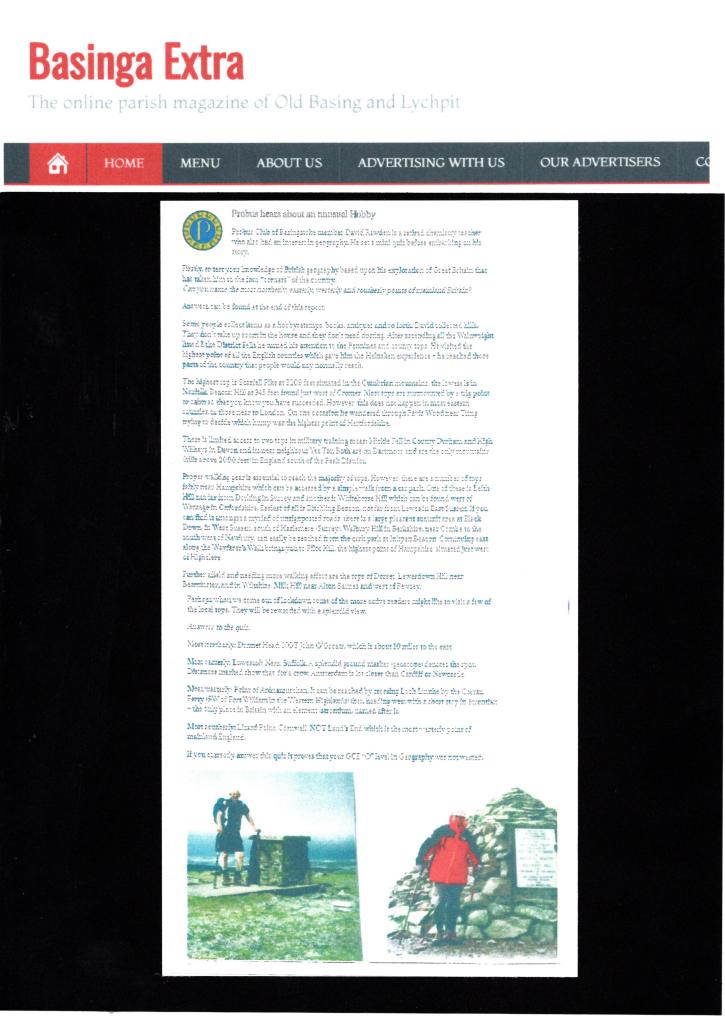
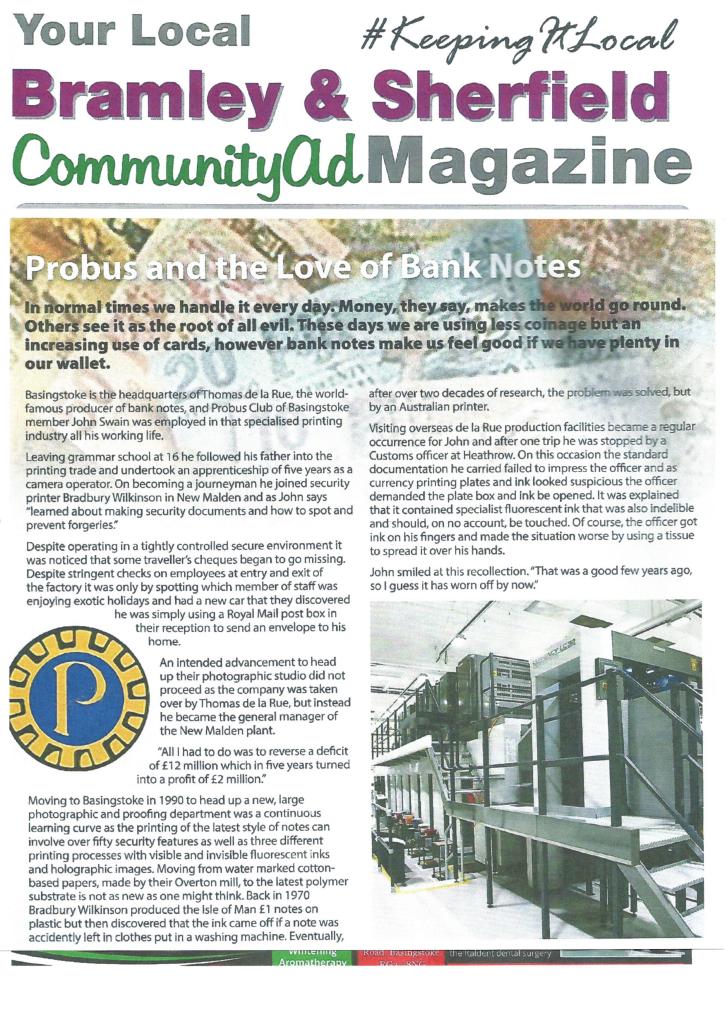
However, you will notice that there is a new publication this month which titles itself as the Old Basing & Lychpit Parish Council Community Newsletter. Both the cover and the full text page showing David Rawden’s hill climbing adventures are shown here. Their copy date was such that this was our latest report at that time but as it was not time critical it still makes for an interesting read. As this is another freebie publication, I expect that they have a loose timing for when going to print which is dependent on selling sufficient advertising space. This magazine is published by the same people responsible for the Sherfield & Bramley and the Overton & Oakley CommunityAd magazines which have previously been included in our results.
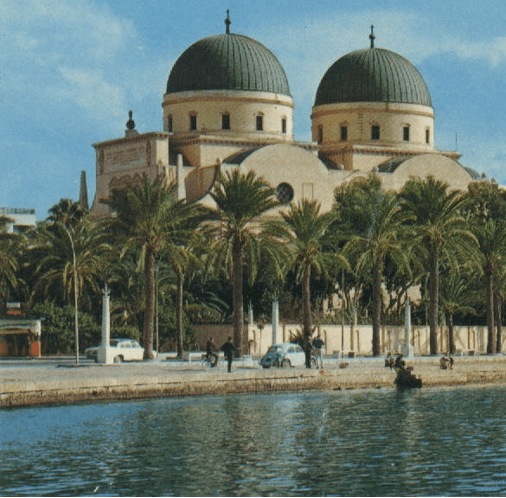
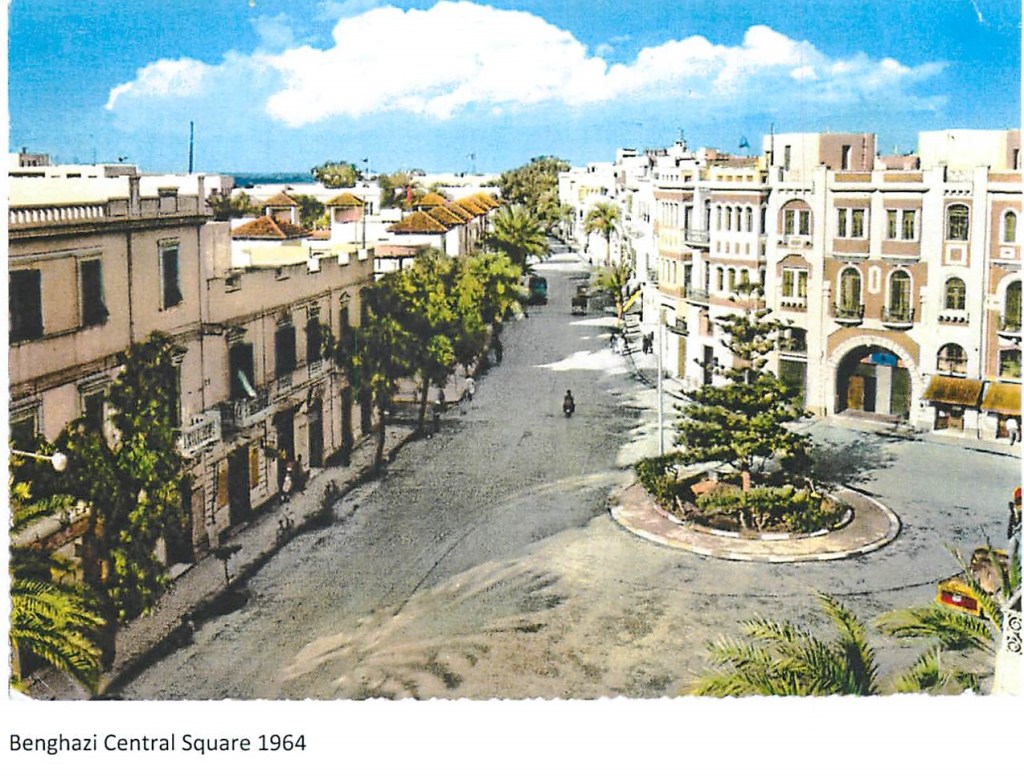
I first went to Libya in 1968 as a young civil engineer to work for a construction company. I was stationed first in Beida working on maintenance and minor works contracts and then was transferred to Benghazi to be in charge of a number of building construction projects dotted around the city. The workshops and accommodation camp was in in Gwarishah some 15 km west of Benghazi.
Libya at that time was a peaceful place. Benghazi was an important business city with first class hotels, banks, restaurants and good shops. Libya was liberated from the Italians in 1951 when King Idris declared it a Kingdom. However the Italian influence was everywhere and an abundance of fashion outlets were doing good business. If Beirut was the Paris of the Middle East then Benghazi was Milano. All religious places of worship were permitted and a good number of European Schools were serving the expat community.
Cathedral Church Benghazi
On the morning of 1st September 1969, I went to the staff mess for breakfast thinking about the recent landing on the moon by the Americans. A directive on the radio instructed us all to stay indoors and wait for an important announcement. The workforce had already left for work and arrangements needed to bring them back to the camp. A lot of road blocks were set up but we managed to get the men back through country tracks.
By mid-day a radio announcement declared a military coup headed by Colonel Gaddafi had ousted King Idris. It was a textbook swift bloodless coup.
Our office in Benghazi downtown was opened for a few hours for next day and business soon returned to normal but there was an atmosphere of tension especially as there was a curfew from sunset to sunrise for quite a while. A number of military checkpoints would wave foreigners through while checks and car searches were carried out on Libyan citizens.
A couple of days later I had a phone call from the wife of the (ex) Chief of Staff. I had met him a few months earlier when he turned up unexpectedly with King Idris at a garrison I was building near Beida. They were happy with the progress and the quality of work and had a pleasant banter with the King and Senousi, his Army chief, about furniture and kitchen equipment. The wife was under house arrest. She had run out of food for herself and four children. I went to their home with some groceries but the guard would not allow me access. The captain in charge came and I explained that understandably the husband was perhaps detained but a woman and four children just needed something to feed themselves with. As mentioned, the country was very civilised and for several days I delivered provisions until the family was moved on.
The great majority of the country is desert and the shores are fertile with beautiful beaches. They are typical Mediterranean without the crowds!
Under Gaddafi, Libya developed the oil reserves and the wealth brought stability in the country for many years. He proceeded with the peaceful departure of the RAF base in El-Adem and the USAF base in Wheelus. The conservative Arab society was maintained under Gaddafi with the added restriction on alcohol but strict religious customs were not enforced. Women were treated with respect, wore western clothes, drove cars and worked in mixed gender environments. In line with all Arab countries dissidents were not tolerated. There was law and order backed by the military regime. Gaddafi for all his faults had integrity and patriotism and all his antics were attention seeking rather than mischief.
I really liked Libya for its climate, its beaches, its important Greek and Roman archaeological sites and particularly its people. In total I spent well over five years in Libya.
Roman Amphitheatre of Leptis Magna near Tripoli – Libya
A good month for local magazines giving coverage to Probus reports. Eight carried the story by David Rawden about his hill climbing activities and two new magazines, published by CommunityAd for the areas of Sherfield & Bramley (A4 full colour) and Overton & Oakley (A5 full colour). Both carried the story of the Love of Bank notes which I sent to them back in August but as these are quarterly publications, they are always going to behind anything that appears in the monthly magazines.
CommunityAd are in the process of producing an edition for Old Basing (hopefully to appear late in November) for which I have sent them the David Rawden story.
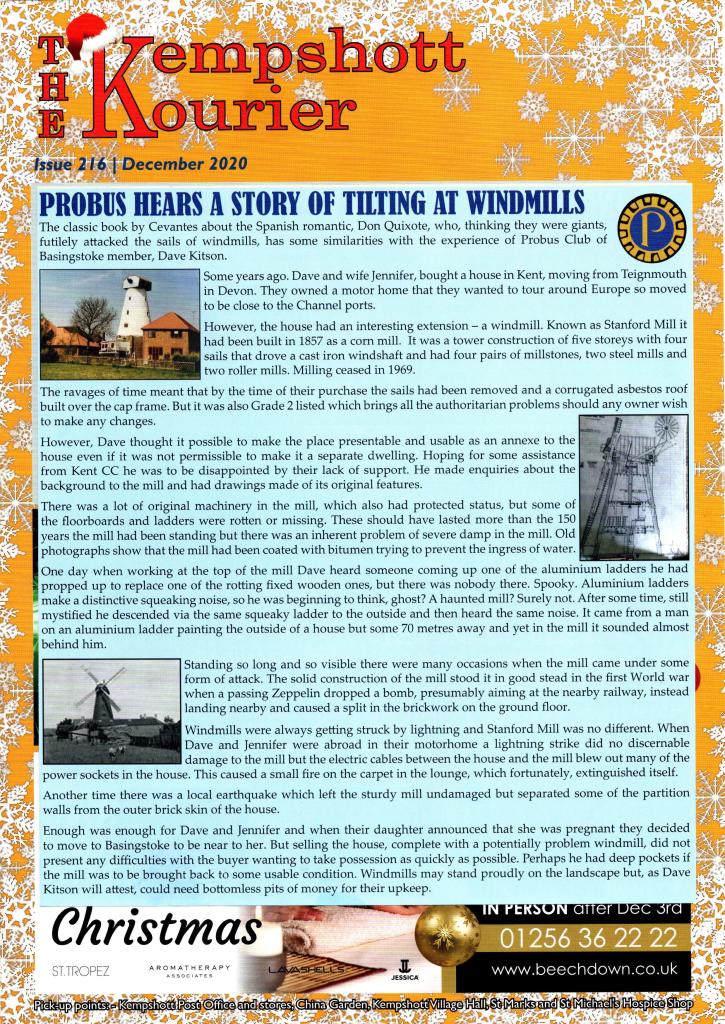
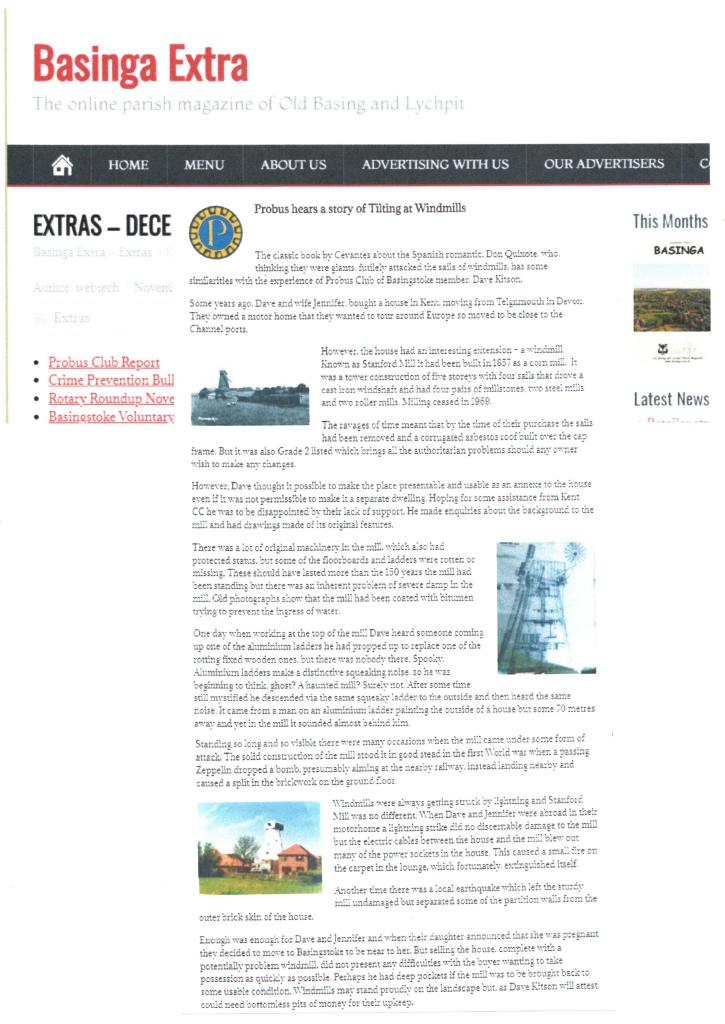
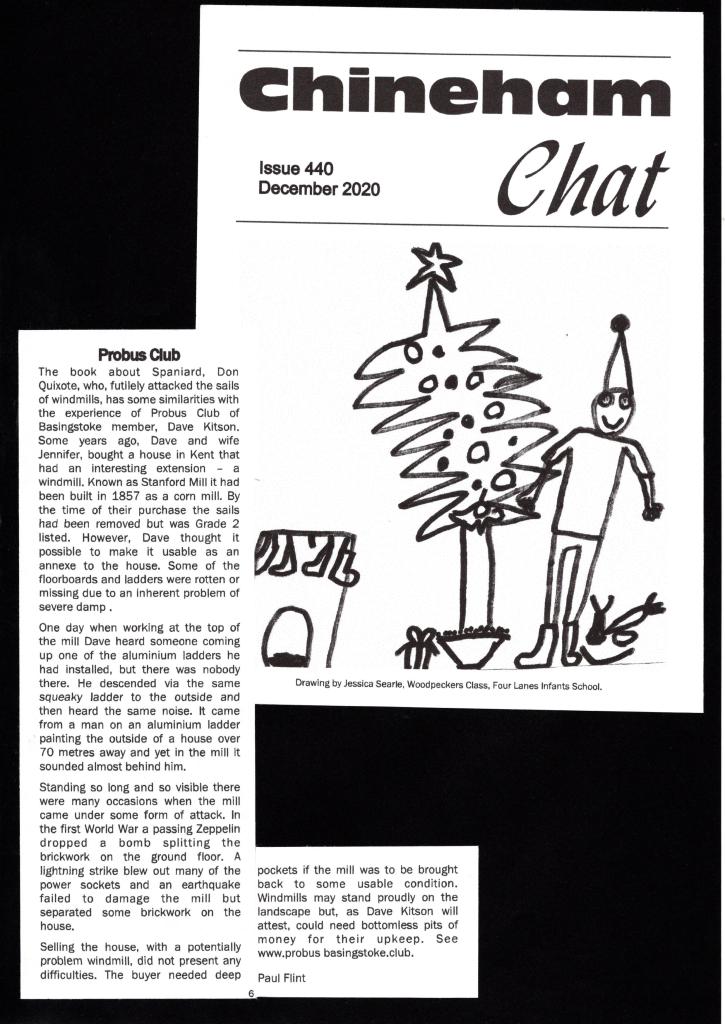
The classic book by Cevantes about the Spanish romantic, Don Quixote, who, thinking they were giants, futilely attacked the sails of windmills, has some similarities with the experience of Probus member, Dave Kitson, who these days lives in Sherborne St John.
Some years ago, Dave and his school teacher wife, Jennifer, bought a house in Kent, moving from Teignmouth in Devon. Dave explains why: “We had bought a motorhome while on a visit to America and had it shipped back to the UK. Being left hand drive it was ideal for touring around Europe so we thought we should make our lives simpler by living closer to the channel ports.”
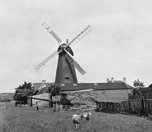
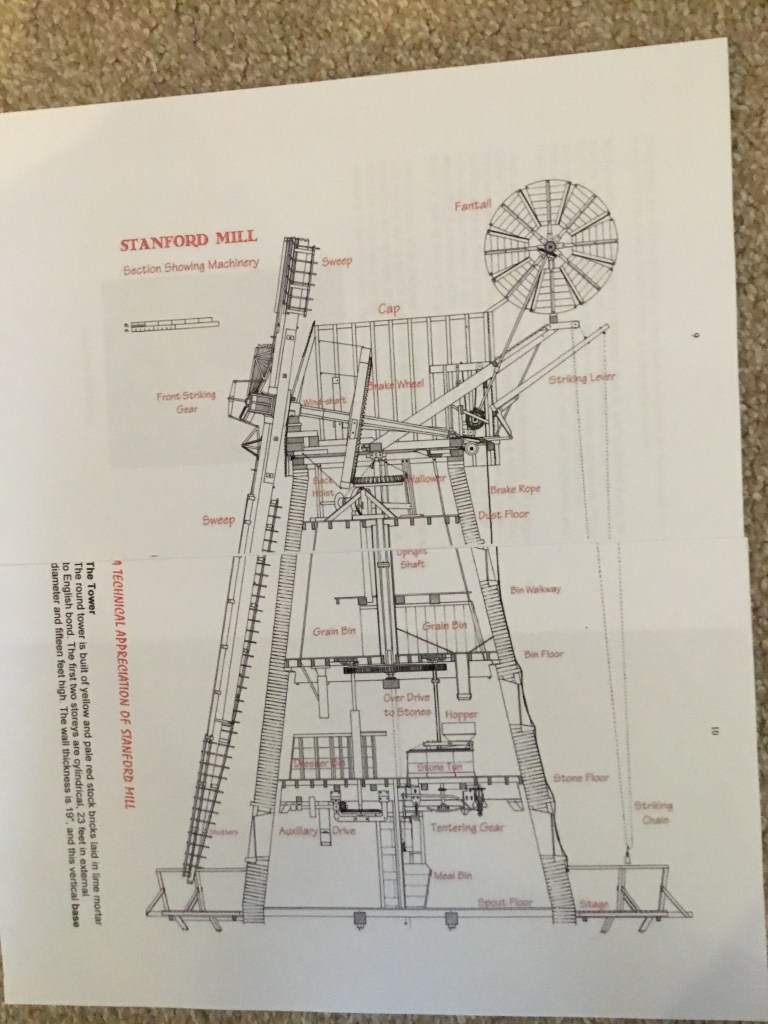
However, the house, which is in sight of the Channel Tunnel, had an interesting extension – or perhaps it might be described as the house was an extension to a windmill. Known as Stanford Mill it had been built in 1857 as a corn mill. It was a tower construction of five storeys with four sails that drove a cast iron windshaft and had four pairs of millstones, two steel mills and two roller mills.
Stanford Mill
The sails were replaced in 1925, 1930 and 1936 and worked by wind until 1946 when the shutters were removed from the sails. Supplementary power had been provided between the wars with a single cylinder oil engine that was changed in 1936 with a Ruston & Hornsby diesel engine.
The sails and roof cap were removed in 1961 and a corrugated asbestos roof built on the cap frame. Milling continued by engine until 1969 when the diesel engine was replaced by an electric motor although that is the year that saw milling discontinue.
Naturally, there has always been interest in windmills and the people of Kent, having lost many over the years, took a particular interest in Stanford Mill and made it Grade 11 listed. And that is where Dave Kitson ran into a spot of bother. Like many people owning Grade 11 listed property they cannot do whatever they want by way of improvement.
The house in Kent with an adjacent windmill bought by Dave & Jennifer Kitson
Dave continued; “One of the reasons we bought the house was that it had this tower windmill in the grounds. And I thought that with a bit of additional funding I might at least make it look presentable and usable. But it was not meant to be. Having said that we got a little financial help because the High Speed Rail passed half a mile away which I spent on checking on the history of the mill and suggestions, photographs and detailed drawings from a local millwright.”
Plan drawing of Stanford Mill as originally constructed in 1857
“Kent County Council were not very cooperative. They sent their conservation architect, and his first observation was where are you going to put the disabled toilets? He said that the windmill could not be used as a separate dwelling but could be used as an annexe to the house.”
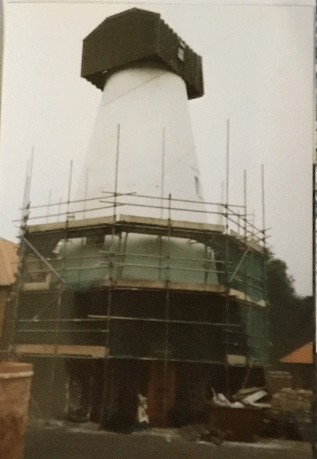
There was a lot of original machinery in the mill, which also had protected status, but some of the floorboards and ladders were rotten or missing. These should have lasted the 160 years the mill had been standing but there was an inherent problem of severe damp in the mill. Old photographs show that the mill had been coated with bitumen trying to prevent the ingress of water.
Work in progress
One day when at the top of the mill Dave heard someone coming up one of the aluminium ladders he had propped up to replace one of the rotting fixed wooden ones, but there was nobody there. Spooky. Aluminium ladders make a distinctive squeaking noise, so he was beginning to think, ghost? A haunted mill? Surely not. After some time, still mystified, he descended via the same squeaky ladder to the outside. And then heard the same noise. It came from a man on an aluminium ladder painting the outside of a house but some 70 metres away and yet in the mill it sounded almost behind him.
Standing so long and so visible there were many occasions when the mill came under some form of attack. The solid construction of the mill stood it in good stead in the first World war when a passing Zeppelin dropped a bomb, presumably aiming at the nearby railway, instead landing nearby and caused a split in the brickwork on the ground floor.
Windmills were always getting struck by lightning and Stanford Mill was no different. When Dave and Jennifer were abroad in their motorhome a lightning strike did no discernable damage to the mill but the electric cables between the house and the mill blew out many of the power sockets in the house. This caused a small fire on the carpet in the lounge, which fortunately, extinguished itself.
Another time there was a local earthquake which left the sturdy mill undamaged but separated some of the partition walls from the outer brick skin of the house.
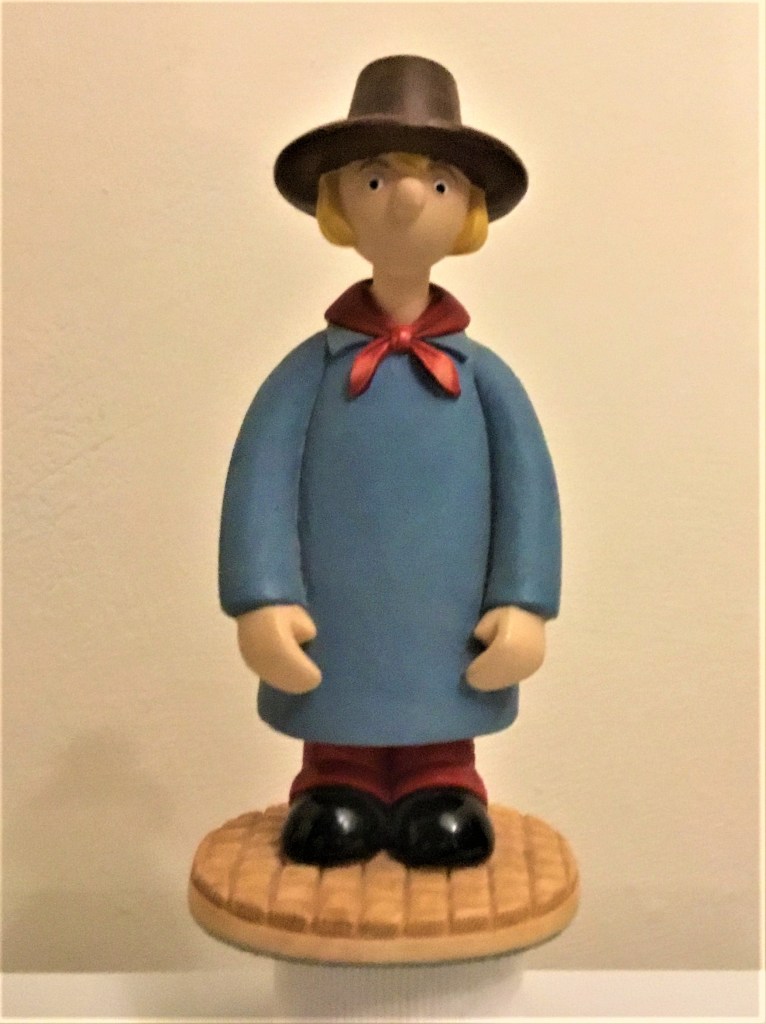
Windy Miller (a character from BBC Children’s TV Trumpton) bought by Dave’s sister as a commemorative gift when Dave & Jennifer bought the property
Enough was enough for Dave and Jennifer and when their daughter announced that she was pregnant they decided to move to Basingstoke to be near to her. But selling the house, complete with a potentially problem windmill, did not present any difficulties with the buyer wanting to take possession as quickly as possible. Perhaps he had deep pockets if the mill was to be brought back to some usable condition. Windmills may stand proudly on the landscape but, as Dave Kitson can attest, could require bottomless pits of money needed for their upkeep.
My first flight on a scheduled airline service did not happen until I was 27 and this was a return trip from London to Aberdeen on a BEA Viscount but shortly after that I joined Hewlett Packard (HP) as a sales account person in the UK and air travel started even before my first official day with the company – attendance at a European sales meeting in Geneva.
Travel to the USA was just a dream at that time but the first opportunity arrived in 1972 when HP organized a meeting in Delaware. Timing was difficult as it was just at the close of the Munich Olympics, so it was a very full TWA 707 that did the honours. Then we had to make an unscheduled stop at Bangor, Maine for more fuel due to a strong headwind. Bangor was then an airport seemingly in the middle of nowhere with forests visible in all directions. Our destination was Philadelphia where every single suitcase on the flight was searched as part of the immigration process.
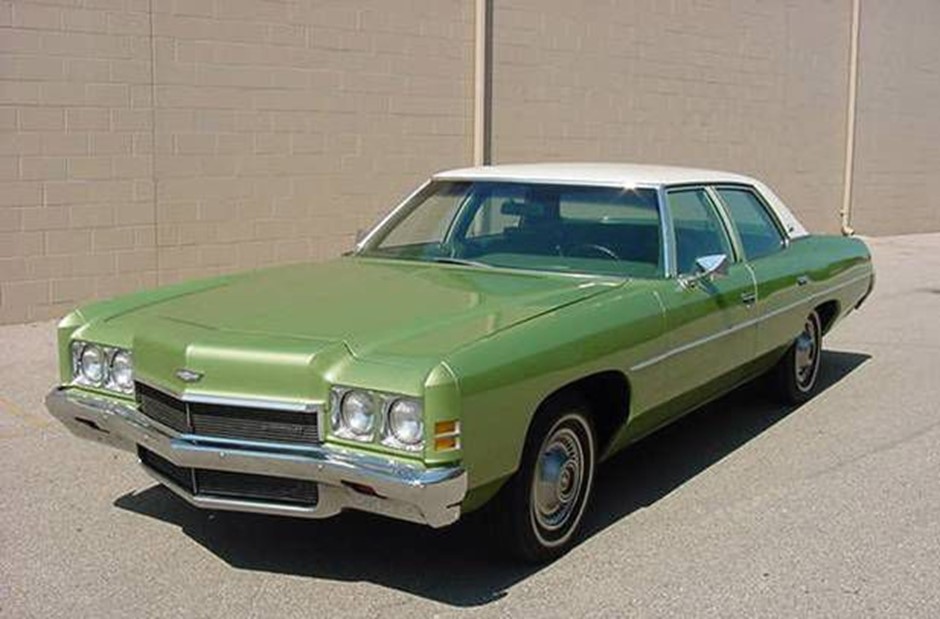
I was met by an HP colleague who drove me to the HP factory where I was handed the keys to a Chevy Impala and told to follow him to my hotel. I had never driven an automatic and never driven a left-hand drive car so this was a steep learning curve.
Photo1: 1972 Chevrolet Impala
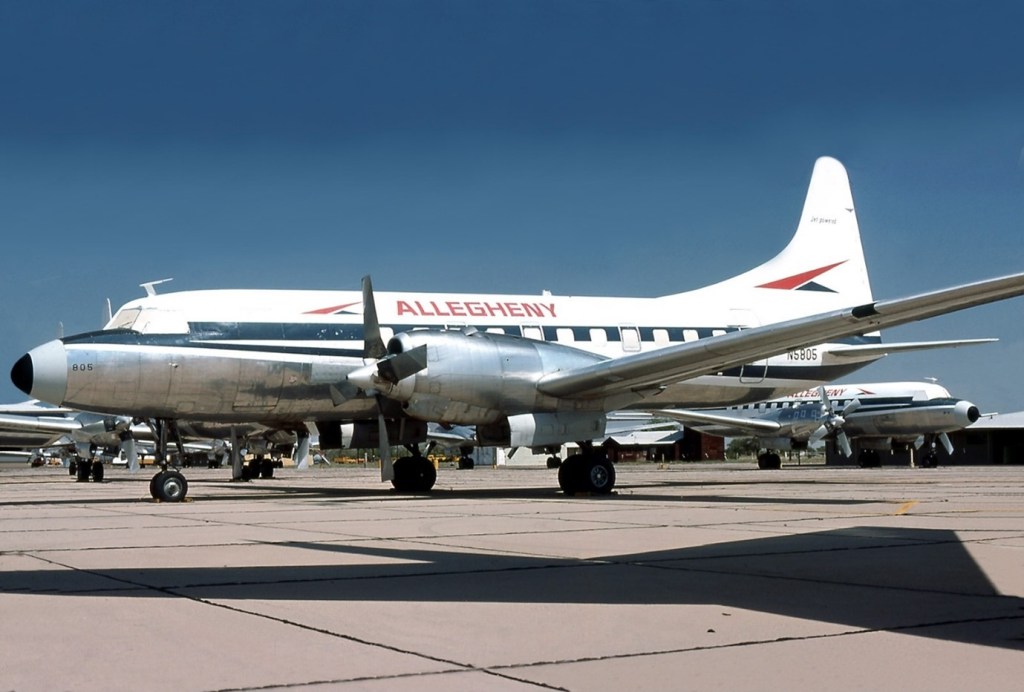
This trip included a visit to Niagara Falls – for airliner buffs this involved a flight from Philadelphia to Erie and then to Toronto on an Allegheny Convair 580. Then on to Montreal and back to London.
Photo 2: Convair 580
That trip really opened my eyes to North America. I loved it and I liked most of the people and I wanted to move there to work – but this never happened although at one point I got into house hunting from the air. My potential future boss had a half share in a private aircraft and he advised that this was the best way to assess the places to live – all very rural in that part of Delaware.
After that I had many business trips to the USA with several Philadelphia – New York – Chicago – Houston – Los Angeles and San Francisco trips over a 3-week period.
Also, several holidays as well which meant that I currently have passed through on the ground all the States apart from North Dakota, Alaska and Hawaii.
One of the holiday highlights was travelling from New York to San Francisco by train on a convoluted route. I will only mention a few significant points about this trip.
This trip started with several days in New York city – I like the place but Anita does not want to go back! However, it did include our first walk through Central Park (not very impressed), our first visit to the top of the Empire State Building (very impressed particularly as we had fast track tickets and we left queuing to most of the others!) and a visit to the Ground Zero museum. This is a must-see place but be prepared for an emotional time – 3 hours was enough. One impressive part of this complex was the arrangement of the waterfalls marking the footprint of the twin towers. The wall surrounding this was engraved with the names of all the people that lost their lives. There was even a computer search facility to help find any given name/s. I had visited the observation level in the World Trade Centre twice on previous journeys to New York.
We walked a lot in New York and ventured on to the subway as well.
We then took the Amtrak train to Washington which was much more to Anita’s taste. More walking and so much to see – I remember it was very hot. I also remember going into a restaurant that was much more up-market than it appeared from the outside and we were in casual clothes. Almost all the other diners were in smart suits etc.
One museum we visited enabled us to look at the front pages of the Washington Times since it was first published. Interesting to look up any significant events to see how the story was presented as front-page news. Obvious candidates – the JFK assassination, Chappaquiddick etc.
Washington to Chicago was an overnight train journey – the food was fantastic, but the sleeping accommodation was a challenge requiring physical dexterity and then we had a poor night.
Photo 3: Typical Chicago scene – interesting city at the right time of the year
Insufficient time here particularly as this was Anita’s first visit.
Then on to Denver, also overnight, but now we had the larger sleeper cabin which was what we should have had on the Washington – Chicago trip. One significant factor was that the sleeping position was across the carriage so going round curves on the track no longer threatened to leave you on the floor unlike the previous experience.
Been to Denver too many times previously for this part to be memorable other than I met an old colleague from HP who I had not seen for several 10’s of years.
However, one of the reasons for going to Denver is to experience the train journey from the city to Grand Junction across the mountains. One of the most outstanding rail journeys I have experienced.
Close on its heels came the steam trip on the Durango-Silverton railway with Durango being a coach ride away from Grand Junction. This journey followed a river gorge for much of the way and facilities for viewing the scenery were excellent e.g. open-air car. Durango looks like an old western town with the railway terminus in the middle of one of the roads with no platforms. Recommended.
Photo 4: The Durango & Silverton Narrow Gauge Railroad is a 3 ft narrow-gauge heritage railroad that operates on 45.2 miles of track between Durango and Silverton, in the U.S. state of Colorado. This is prior to departure from Silverton.
A visit to the Grand Canyon using the Grand Canyon railway followed and, of course, the train was held up by bandits on the way back!!
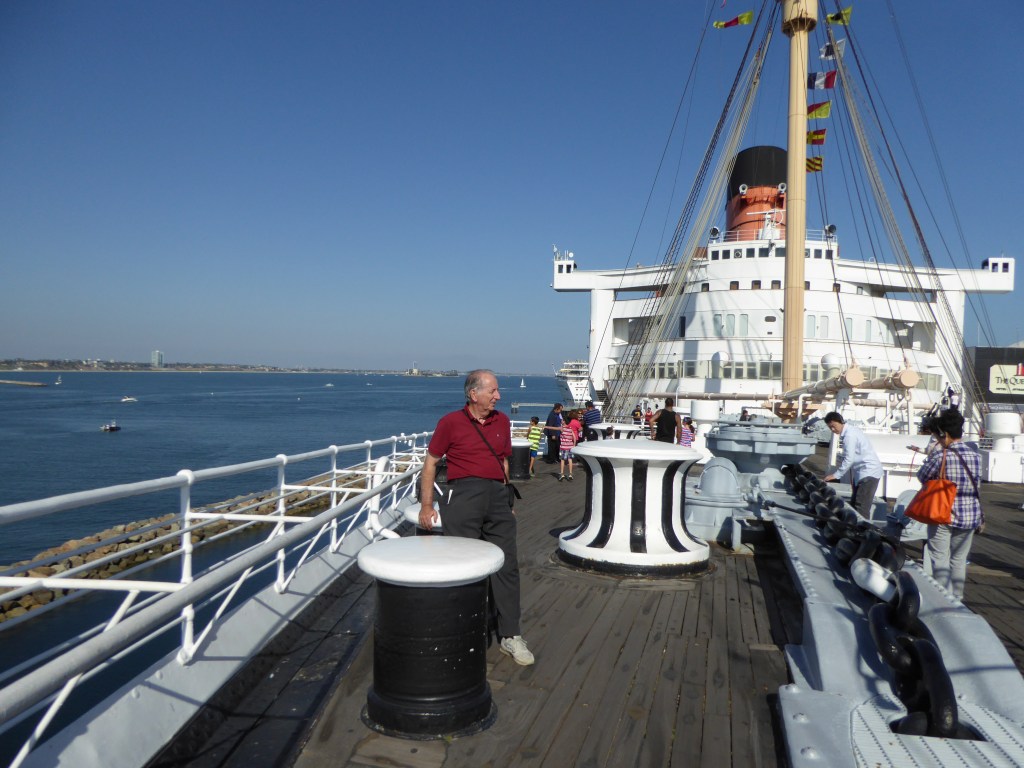
Then an overnight train journey from Williams to Los Angeles followed with arrival in LA about 6.30am. We had a tour of the city including the Hollywood scene – all somewhat tacky we thought – and then an overnight on the Queen Mary. It is looking tired externally and the cabins are, of course, old-fashioned compared to modern hotel rooms but an enjoyable experience. From the deck you could watch pelicans diving into the water for fish in quite lovely sunny conditions.
Photo 5: On October 31, 1967, the Queen Mary departed on her final cruise, arriving in Long Beach, California, on December 9, 1967. Here it is in 2015.
Our last train journey was along the coast from LA to San Francisco. It was not the coast that made the big impression but the thousands of people living rough alongside the tracks for about 20 miles after leaving LA.
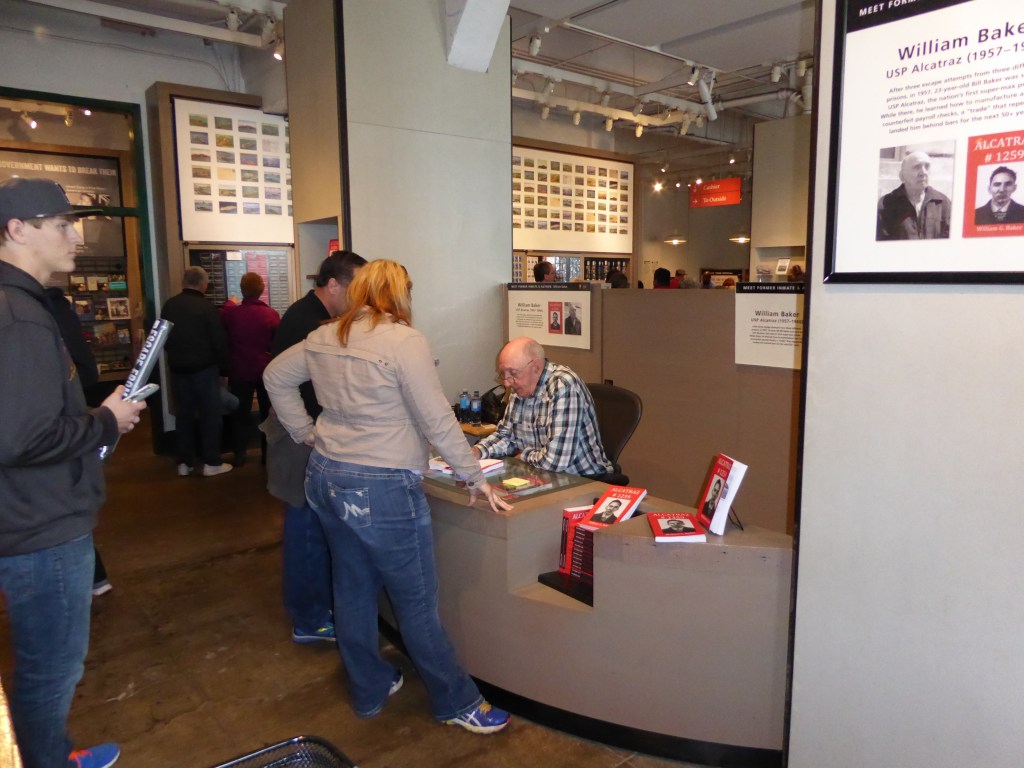
We are old-timers at San Francisco but this time we had pre-booked a visit to Alcatraz. This was interesting made even more so by the fact that there was an ex-inmate in the gift shop signing his book telling of his experiences. Apparently, he was making more money from the book than he ever did from his criminal activities.
Photo 6: Baker, a former Alcatraz inmate, shares his stories in “Alcatraz-1259,” a book he wrote about his experience at the prison.
This was a great trip with a huge variety of things to see and great travelling companions with a hearty sense of humour. Highly recommended if you like train travel.
However, I do wonder where the US is headed given recent events and to-day I would not be so keen to move there.
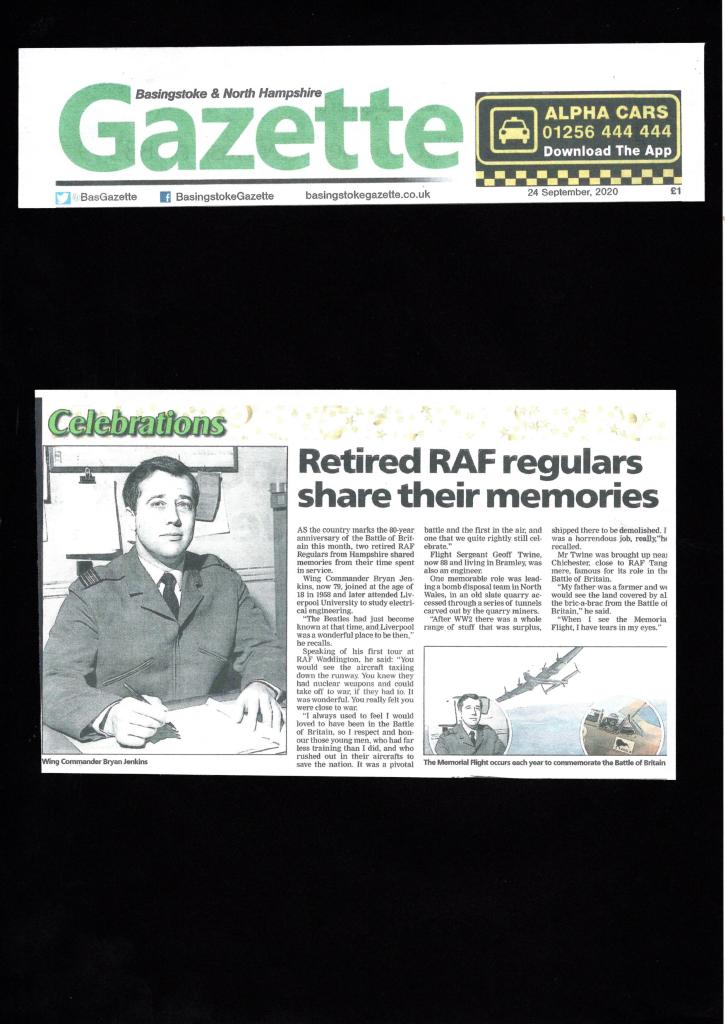
Having seen the report about Bryan Jenkins’ RAF career, Probus member, Geoff Twine reminisces about seeing the photograph of the Avro Lancaster at the main gate to RAF Scampton.
Many years before Bryan was involved in having the Lancaster re-positioned back into its place, there had been quite a panic, when, in 1958, Lincolnshire County Council needed to change the road layout around the east side of the airfield. It was due to the RAF station needing to lengthen the runway to accommodate the soon to be arriving Avro Vulcan bombers. This meant it was necessary to move from the gate, not only the war time plane used by 617 Squadron, who were still based at RAF Scampton, but also its neighbouring war time relic. This was none other than a Grand Slam bomb, the largest non-nuclear bomb used towards the end of WW2.
Known affectionately as Ten Ton Tess it also had the semi-official name of the Earthquake bomb and also the bomb designed to miss its target. It weighed 22,000 lbs (10 tons) and was designed by Barnes Wallis the man who created the bouncing bomb used by 617 Squadron on the Dam Buster raids. With a tail fin to create spin the 25 feet bomb would be travelling at over 700 mph when it hit the earth. Having a pointed solid nose, it would penetrate deep into the ground and seconds later would detonate creating a similar effect to an earthquake which had greater damaging impact on buildings and adjacent constructions than any direct hit.
A Grand Slam Bomb weighing 10 tons with a length of 25 ft
As a RAF armourer, Geoff still has his hand written records of his training on the Grand Slam bomb in the period 1949 – 1952 and clearly recalls what happened to this monster when it had to be moved for the road positioning scheme years later and what caused a major panic.
An 8 ton Coles Crane from RAF Scampton MT Section failed to lift what had been expected to be just a casing. Perhaps it had been filled by concrete which had been part of the training of ground crew responsible for loading the Grand Slam under a specially modified Avro Lancaster. Eventually it was proved to be still filled with high explosive although no records could be found as to why such a monster would have been exposed to the public for so long.
Some safety calculations were done to estimate the damage a Grand Slam detonated at ground level in the open would cause. Apart from the entire RAF station, most of the northern part of the city of Lincoln, including Lincoln Cathedral, which dates back to 1250, would have been flattened.
Using a much heavier civilian crane the Grand Slam was carefully placed on one of the RAF’s Queen Mary low loaders and taken under a police escort to Shoeburyness in Essex where it was detonated proving that the filling was very much alive.
From the age of 10 I had a passion for building scale model aircraft from kits. They were actually quite sturdy and realistic with propellers driven by wound up rubber bands. Later on, small jetex engines became available that provided the propulsion for scale model jet aircraft such as the F86 Sabre and Mig 15. These jetex engines ejected a plume of hot smoky gas, but did not provide much thrust, a bit disappointing, but fun, nevertheless. I hung these models from my bedroom ceiling and must have had at least a dozen at any one time.
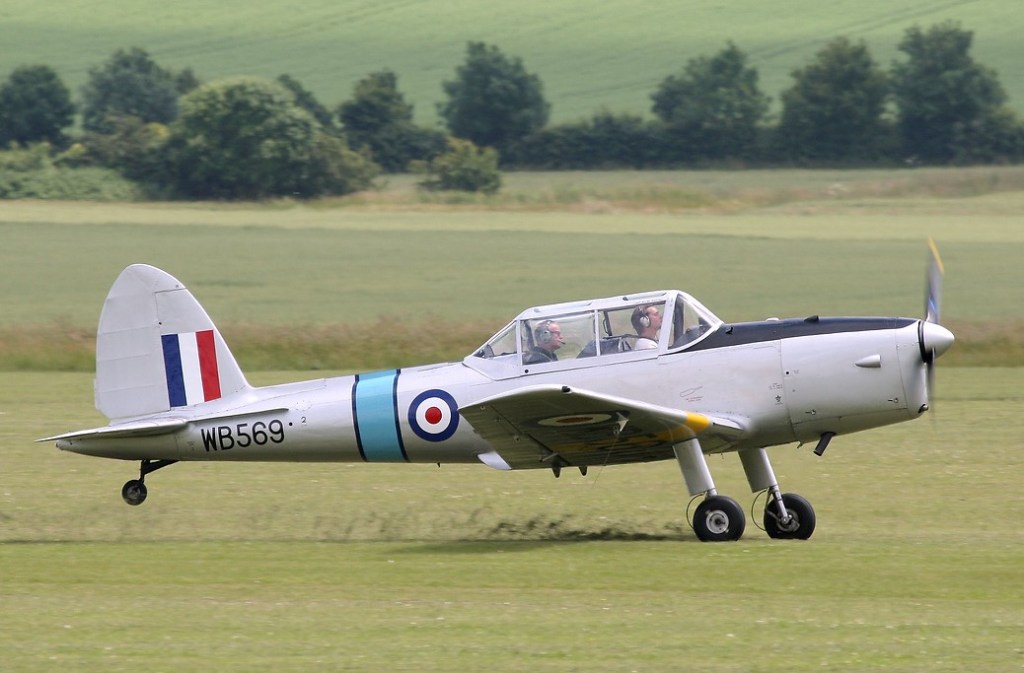
My interest in aviation led naturally to me joining the air force section of our school Combined Cadet Force. I applied for a Flying Scholarship and after 30 hours on Tiger Moths I obtained my PPL when 17. The CCF brought me into much closer contact with the RAF at summer camps held at RAF Stations. I remember RAF Topcliffe (in Yorkshire) where I was thrilled when the pilot flew VERY low over the Yorkshire Dales in a Chipmunk. Who wouldn’t want to join the RAF after that? RAF Thorney Island (next to Hayling Island on the South coast) was another winner where we were rescued and winched by helicopter.
A Chipmunk similar to the one schoolboy Bryan Jenkins had a great thrill sitting in the front seat with the pilot instructor behind. While at Liverpool University he flew this model in inter-University flying competitions.
My father noticed an advert in the paper for scholarships into the Engineering Branch of the RAF. The conditions of the scholarship provided for some candidates to study engineering at university instead of spending the 3 years at The RAF Technical College at RAF Henlow. Furthermore, flying training was available to those who qualified, my aim was to do both of these as I already had a PPL. However, to be successful I had to endure 5 days of evaluation. This included thorough aircrew medicals and aptitude tests at the Officers and Aircrew Selection Centre at RAF Hornchuch followed by 3 days at RAF Cranwell. I was passed suitable for officer aircrew, but the interviewers (all RAF pilots) could not understand why I wanted to be an engineering officer, they tried to change my mind (but failed). I always wanted to go to university, and I made this known at interviews – it worked.
Soon after, a letter arrived for my dad saying that the Air Force Board had approved my scholarship application subject to me obtaining four good “A” levels. This I achieved and I reported as ordered to RAF Henlow on 10th October 1958, my first day in the RAF. While at Henlow, those fit and able to fly were progressed on Chipmunks through aerobatics, instrument flying, night flying and formation flying.
The college staff selected Liverpool university for me starting in October 1959. Being a Pilot Officer in the RAF, I was administered by the University Air Squadron (UAS). The best part of being in the Air Squadron was flying from the airfield at RAF Woodvale just south of Southport. We could fly as often as we liked (although not at the expense of our academic studies). The staff were RAF Flying Instructors and the aircraft were Chipmunks just like the aircraft at Henlow. I was able to represent our squadron each year in the annual inter-UAS competitions in spot landing, formation flying and finally aerobatics.
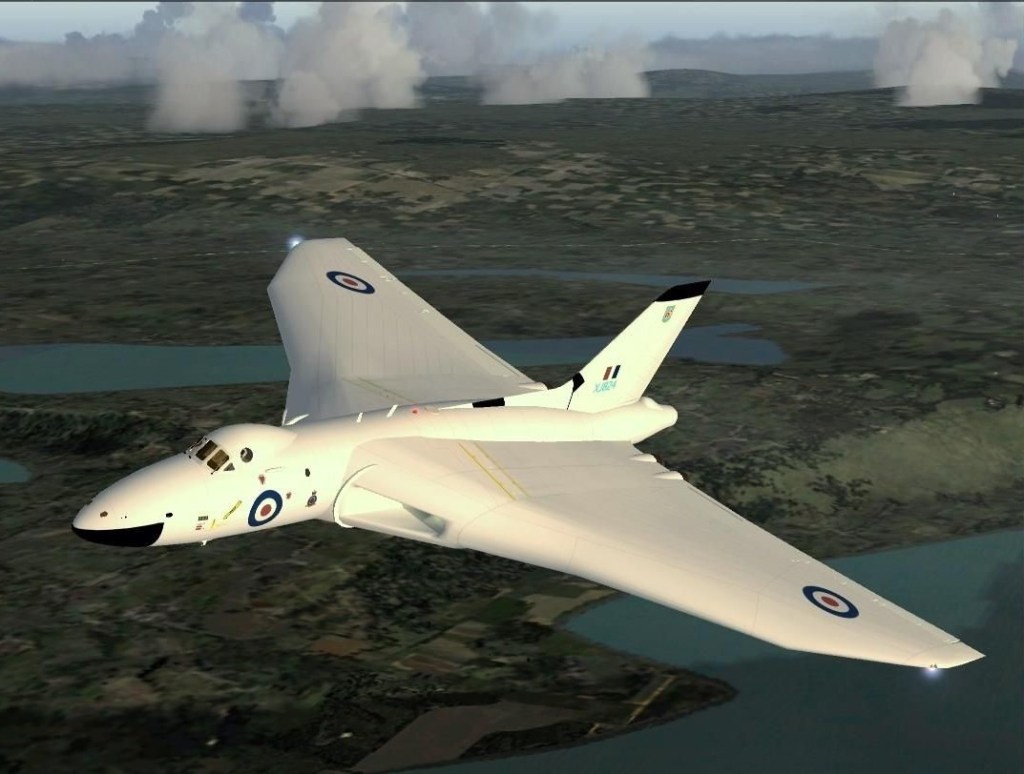
After the happy days at Liverpool I was recalled to Henlow for 2 terms to prepare me for my first posting to RAF Waddington just south of Lincoln. This was very much into the deep end because it was the time of the Cold War and the RAF provided our nuclear deterrent. There were 3 squadrons of white Vulcan bombers on the station, 27 in all, and 3 aircraft, the QRA – (Quick Reaction Alert) – were always on 15 mins standby, they were fully armed with (nuclear) weapons and guarded by RAF Police with dogs.
Avro Vulcan B Mk1A for use at high level attack as flown from RAF Waddington in 1958
A later camouflaged Avro Vulcan used for low level attack
Bomber Command would test the readiness of the station by ordering all aircraft on the station to 15 mins readiness; this was exercised periodically (called Exercise Micky Fin) usually at 2 am. My job was in the Hangar Squadron whose task was to carry out the deeper servicings and rectifications that could not be done outside on the line. I had 100 radio, radar and electrical tradesmen in my flight, so it was a great initiation into both engineering and man-management in a real operational environment that set me up for the rest of my career.
Despite the seriousness of the situation I recall some amusing events. One freezing January during a QRA alert, the captain could not insert the cabin door key into the frozen lock and so the crew could not enter. Meanwhile the crew chief had started the engines, so we had a nuclear weaponed aircraft with engines running, but the crew locked out. Luckily, a cigarette lighter saved the day. I once had a phone call from the Station Commander’s wife inviting me for afternoon tea at the CO’s quarter to get to know me. I was rather apprehensive, particularly when she answered the door and said that she had not invited me. It was down to a mischievous young WAAF officer who had pretended to be the CO’s wife. However, when we realised what must have happened, I was invited in anyway for a cup of tea and a very pleasant chat.
Nothing after Waddington could really compare, from a very intensive Cold War operational environment I was posted to Aden (in South Yemen) as the CO of a strategic HF receiving station. My unit was located on former salt pans with large, rhombic HF antenna arrays and with about 100 technicians living on site. Then I was posted to RAE Farnborough where I worked with RAE scientists to define, test and prepare for the introduction to service of new antisubmarine sonobuoys, then a post in MOD writing the reliability and maintainability requirements for new aircraft and major equipment and back to Vulcans in charge of the Electronics Centre at RAF Scampton.
Ready for a Dining-In night at the Officers Mess at RAF Scampton
Day Job – Sqn Ldr Jenkins CO of Electronics Centre RAF Scampton
RAF Scampton 1975 the Lancaster Gate Guardian “Just Jane”. Now at the Lincolnshire Aviation Centre at East Kirkby where you can, at a price, experience a taxi ride in the aircraft. RAF Scampton is now the home of the Red Arrows display team.
Then followed an unexpected thrill, a three year posting to the United Sates working in their Logistics Command HQ at Wright-Patterson Air Force Base in Dayton, Ohio.
Badge of RAF Strike Command
When I returned to the UK, it was to a post in MOD’s Procurement Executive, then11 months at the RAF Staff College and finally my last posting at HQ Strike Command at High Wycombe responsible for the engineering aspects of the electrical, avionic, armament and software of all the equipment in the Nimrod Fleet. I took early retirement in the rank of Wing Commander in 1986 and continued my career in industry.
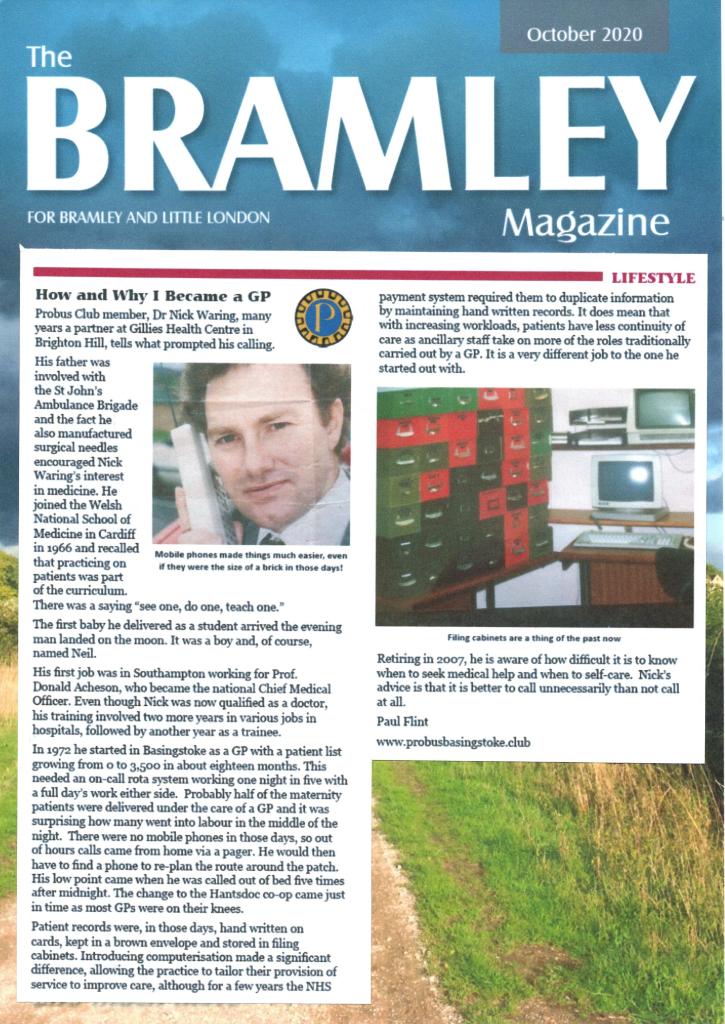
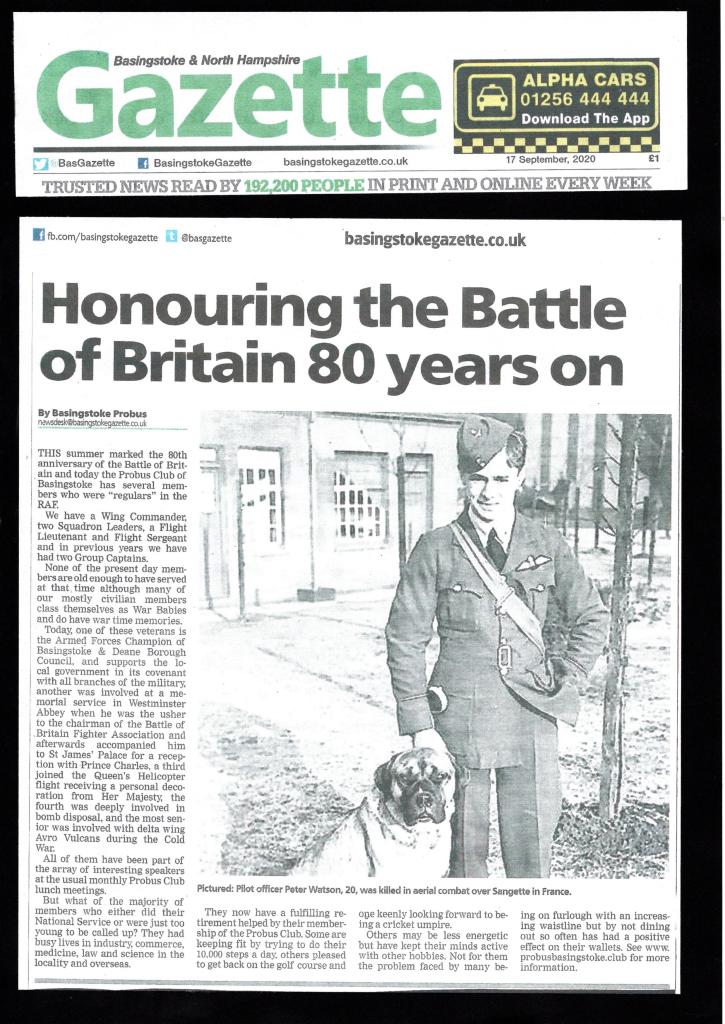
A particularly good month for the publicity efforts published in October. As well as good coverage in the local magazines the Basingstoke Gazette gave us two mentions in consecutive weeks and their web site had a more extensive offering than appeared in print. The Basinga held firm on their promise made last month and for October, not only did we appear in their printed version, but gave us a complete page carrying two of our reports. You will see that apart from the Winklebury Way which ran late with their quarterly publication and therefore carried a previous story about banknotes, that the remainder carried the report about the reasons behind Nick Waring’s decision to enter medicine.
Information was also sent (in late August) to two CommunityAd magazines for Bramley & Sherfield and Overton & Oakley but nothing appeared from what I can see. These magazines are printed by a Kent based publisher that has an impressive stable of magazines – not only for locals (including one for Old Basing & Lychpit) but for many general and specific interests. Like many such publications they exist by selling local advertising space.
Just to ensure that you are aware that I have not succumbed to any pressure to give undeserved publicity to a young looking Bryan Jenkins when a Squadron Leader, it is just the way the programme assembles the pictures when there is a number like the ten we have this time. Had the two CommunityAd magazines come good then there would have been a final row of three pictures. If you view this page on your smart phone it assembles the pictures in five rows of two so Bryan Jenkins appears the same size as the others.
Probus Club of Basingstoke member David Rawden is a retired chemistry teacher who also had an interest in geography. He set a mini quiz before embarking on his story.
Firstly, to test your knowledge of British geography based upon his exploration of Great Britain that has taken him to the four “corners” of the country. Can you name the most northerly, easterly, westerly and southerly points of mainland Britain?
Answers can be found at the end of this report.
Some people collect items as a hobby: stamps, books, antiques and so forth. David collected hills. They don’t take up room in the house and they don’t need dusting. After ascending all the Wainwright listed Lake District Fells he turned his attention to the Pennines and county tops. He visited the highest point of all the English counties which gave him the Heineken experience – he reached those parts of the country that people would not normally reach.
Dunkery Top, highest point of Somerset. Presented to the National Trust in 1935
The highest top is Scarfell Pike at 3209 feet situated in the Cumbrian mountains; the lowest is in Norfolk, Beacon Hill at 345 feet found just west of Cromer. Most tops are surmounted by a trig point or cairn so that you know you have succeeded. However, this does not happen in most eastern counties or those near to London. On one occasion he wandered through Pavis Wood near Tring trying to decide which hump was the highest point of Hertfordshire.
Summit of Snaefell, the highest point (2063 feet) of the Isle of Man
There is limited access to two tops in military training areas: Mickle Fell in County Durham and High Wilhays in Devon and its near neighbour Yes Tor. Both are on Dartmoor and are the only mountains (hills above 2000 feet) in England south of the Peak District.
Proper walking gear is essential to reach the majority of tops. However, there are a number of tops fairly near Hampshire which can be accessed by a simple walk from a car park. One of these is Leith Hill not far from Dorking in Surrey and another is Whitehorse Hill which can be found west of Wantage in Oxfordshire. Easiest of all is Ditchling Beacon, not far from Lewes in East Sussex. If you can find it amongst a myriad of unsignposted roads, there is a large pleasant summit area at Black Down, in West Sussex, south of Haslemere (Surrey). Walbury Hill in Berkshire, near Combe to the south west of Newbury, can easily be reached from the cark park at Inkpen Beacon. Continuing east along the Wayfarer’s Walk brings you to Pilot Hill, the highest point of Hampshire, situated just west of Highclere.
Further afield and needing more walking effort are the tops of Dorset, Lewesdown Hill near Beaminster, and in Wiltshire, Milk Hill near Alton Barnes and west of Pewsey.
Perhaps when we come out of lockdown some of the more active readers might like to visit a few of the local tops. They will be rewarded with a splendid view.
Answers to the quiz:
Most northerly: Dunnet Head. NOT John O’Groats, which is about 10 miles to the east.
Most easterly: Lowestoft Ness, Suffolk. A splendid ground marker (geoscope) denotes the spot. Distances marked show that, for a crow, Amsterdam is lot closer than Cardiff or Newcastle.
Most westerly: Point of Ardnamurchan. It can be reached by crossing Loch Linnhe by the Corran Ferry (SW of Fort William in the Western Highlands) then heading west with a short stop in Strontian – the only place in Britain with an element (strontium) named after it.
Most southerly: Lizard Point, Cornwall. NOT Land’s End which is the most westerly point of mainland England.
If you correctly answer this quiz it proves that your GCE “O” level in Geography has not been wasted.
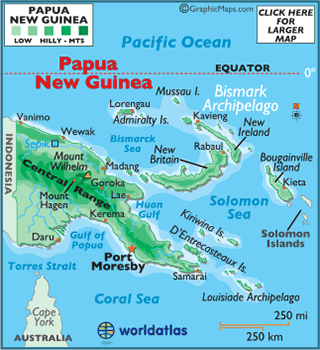
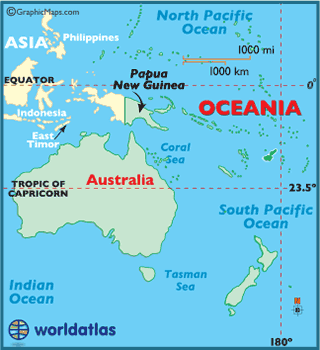
Towards the end of 1974 I obtained a job with the PNG Government Legal Department. We travelled to the capital Port Moresby in April 1975 – a journey from the UK of about 33 hours, with two changes of plane (at Singapore and Brisbane). I was sent some information with the plane tickets before we left, which informed us that when we arrived at the airport we would be met by someone from the recruiting department.
The Qantas flight from Brisbane arrived at Port Moresby at lunch time. We emerged from the aircraft somewhat bleary-eyed into the tropical heat and humidity, and successfully navigated our way through immigration and customs, and then out into the airport concourse. This was much like any other airport – although the ceiling fans were something of a novelty to us, with a lot of people milling around – both PNG nationals and expatriates. We looked around hopefully for someone to take an interest in us but we were completely ignored by the throng.
After a while, I noticed that a couple of British men who I had seen on our flight were talking to an Australian man who had evidently gone to meet them at the airport. (He, as I recollect, was from the Department of Agriculture). I went over and asked him if he recognised anyone in the concourse from the Department of Law, which he didn’t. However, he must have taken pity on us and said he would go off to a pay phone and let them know that we had arrived (no mobile phones in those far-off days!).
He reappeared a few minutes later and said that he had spoken to the Department of Law and that someone was on the way out to meet us.
We found some seats and sat down to wait, and to try and stay awake. After about 30 minutes, two Australians showed up – little and large – and they turned out to be the admin. officers for the Department of Law who should have been there to meet us. Their first words to us – which I still remember – were “That plane’s always late!” Well, it wasn’t today we thought. In the best Australian tradition we were taken off to a bar for a beer – luckily we had managed to dissuade them from taking us on a tour of Port Moresby! We had to endeavour to make polite conversation, when all we really wanted to do was have a shower and a sleep. After that they took us to an hotel, where we finally achieved the much-needed shower and a sleep.
When I started work, the reason why we had not been met became clear. At lunch time in the Department, a group of people met up to play cards. Two of the leading lights in this card game were the admin. officers. They were evidently not prepared to interrupt their lunch hour and give up their card game to meet a couple of Poms off a plane! Looking at it positively, it was good training to expect the unexpected for the next three years.
Margaret and our cat Timmy in our kitchen in Port Moresby
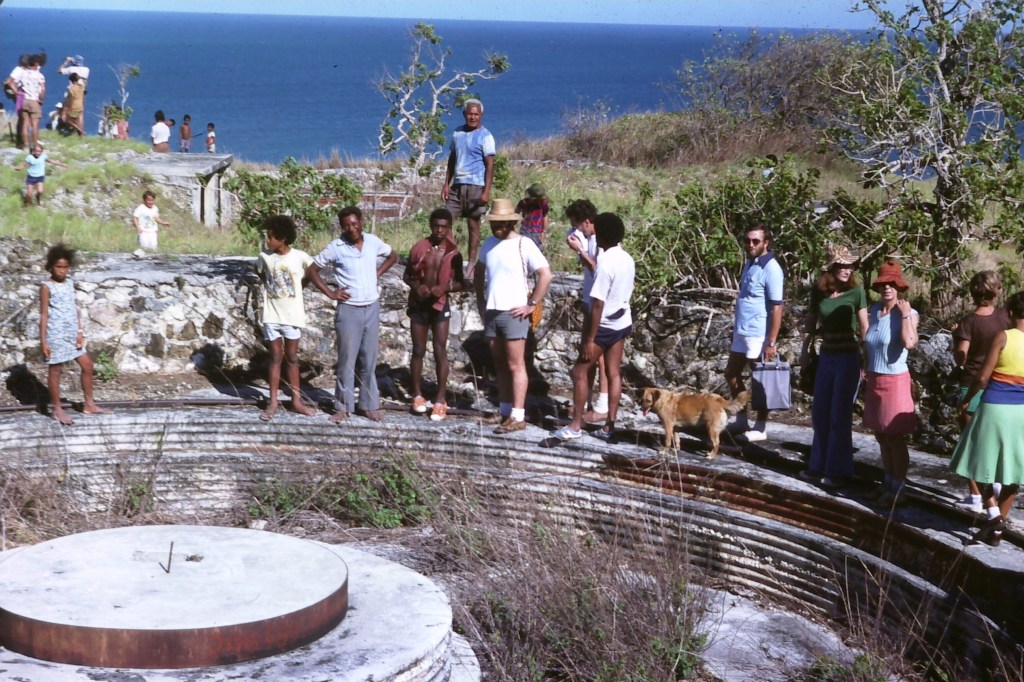
Margaret (in hat and green T-shirt) and our dog Keemah at WW2 anti-aircraft gun emplacement at Boera – along the coast from Port MoresbyMe in the wreck of a P-38 Lighting in the Waigani Swamp near Port Moresby (the lady in the picture is not Margaret)Me at an uplifted coral cliff overhang near Sialum on the Huon Peninsula
PLUS: A STORY OF A DEAD PARROT (OR, LIFE SORT OF IMITATES MONTY PYTHON)…. (not a Norwegian Blue!)
We had some friends in the New Guinea Bird Society who had a licence to ring birds, which they caught in mist-nets. Having been ringed, weighed and measured, the birds were then released to go about their business. Occasionally birds died in the nets – probably of a heart attack due to stress. This was clearly unfortunate and somewhat embarrassing.
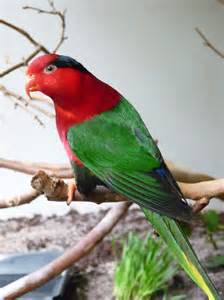
Some months before my contract came to an end, our friends had been on a bird-ringing trip to the New Guinea highlands, where the day before they were due to return to Port Moresby, a Fairy Lory (now apparently known as the Papuan Lorikeet) – a type of small parrot with a long tail – died in the net. In the hope that some good might come of this unfortunate event, they put the parrot in a plastic bag and brought it home, and put it in their freezer, with the intention of taking it to the University of Papua New Guinea Zoology Department as the bird might be of interest to them.
A Papuan Lorikeet
Inevitably the parrot worked its way to the back of the freezer, and was forgotten. Our friends were due to return to Australia a few months before my contract ended, and when they cleared out their freezer, they found the parrot. Not wishing for it go to waste, they called us and asked us if we would have custody of the bird, and when we were next in the direction of the University, to give it to the Zoology Department.
We were happy to help out, and so the unfortunate parrot was delivered to us and deposited in our freezer, where it languished at the back, and was duly forgotten.
When my contract came to an end, it was arranged that the Australian lawyer who was to take over my job, would also take over our flat. I had known him from when I first joined the Department of Law as he was employed there until his contract ended and he returned to Australia. It was quite hard to return to what may be termed normal life after the “PNG experience”, and when my job was advertised, he must have seen the opportunity to return, and applied and was appointed. He arrived a couple of weeks before my contract ended, so that there was a hand-over period, and he told us not to bother to clear out the fridge and freezer as he would eat his way through what we had left.
Thus we departed leaving him a freezer containing unknown excitements.
A couple of weeks later we were travelling in the Philippines, and it occurred to me that the deceased parrot must have been in our freezer when my successor took over our flat. Quite what he made of it we shall never know – I suspect it was something of a disappointment if he had arrived home from work and was looking through the freezer for something to cook for dinner. The Fairy Lory was unplucked and would not have had much meat on it anyway! Probably it just confirmed whatever doubts he may have had about me.



























 Probus Club of Basingstoke
You must be logged in to post a comment.