News

TV Comedy Writer Entertains Us

CIMG0483

Writing “gags” for a living is a cut throat business Brad Ashton explained to the Probus Club of Basingstoke. The club for retired professional and business managers was amazed to hear that he had written over 1500 comedy shows for television over a working lifetime and the names he mentioned were household favourites that the audience recalled with ease.

Since his retirement he has been telling his anecdotal tales to passengers on cruise ships about working with the comedy greats. Ted Ray, Tommy Trinder, Jimmy Edwards, Jon Pertwee, Leslie Phillips, Harry Worth and Dick Emery from the early days; Benny Hill, Tommy Cooper, Les Dawson, Frankie Howerd, Tony Hancock, Ken Dodd, Bob Monkhouse, Bernard Bresslaw, Mike and Bernie Winters, Morecambe & Wise and Little & Large were the British stars. And Brad worked with Groucho Marx for fourteen weeks on a UK tour.

Brad’s first script was broadcast on the wireless on 28 September 1952, but was unable to listen as it was Yom Kippur. “I come from a traditional Jewish family and my father would not let me turn on the radio during Holy Days, which I respected.”

“In the early 50s I found the BBC a bit anti-Semitic so having the Jewish surname of Abrahams did not help, so for professional reasons I changed my name by deed poll.”

Spike Milligan was a witness at Brad’s marriage in 1961 and had an office below Brad’s for 20 years. They would lunch together with Ray Galton and Alan Simpson, Johnny Speight and others. In fact there were 16 of them in the building and if unsure of a gag or routine they would pop into one of the other offices and try it out on each other.

Some comedians were well known for being a little tight over money. Brad gave an example “ I sold a gag to a well known name for £250 but six months later he phoned me to tell me that as he had not used it he wanted his money back.”

Brad was asked by Ned Sherrin at the BBC to help decide between David Frost and Brian Redhead who was to be the anchor man on a new topical show called That Was The Week That Was. Initially Brian Redhead was ahead but then Brad saw David Frost handle a 300 strong audience with top quality political impersonations.

“On the day of the show I would get all the newspapers, sit down by 7.00am and by 3pm I’d have my target of 33 gags. I would read them out to David in his dressing room at the BBC for the show that night and those that excited him, he’d remember. On average he would use at least fifteen in that night’s TW3. He was without doubt the most talented person I ever worked with.”

Les Dawson was another of Brad’s favourites and unbeknown to most, spoke seven languages. At lunch with Brad in a Chinese restaurant Les spoke in Mandarin for twenty minutes with a waiter. He was also a good pianist who by deliberately playing out of tune avoided paying royalties.

Brad went on “Everyone says, having written for all these comedians I must have had an exciting life. I probably did but was too busy to notice as each day I would be at rehearsals and script meetings. I slept at my desk using a satchel as a pillow, but they were marvellous experiences. The best thing about my profession was by not having to be a performer I could watch a good comedian get a laugh, sit back and think, I wrote that!”

My Sister the Code Breaker at Bletchley Park

CIMG0481

John Lidstone has enjoyed a varied and eventful life in business and public service being an internationally recognised broadcaster, public speaker and author of 16 best-selling books on business management. He gave a presentation to the members of the Probus Club of Basingstoke about the Bletchley Park code breaking centre and the secret part played by his elder sister Pamela stationed there.

Until fairly recently, Bletchley Park, or ‘Station X’, has probably been Britain’s best kept secret. This is because all the activities carried on there during World War Two were of vital importance to our national security and ultimate victory. It is estimated that because of their work that the war was shortened by two years and saved 80,000 lives. It was purchased in 1938 for the Government Code and Cypher School and MI6 in the event of hostilities. Its mission was to crack the Nazi codes and ciphers. The most famous of the cipher systems to be broken at Bletchley Park was the Enigma.

Few outside Bletchley knew of its mission, and even fewer, inside or outside, understood the breadth of that mission and the extent of its success. All staff signed the Official Secrets Act and a 1942 security warning emphasised the importance of discretion even within Bletchley itself as people in each working hut were not allowed to discuss their work with people in other huts. Any subsequent breach could have led to 30 years imprisonment or the death penalty.

Debutantes and other high born women, considered capable of being able to keep a secret, were initially recruited for administrative and clerical jobs. Then intelligence became the criterion. Personal networking sought out suitable recruits from Oxford and Cambridge universities as it was recognised that formally trained mathematicians were needed if the enemy’s electromechanical cipher machines, particularly Enigma, were to be cracked. Alan Turing and Gordon Welchman from Cambridge worked alongside other cryptanalysts including a chess champion.

John’s sister Pamela was one such recruit, having graduated from Reading University with a First Class Honours Degree. She was called up for National Service and attended the selection procedure for the Foreign Office part of which was a timed completion of the Daily Telegraph crossword. Most addicts took eleven minutes: Pamela completed the crossword in seven. She was consequently discreetly approached about a particular type of work as a contribution to the war effort.

The first operational break into Enigma came in January 1940. Secrecy shrouded the fact that Enigma had been broken and to hide this information, the reports were given the appearance of coming from an MI6 spy with a network of imaginary agents inside Germany.

Winston Churchill called Bletchley Park his “goose that laid the golden egg and never cackled”. The “golden egg” was nothing less than the ability to decode the secrets of the German war machine. Station X, as it was known, was so efficient it could read coded messages from German generals on the battlefield before they were even seen by Hitler in Berlin.

At the end of the war, Churchill ordered that all records of the place be destroyed and the embargo on Bletchley’s secret work remained until 1976. John only learned of Pamela’s part at her death at 95. She, like many others, never told her family about her work. They thought she had worked for the Foreign Office throughout the war.

Christmas Dinner 2015

Wednesday 9 December 2015 was the night of our Christmas Dinner, held again at the Test Valley Golf Club. And again the food was very much up to par (excuse the golfing pun) with a multiple choice menu that ensured individual decisions had to be selected at the time members made their booking. Nobody was heard to complain that they didn’t receive what they ordered; either that or they simply forgot what they had originally selected.

Forty five sat down and enjoyed music from a singer/keyboardist while dining followed by dancing after dinner. It was good to see widows Jenny Barton, Doreen Davies and Jo Jarvis in attendance. The raffle organised by David and Bridget Tivey raised nearly £100 for the club’s funds and Alan and Liliane’s puzzles on the menu cards ensured many a scratched head (again apologies for another golfing pun). Thanks are due to this intrepid couple who put their heart and soul into organising this event and the Spring Ladies’ Lunch.

Getting your knees brown – advice to the Probus Club

RAF Wardrobe2
Flying Wardrobe Beverly

John Grimwood, a freelance tour guide and military historian, gave an illustrated presentation to the Probus Club of Basingstoke about a period in his early life spent as a young airman in the Middle East. Readily admitting that he did not try hard at his grammar school he was disappointed that the RAF declined to accept him as a possible pilot but instead recruited him as an Administrative Assistant.

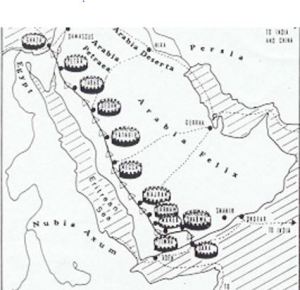
In 1965 John received a posting to a place called Salalah on the Arabian Peninsula, partway between Aden and Bahrain. After 12 hours on a nauseous flight in a packed propeller driven RAF Britannia trooping aircraft he arrived at RAF Khormaksar in the Aden protectorate. Then followed a 700 miles flight to Salalah in a Blackburn Beverley ‘flying wardrobe’, a huge four engine aircraft with a cavernous freight bay and ideally suited to short, rough, Arabian dirt airstrips.

RAF Wardrobe2 (1)
RAF Salalah Base

This period of the 1960s heralded the “dying days and end of Empire” and many of our bases were attracting the attention of anti-British guerilla groups or “freedom fighters.” Salalah was situated in an area of counter insurgency warfare but was crucial as an RAF support base during the Dhofar War.

John lived in quarters with anti grenade window shutters yet guarded the base with pick axe handles. While having the basic requirements for the 60 airmen on base it was extremely Spartan by modern standard and had no air conditioning. Uniform consisted of shorts, socks and suede desert boots with no hat or sun cream. There was ample time to get his knees brown as the work routine finished in the lunchtime peak heat of day and afternoons were spent relaxing, playing football or swimming, watching out for sharks on a secluded beach. At the end of the year 10 shillings financed a posting home party with barbecue and plentiful beer and everyone listened to England winning the World Cup.

John returned to service outside London in the ‘Swinging Sixties’. He applied for Aircrew duties spending the next 30 years flying as an Air Loadmaster, Helicopter Crewman, Aircrew Instructor and Technical Author. In all 12,000 flying hours which totals 16 months airborne and never suffered from air sickness again.

Micro Brewery Visit

Saturday 10 October 2015 saw a visit of seventeen consisting of ten members, wives and friends visit the Andwell Brewing Company which is based in Andwell Lane in Andwell near Hook.

It was eight years ago to the day that this micro brewery made its first pint of real ale and since that time has established a reputation for consistently producing beers of the highest quality. It brews five varieties of ale and has won awards in each of the last six years.

The tour was led by Adam Komrower, whose brainchild the brewery was when he achieved his ambition of wanting to be in a manufacturing business. Taking the group through the selection of the ingredients of malted barley, yeast, hops and water the tour lasted one and half hours. We saw all the Bavarian Brewery Technology equipment that produces his range of beers in this 20 barrel brew plant.

The shop sells all the varieties of beers produced on site including versions bottled in an adjacent business. And all on the visit received an Andwell pint glass and several tasters which surprised many of the ladies who had not really previously tried beers.


Big Blast at Probus Club

Geoff 2+Twine2

Bramley resident, church warden and member of the parochial church council, Geoff Twine, gave an illustrated talk to the Probus Club of Basingstoke, of which he has been a member for many years, about two years of his life spent in charge of the world’s biggest bomb disposal task. Flight Sergeant Twine, an armourer by trade, had been based at the Bicester RAF Explosives Ordnance Disposals unit when he was given the responsibility for the Llanberis slate quarry project.

Pre-war had seen these disused slate quarries in North Wales, as the main RAF Bomb Storage Unit. They had been converted into huge underground bomb stores and during the war there was considerable activity in despatching all types of ordnance to the airfields throughout the country. Post war the area had been used as a disposal area where Bomber Command despatched thousands of tons of obsolescent and deteriorating stocks of explosives to be made safe or destroyed. It was decided to maintain the area as a storage depot for the bombs probably on the basis that there was nowhere else more suitable. When the RAF moved out in 1956 they attempted to destroy the explosives. Fires burned for days and explosions rocked the area.

The area is a nightmare of crags and quarries linked by tunnels and high mounds of dumped slate fragments. There were quarries 900 feet deep and others with lakes 60 feet deep containing 20 million gallons of water. It was one vast booby trap to the unwary. 10 foot barbed wire fences eventually erected around the site failed to prevent trespassers resulting in some injuries. In view of the upcoming investiture of Prince Charles as the Prince of Wales at nearby Caernarvon castle and the deteriorating situation in Northern Ireland it was decided, a quarter of a century after the end of the war that something needed to be done.

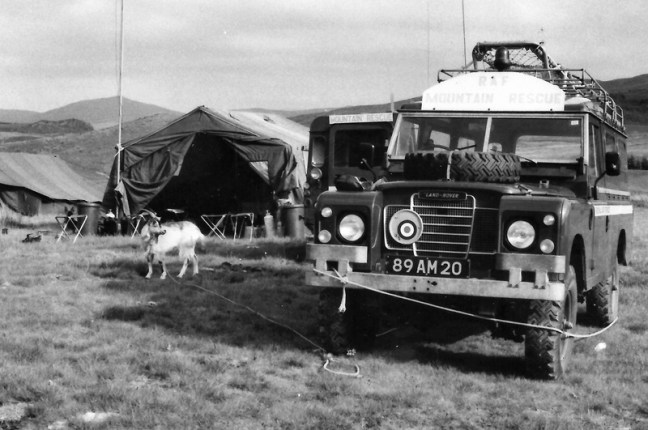
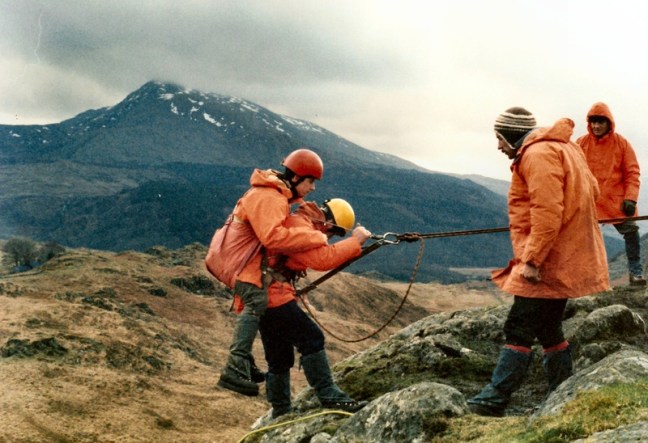
Because of the nature of the site men had to be trained in mountaineering and abseiling as this was the main method of gaining access to the now seriously decaying devices down the sides of the quarries. As they crawled along narrow ledges, some of them hundreds of feet above the bottom of the pits, they used all their skills and iron nerves they possessed to turn any bombs or explosives they found into harmless objects. The passage of time and rock falls meant that bombs were found on ledges or crevices and many now lay exposed on the quarry floors. Divers searched the lakes and discovered considerable numbers of ordnance that although being underwater still had the capability to explode. The lakes were drained before work could be started and the pumps kept going as there was a natural inflow from streams of 170,000 gallons a day.

In a Daily Mirror article published on 5th September 1973 Geoff Twine is quoted “We know what we’re handling and what it is likely to do. On a job like this we’re writing the book as we go…there’s no precedent.” And testament to the high professionalism of Geoff and his small team there was not one fatality during the years it took to make the quarries safe at what had been described as the biggest time bomb in the world.

Summer Pub Lunch 2015

The Queen’s College Arms on the Aldermaston Road at Pamber End was the venue for this year’s Summer Pub Lunch on Tuesday 11th August. A total of thirty one consisting of members/wives/friends enjoyed a convivial lunch at this annual event which has been on the Probus calendar for many years.

The venue is the choice of the Vice President, made several months before the occasion, and therefore he is already installed as the President at the time of the lunch.

Probus Club hears from the Friends of the National Railway Museum

The Chairman of the South of England Group of the Friends of the National Railway Museum, Dr Ian Harrison, gave an illustrated talk to this club for retired professional and business managers at the first speaker meeting of their 37th Probus season.

ProbusRailways_zpse0e3abfb (3)
Ian Harrison and Alan Porter

“I didn’t work on the railways but always had a close affinity as my father was a signalman on the Carlisle to Settle railway”, Dr Harrison explained. “He moved to Leeds, where he continued as a signalman, as he recognised that his three children would have greater job opportunities in an industrial centre.”

Dr Harrison talked about the creation of the NRM in 1975 and the problems of running a museum where many of the exhibits are very large! The museum has gathered over a million objects from 300 years of railway history and now has 280 rail vehicles including all manner of locomotives and rolling stock. About a hundred are at York with the rest being shared between the Locomotion Museum at Shildon in County Durham and at many Heritage Railways around the country. In addition it houses an immense collection of railway ephemera including uniforms, trackside equipment, signs, engine nameplates and railway art. Dr Harrison brought several books produced by the Friends of the NRM on railway matters which were available to purchase as part of their fund raising activities.

ProbusRailways_zpse0e3abfb (2)
Winston Churchill & The FNRM South of England Group team

Our local heritage line, the Mid Hants Railway, perhaps more commonly known as the Watercress Line, that runs between Alton and Alresford, has a major repair centre at Ropley (and operates two NRM locomotives – Lord Nelson and Cheltenham). The Mid Hants has played an important role in many restorations over the years. The latest undertaking was the complete cosmetic restoration of the NRM’s locomotive Winston Churchill. This was one of 44 Battle of Britain class locomotives, named after Battle of Britain heroes, RAF stations and squadrons produced by the Southern Railway in 1946. It famously hauled the funeral train of Sir Winston Churchill on 30th January 1965 from Waterloo to Long Hanborough in Oxfordshire. It was taken into the National Collection in September 1965 on withdrawal from service and stored in various locations, suffering the ravages of time before the Friends decided that something needed to be done!

On behalf of the FNRM, Ian’s South of England Group has so far raised £39,000 of the £44,000 target; this allowed the restoration to be completed at Ropley in time for the 50th anniversary of Churchill’s funeral in January this year. The loco was taken back to York where it formed the centre-piece of the National Railway Museum’s exhibition marking this event – the last time a coffin was carried by train.

More details about the South of England Group of the Friends of the National Railway Museum can be seen on their web site http://www.nrmfriends-south.org.uk and that of the Probus Club on http://www.probusbasingstoke.wordpress.com or phone their secretary Paul Flint on 07770 886521.

ProbusRailways_zpse0e3abfb (1)
Winston Churchill on roll out at Ropley

Probus Welcomes Mayor

BrightnessEdited Mayor
The Worshipful the Mayor of Basingstoke & Deane Cllr Mrs Anne Court

The Worshipful the Mayor of Basingstoke & Deane Cllr Mrs Anne Court was guest of honour at the first lunch of the new Probus Club season. Alan Porter, the newly elected President of the Probus Club of Basingstoke welcomed the senior citizen of the borough to the Test Valley Golf Club on Tuesday 14 July. This was his first official function since being appointed President at their AGM at the end of June in his role as head of this club for retired professional and business managers – hence the name Probus.

There were several club members who were known to the Mayor, one had even worked with her late father when serving in the RAF.

Cllr Court spoke about the three charities she had selected for her mayoral year. Inspero which works with young people to promote healthy eating and living through food growing, baking and cooking programmes, Basingstoke Multicultural Forum selected because of her young life living in many parts of the world which exposed her to a wide array of cultures and the Ark Cancer Charity that is seeking to raise £5million towards a much needed cancer treatment centre to be built locally that will be a beacon facility to deliver cancer care and support that people in Basingstoke & Deane need and deserve.

Alan Porter presented the Mayor with a cheque in support of her charity appeal.

The Probus Club of Basingstoke has been in existence since 1979, the organisation having been formed in Surrey in 1965 by retired members of the Rotary Club. These days most towns have a Probus Club whose diverse membership, many having worked elsewhere but now live locally, bring a wide range of experiences to bear in what is a social organisation for like minded men. Their ladies also join in several times during the year with several lunches, a Christmas dinner and various outside trips. The Club’s web site http://www.probusbasingstoke.wordpress.com provides more information about their activities together with contact details for any men interested in joining.

Probus 36th AGM

scan0003
David Tivey and Alan Porter

Thursday 25th June was the 36th Annual General Meeting of the Probus Club of Basingstoke which took place at Christ Church in Chineham.

Alan Porter was elected President with Fred Locke Vice President, returning to the Executive Committee after an absence of five years. The other members are Paul Flint (Hon. Secretary), Alan May (Hon. Treasurer), Chris Perkins (Programme Secretary) and Stephen Thair (Lunch Steward). David Tivey, as the immediate past President, remains on the committee as an ex-officio member. The position of Outings Organiser remains unfilled and the Club seeks any one or more to take on the role of wine steward/s.

Copies of the minutes have been circulated to all members.