

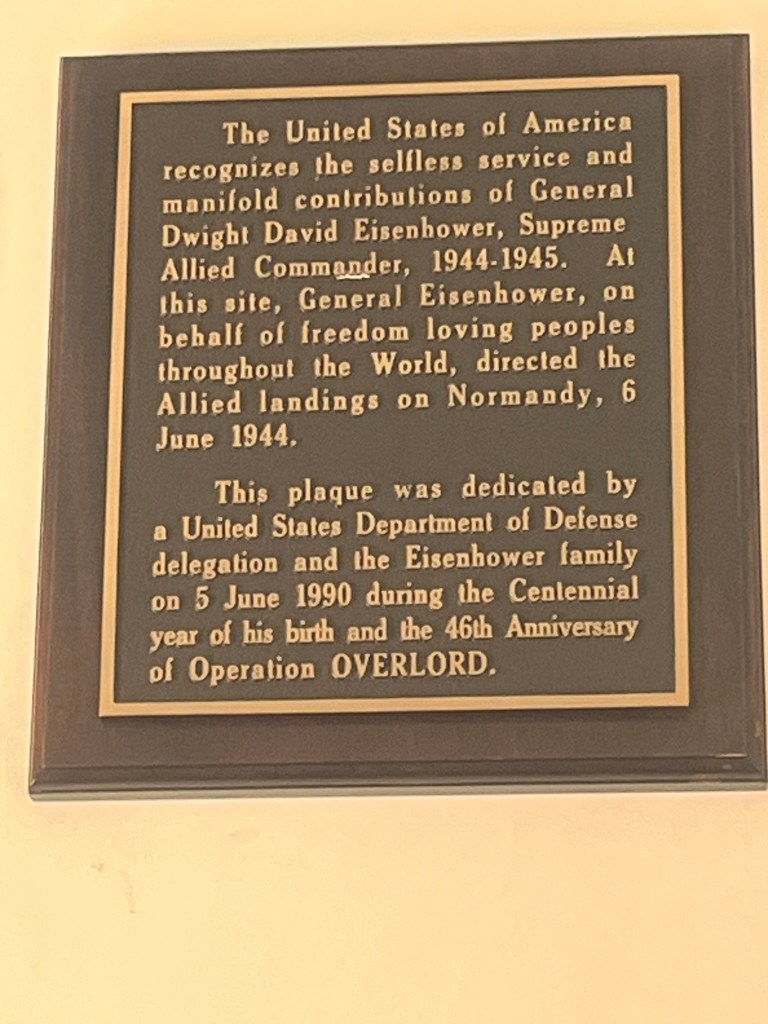
A group of Probus members and families had an impressive visit to Southwick House (locally pronounced “Suthick”) positioned five miles north of Portsmouth that had a pivotal role in the planning of D-Day, the largest amphibious assault in history.
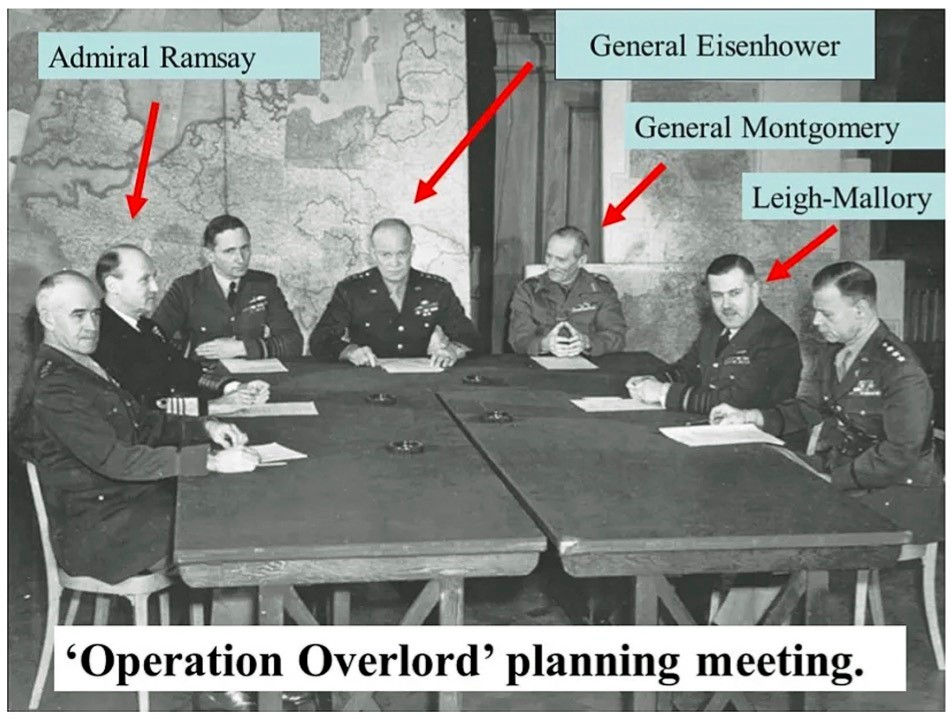
It was the Supreme Headquarters of the main allied commanders, including Allied Supreme Commander General Dwight D Eisenhower, Naval Commander-in-Chief Admiral Ramsey, Army Commander-in-Chief General Montgomery, and Commander-in-Chief Allied Air Force, Air Chief Marshal Leigh-Mallory. The grounds became the Main Tactical Base for the 21st Army Group for their forthcoming invasion plans.
Richard Callaghan, the curator, gave an extensive narrative about the map room that still contains the enormous graphic showing the invasion plans. His talk was interwoven with anecdotes about incidents involving the main characters that gave life to this history lesson.
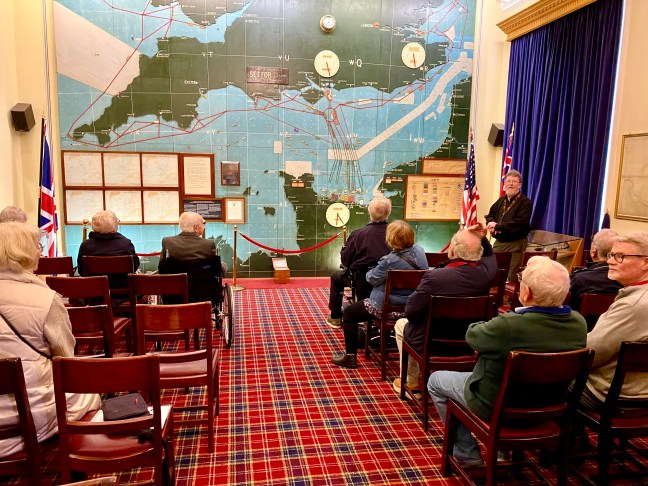
Deception was used to convince the German high command that the invasion would come across the shortest route from Kent to Pas de Calais which caused German divisions to move from the Normandy region.
James Stagg was the meteorologist providing weather forecasts to the senior planning group. As a civilian he would have difficulty in ensuring he would be taken seriously so he was presented with the uniform of a RAF Group Captain. It was Stagg that convinced General Eisenhower to postpone the assault from the planned day of 5th June to 6th June 1944.


6,000 ships were involved moving from all regions of southern England to the main dispersal area that became known as Piccadilly Circus and then had to pass through corridors cleared through minefields in the Channel. Thanks to detailed planning only seven ships were involved in collisions.
Despite the break in the weather there was still a swell, and the floating Sherman tanks were launched too far out from the shore resulting in only four out of thirty-two reaching the beach. It had been necessary to ensure that the beach would support such vehicles by nighttime investigations in the previous weeks that had not been spotted by the land-based Germans.

In the adjacent bar room, the original weather maps were on the wall along with other memorabilia including models of two LCT (Landing Craft Tank) ships that were the subject of a talk some years ago by Probus member Brian Nagle.
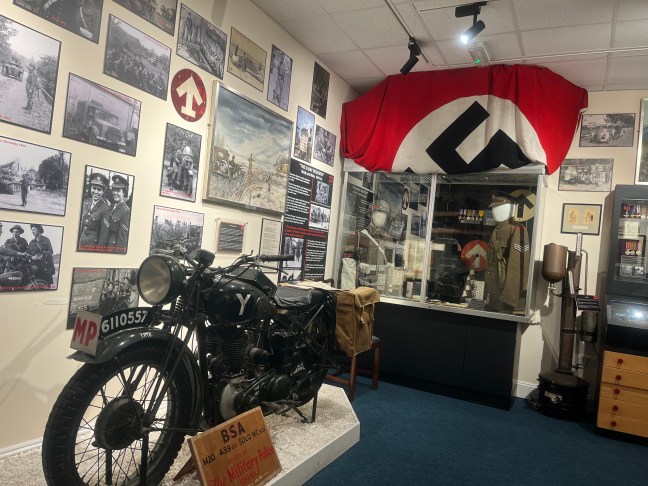
There followed a visit to the Royal Military Police Museum, based on the same military establishment, that showed the development from the early days of the Provost Marshall to the Red Caps known today.
 Probus Club of Basingstoke
You must be logged in to post a comment.