Probus Member Ticks One Off His Bucket List

Many people watch this annual event either as bystanders or seeing reports on television, the world-famous London to Brighton veteran car run. It was set up to celebrate the change in the law in 1896 that increased speed limits from 4 to 14 miles per hour dispensing with the need to have a man with a red flag walking in front of new-fangled self-propelled vehicles.

This year there was another celebration, that of it being the 125th anniversary of the 1,000 miles Trial round Britain of 1900. A Wolsey car that took place on that rally was also an entry on this year’s London to Brighton run.

A good reason, then, for Dave Kitson, a member of the Probus Club of Basingstoke with a well known penchant for things mechanical and aeronautical, to make a day of it. He could see the start in Hyde Park in London and then follow events by train and bus as the rally progressed to Brighton.

His travel plans immediately unravelled as the first train from Basingstoke on Sunday arrived in the capital at 8.35 am, far too late to see the first cars setting off at 7.00 am. So, he decided to watch the rally go past at Westminster Bridge. And it was here that things took an unexpected turn to the bizarre.

Standing below Big Ben as it chimed 8.45 am, a car, unusually with no passenger, stopped at the traffic lights. Dave made eye contact with the driver, raised his hitch-hiking thumb, pointed at the empty passenger seat and to his great surprise, was invited onboard. Not dressed for the exposure of an open car the kindly driver found a drover’s coat that went some way to avoid Dave becoming too cold.

A surprised Dave Kitson on board a 1904 Cadillac

Regulations state that all entries must have been manufactured before 1905 with the oldest participant this year being made in 1894. Our intrepid hitch hiker’s car, entry number 289, was a 1904 Cadillac which had a single cylinder eight horsepower horizontal engine, with two gears driving a chain to the rear wheels.

A similar Cadillac was sold six months ago for £145,000

The driver claimed that not only was this his 44th London to Brighton run but also in the rally this year he had another similar model of Cadillac being driven by a friend, and his son was driving a 1903 French made Panhard et Levassor which had a two-cylinder engine producing 7 horsepower. The three cars had a total value of around three hundred thousand pounds.

Not only did Dave have the unexpected pleasure of being a participant in this world-famous rally he had the additional duties of helping to look out for the route markers, make left arm signals and best of all acknowledge the applause of the spectators lining the route.

More than once, it was necessary to give the appropriate hand signal to drivers cutting across in front of a 121-year-old car that did not have ABS brakes and sometimes hardly any brakes at all.

Next to the Cadillac is the American made White steamer car

The RAC were out in force and in front of every stationary van was a veteran car in distress. It became obvious that as they caught up with the driver’s son that his Panhard was alarmingly emitting steam. They stopped at a petrol station to refill the radiator and carried on to Purley where many cars had pulled into a church car park for a desperately welcome hot coffee.
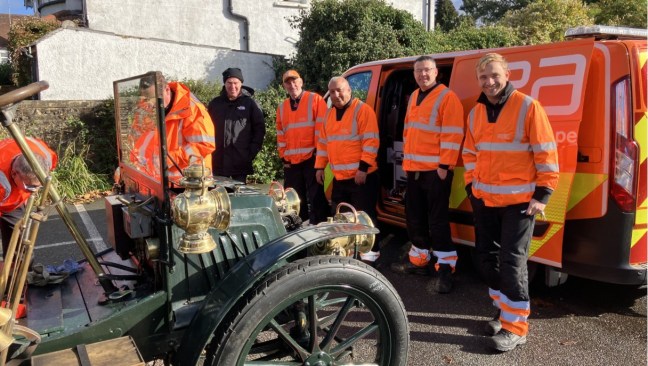
Much mechanic expertise ready to resolve any problems

It was there while investigating the water loss of the Panhard that a team of eight RAC mechanics diagnosed a seized water pump and declared the problem terminal. It was probably an unrealistic expectation that any of their service vans would carry a replacement water pump for an ancient French car.

End of the rally for the Panhard et Levassor with a seized water pump

It was here that Dave’s adventure came to a halt. The son took the dad’s Cadillac to drive on to Brighton while dad was left to organise rescue transport to take the Panhard back to Yorkshire after following to Brighton to collect both Cadillacs that were two of 340 cars that reached Brighton from 400 starters.

Dave travelled from Purley station back to Basingstoke, reflecting on his experience that was always the final scene in the Aardman Animation films when Wallace says” It had been a grand day out, Gromit.”
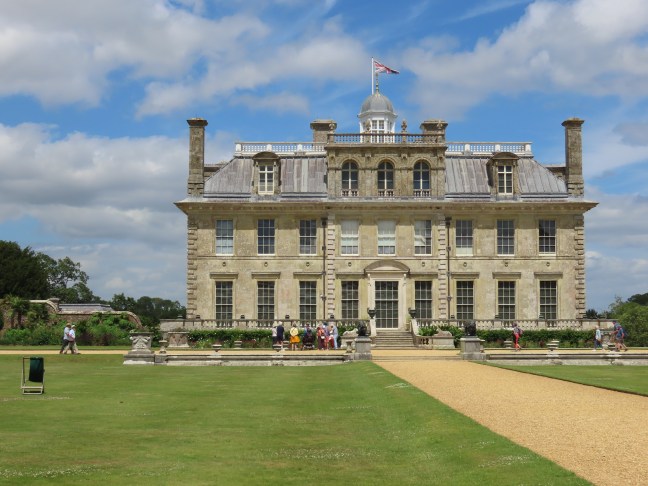
Probus Trip to Kingston Lacy

SELF-DRIVE TRIP TO KINGSTON LACY – Report by Stephen Thair

Seventeen members and guests enjoyed an excellent day out to the National Trust property at Kingston Lacy, near Wimborne in Dorset on 26th June. Unfortunately Chris Perkins who had kindly organised the expedition, was indisposed and unable to go.

The House dates mostly from the 1700-1800s and is a “nice size” and set in attractive grounds and gardens. The Bankes family who had owned the estate before donating it to the National Trust had furnished the house with many paintings, including some by Rubens and Titian. One member of the Bankes family had lived in Venice, and sent back paintings and furniture from Italy, including a painted ceiling – the painting (on canvas) dates from the 1600s and was purchased in Italy, taken down from its original location, and shipped to England and then fixed to the ceiling of one of the rooms in the house.

There are two singularly unpleasant paintings each side of the magnificent staircase, which were apparently previously hung in the dining room, and would not have been conducive to enjoyable dining!

Not far from the House is a large stable block which in the best NT tradition, now has the café in it, and some of us gravitated there initially for a coffee.

Lion & Snake Statue
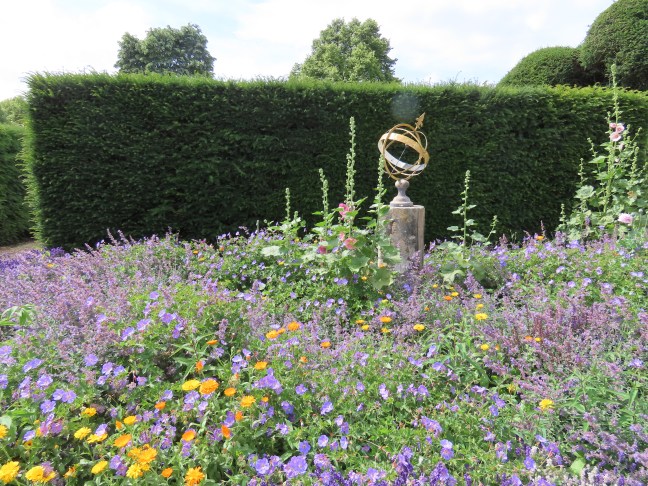
Part of the formal garden

The grounds include a splendid Japanese Garden, which has a Tea Garden within it.

Japanese Garden

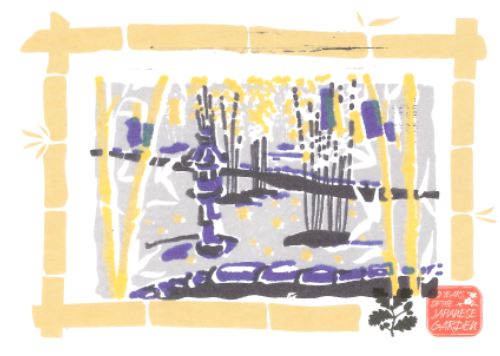
There are four decorated boxes on poles as you go through the garden, and they contain postcards and stamps (not postage) and ink so you can make your own small Japanese-style painting as you proceed through by stamping your card at each box.

Japanese Artwork by Margaret Thair

After passing through the Japanese Garden, you reach the kitchen garden which is very extensive with a lot of greenhouses and a café, and must have produced large quantities of vegetables for the big house in its day.

Enjoying the good weather at Kingston Lacy

There was plenty to see and enjoy and thanks go to Chris Perkins for arranging the trip.

Stephen Thair

Probus Hears About The Titanic & Her Times

President Stephen Thair & Speaker Dr Stephen Goss

The peaceful period following the end of the Franco-Prussian war in 1871 up to the start of WW1 in 1914 was a time of great advances in social and artistic movements in Europe, centralised in France, and became known as the Belle Époque.

Follies Bergere tipifies the Belle Epoque period

At the same time there were shifting collaborations between nations where Britain, Austria and Prussia were allied against Napoleonic France. The unification of Italy and Germany brought other pressures with the arrangement between France and Russia seen by Germany as a particular threat which they met by re-arming with naval power. This brought them into direct competition with Britain who had the largest navy in history and the UK was also the most successful ship builders in the world.

By the 1890s Britain was losing its global predominance to both Germany and the USA. To maintain influence in the world the use of soft power was recognised as a replacement for gun boat diplomacy. One way was to have the most impressive, biggest and most luxurious ocean-going liners to attract the most wealthy and influential people in the world. Who better to build such leviathans but the most famous ship builders in the world, Harland & Wolff of Belfast.

This background was explained by speaker Dr Stephen Goss, himself an Ulsterman whose great grandfather was a painter on the RMS Titanic in this famous shipyard.

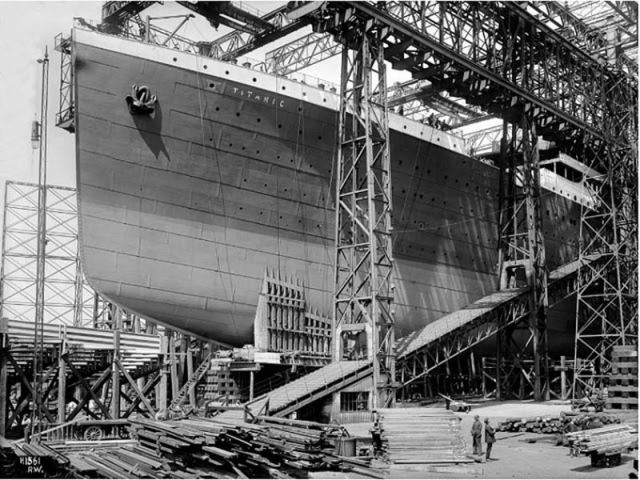
Belfast had boomed from the success of ship building with “Belfast Built” its signature and had become world leaders in ship construction, support services and finance. It was the only place to build three transatlantic liners for the White Star Line whose names are engraved in the annals of history, the Olympic, Titanic and Britannic.

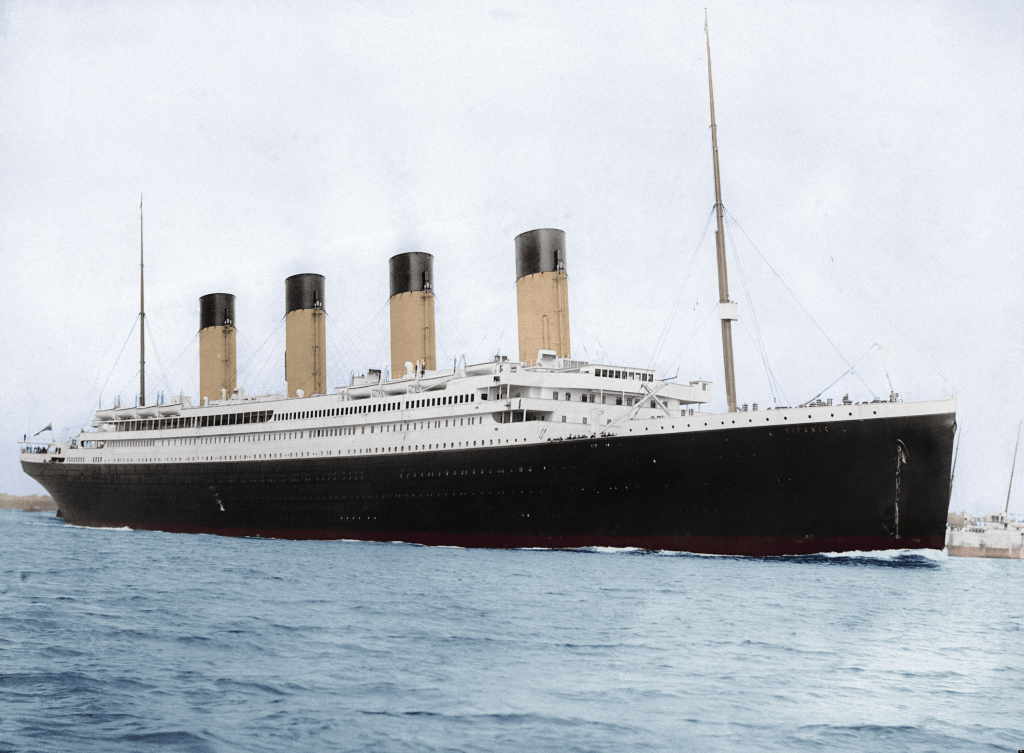
At 46,000 tons the Titanic was the largest ship in the world and was fitted out to the most luxurious level. The staterooms were designed to exceed the expectations of the great and good while the second-class cabins on the Titanic were more than a match for first class on other liners. Its safety measures considerably exceeded the maritime regulations of the day. And to further pander to the wealthy clientele the Marconi Company was employed to relay ship to shore messages via the latest Morse Code signalling system.

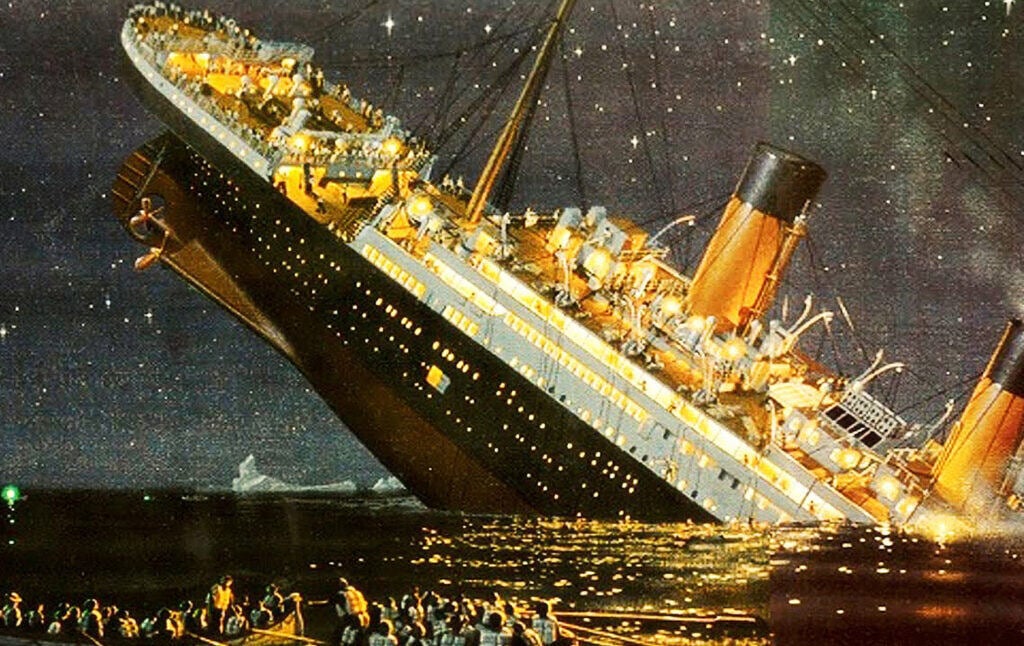
The unsinkable RMS Titanic – the most luxurious ship in the world in 1912

During these years the increasing industrial and commercial activity in Belfast meant that there was extensive commercial traffic across the North Channel to Scotland and England as supplies were required from British manufacturers.

The pressure for Irish independence in the 1920s increasingly led to conflicts and to the three-year Irish war of independence between the forces of the Irish Republic – the Irish Republican Army (IRA) and the British Crown forces. This was a major concern to the business community in Ulster where 8,000 mostly Catholic workers had been driven out of the Belfast shipyards sparking sectarian violence in the city. There had been a long held fear an independent Catholic Dublin would negatively influence commercial matters between Belfast and Britain. The shipyards had become a Protestant closed shop and became afraid for the future of ship building and supporting industries that had brought so much prosperity throughout Ulster. The people in Belfast felt they had to protect their interests and in 1913 they had formed the Ulster Volunteer Force with 100,000 members. During WW1 they became the 36th (Ulster) Division and post war became the Ulster Special Constabulary when Northern Ireland was created in 1921.

When Home Rule was granted for Ireland it renamed itself the Irish Free State except the six counties of Ulster remained part of the United Kingdom, but the foundations were laid for generations of problems that in modern times became known as ‘The Troubles’.

The sinking of the Titanic on its maiden voyage is well known but the discovery of the wreck is far from straight forward as the Marconi operator that fateful night gave incorrect information that placed the stricken ship a few miles from its actual position.

RMS Titanic sank 2hrs 40mins after hitting an iceberg 0n 15 April 1912 with the loss of 1500 passengers and crew
Robert Ballard on board survey vessel Knorr

Over the years there had been several attempts to find the wreck, including one by oceanographer Robert Ballard. His ship contained the latest sonar and submersible technology, and he approached the US navy seeking support. While an agreement was reached to finance the search for the Titanic there was another reason for their support which was as cover for a top-secret mission. In the 1960s the US navy had lost two nuclear submarines in the North Atlantic Ocean in the area that supposedly contained the wreck of the Titanic, and they did not want the Russians to be aware of this search or its result.

The two submarines were located but that only left twelve days of the contract to find the Titanic and on 1st September 1985 a boiler was discovered in a debris field that led to the wreck. The survivors were wrong, and the Titanic had broken its back when descending below the waves. The rest, as they say, is history, culminating in June 2023 of the implosion of the observation submersible, Titan, with the loss of five lives.

Titan submersible that imploded in June 2023
Harland & Wolff’s Samson & Goliath Dock Cranes

And the future of Harland & Wolff remains uncertain as on 16th September 2024 it was reported the company entered administration for the second time in five years. The company is expected to continue operations normally while its non-core operations wind down.