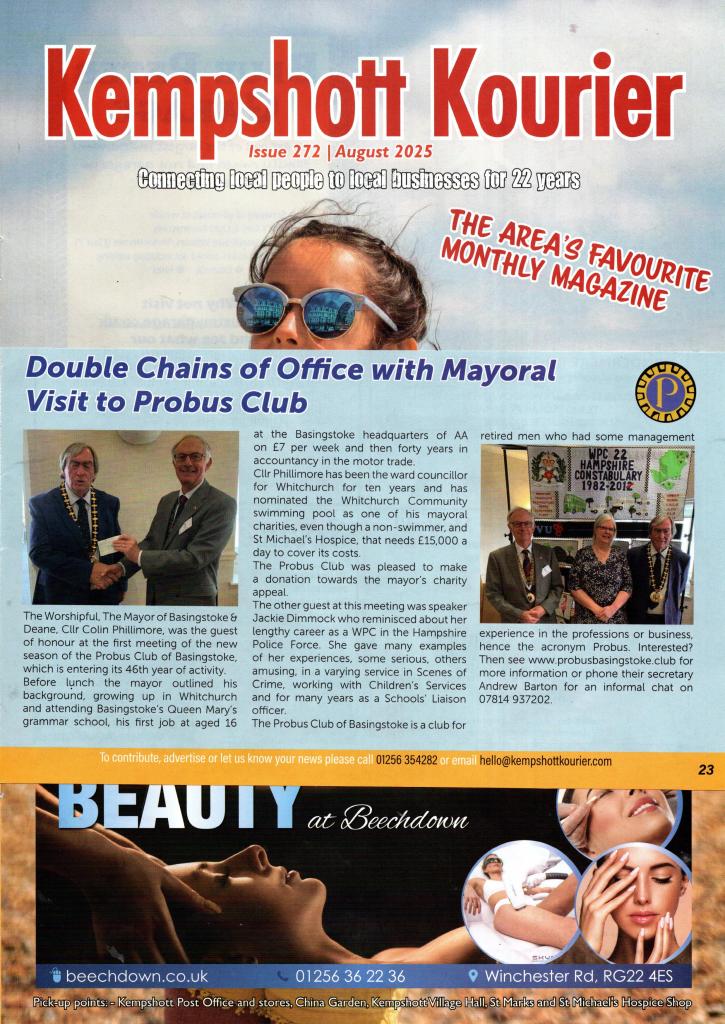
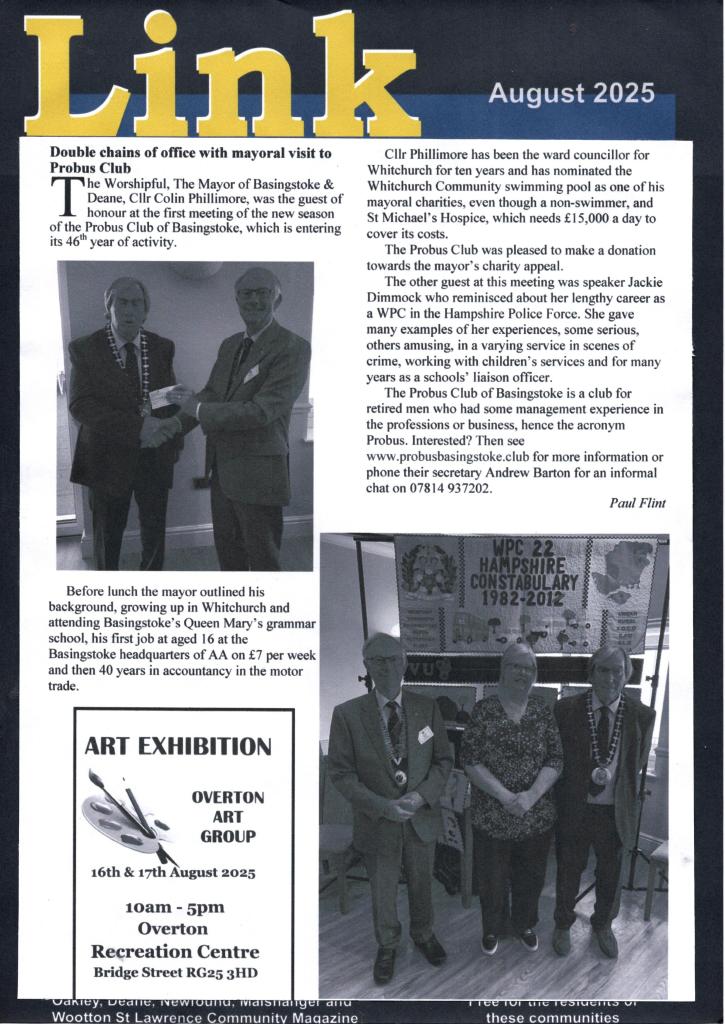
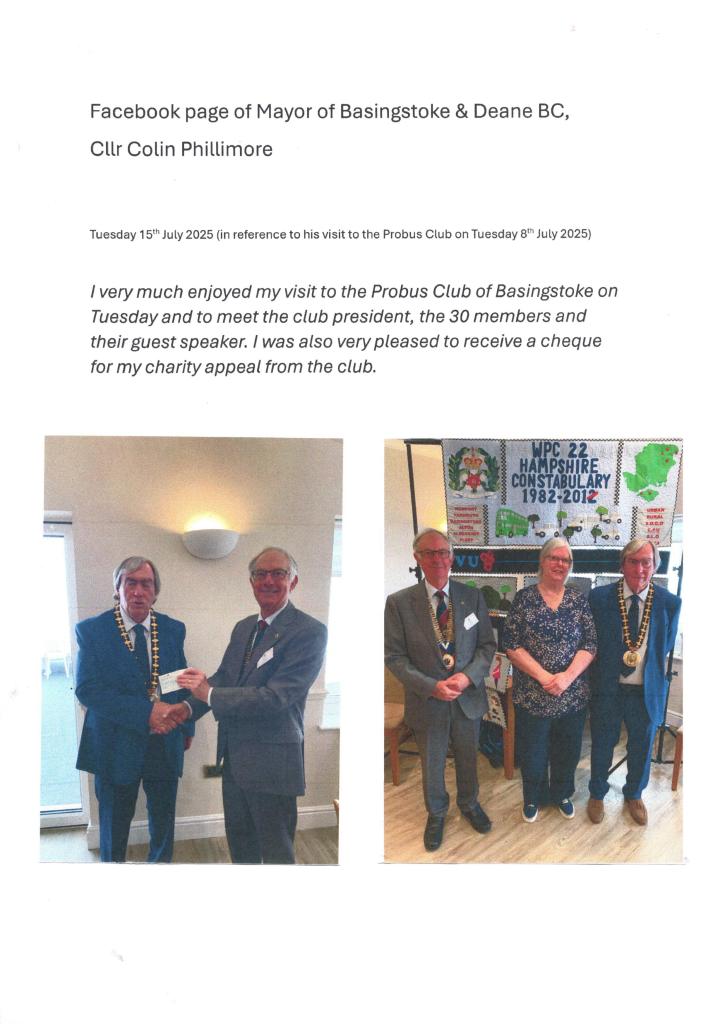
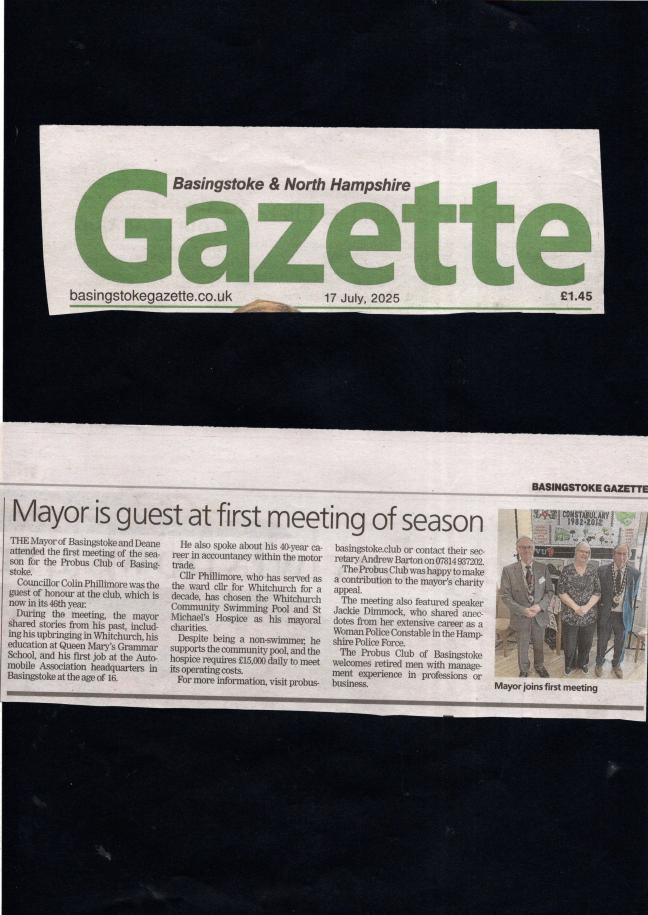
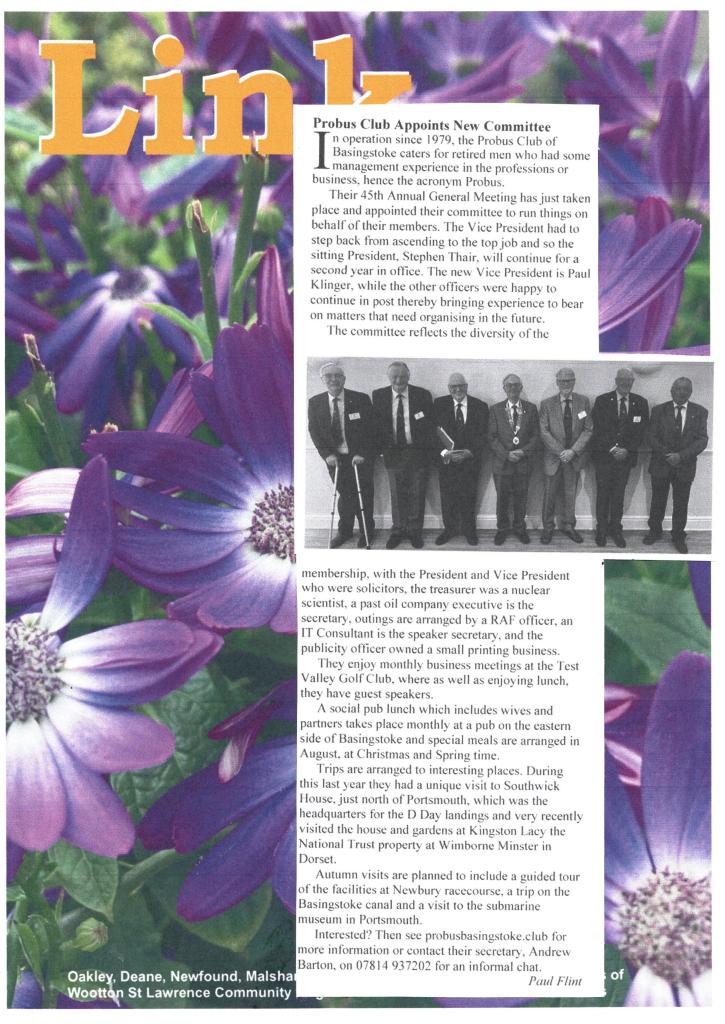
August means only two magazines were available for our publicity notice which were the Kempshott Kourier and the Link magazine covering Oakley and surrounding villages. The Mayor’s Facebook page featured his visit to our July meeting, the Basinga Extra ran a previous report about our new Executive Committee and a rare appearance in the Basingstoke Gazette completed this quiet month.
Mayor of Basingstoke & Deane Cllr Colin Phillimore receives a cheque from President Stephen Thair
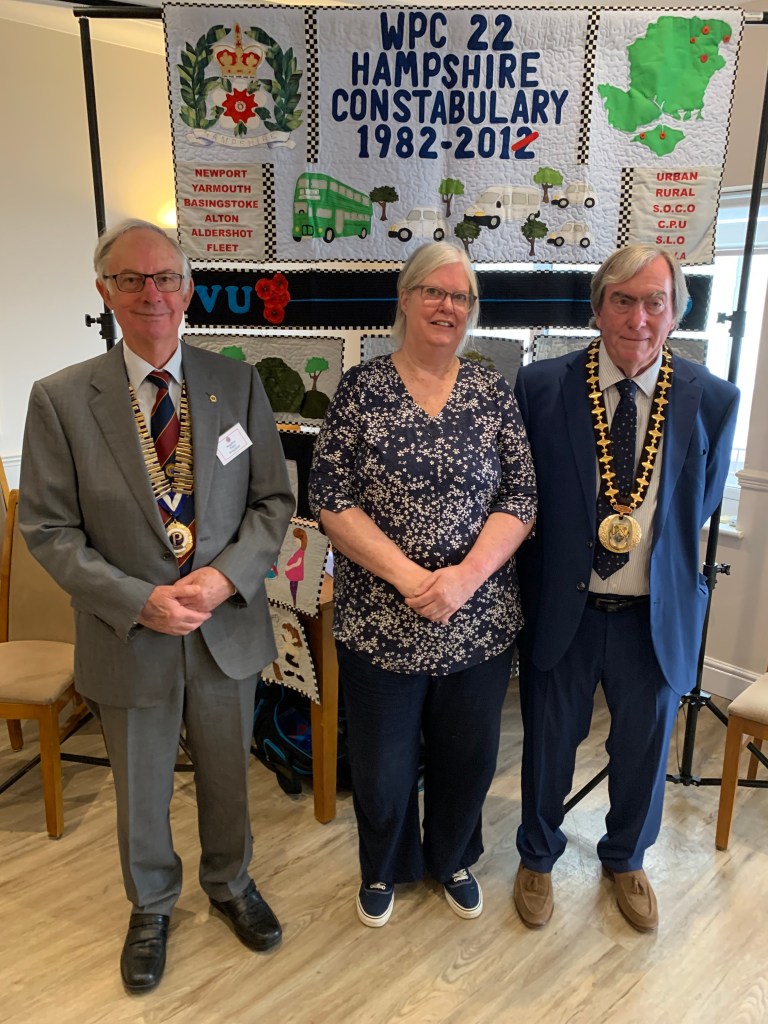
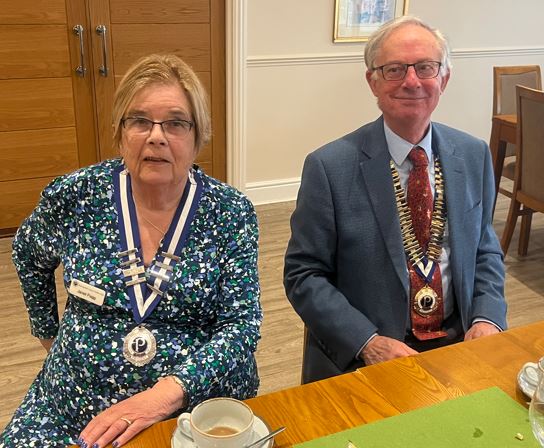
Double Chains of Office with Mayoral Visit to Probus Club
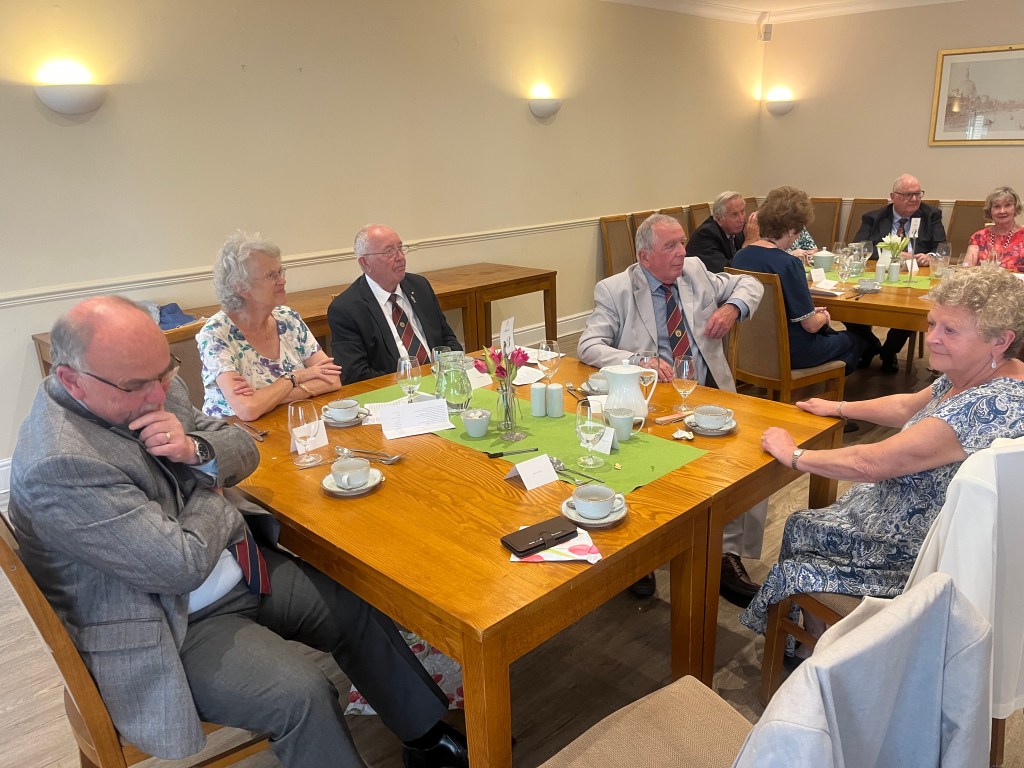
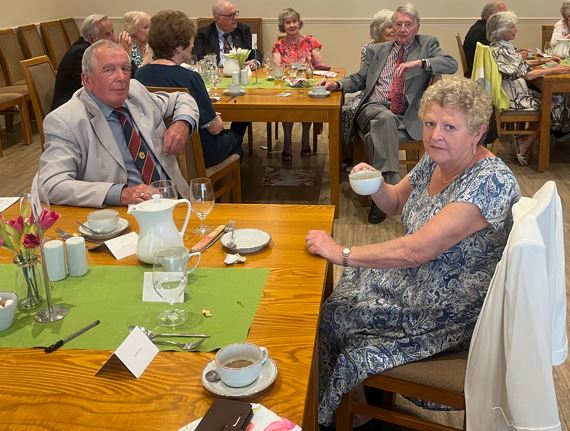
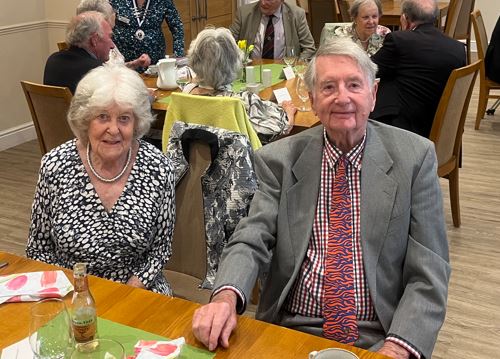
The Worshipful, The Mayor of Basingstoke & Deane, Cllr Colin Phillimore, was the guest of honour at the first meeting of the new season of the Probus Club of Basingstoke, which is entering its 46th year of activity.
Before lunch the mayor outlined his background, growing up in Whitchurch and attending Basingstoke’s Queen Mary’s grammar school, his first job at aged 16 at the Basingstoke headquarters of AA on £7 per week and then forty years in accountancy in the motor trade.
Cllr Phillimore has been the ward councillor for Whitchurch for ten years and has nominated the Whitchurch Community swimming pool as one of his mayoral charities, even though a non-swimmer, and St Michael’s Hospice, that needs £15,000 a day to cover its costs.
The Probus Club was pleased to make a donation towards the mayor’s charity appeal.
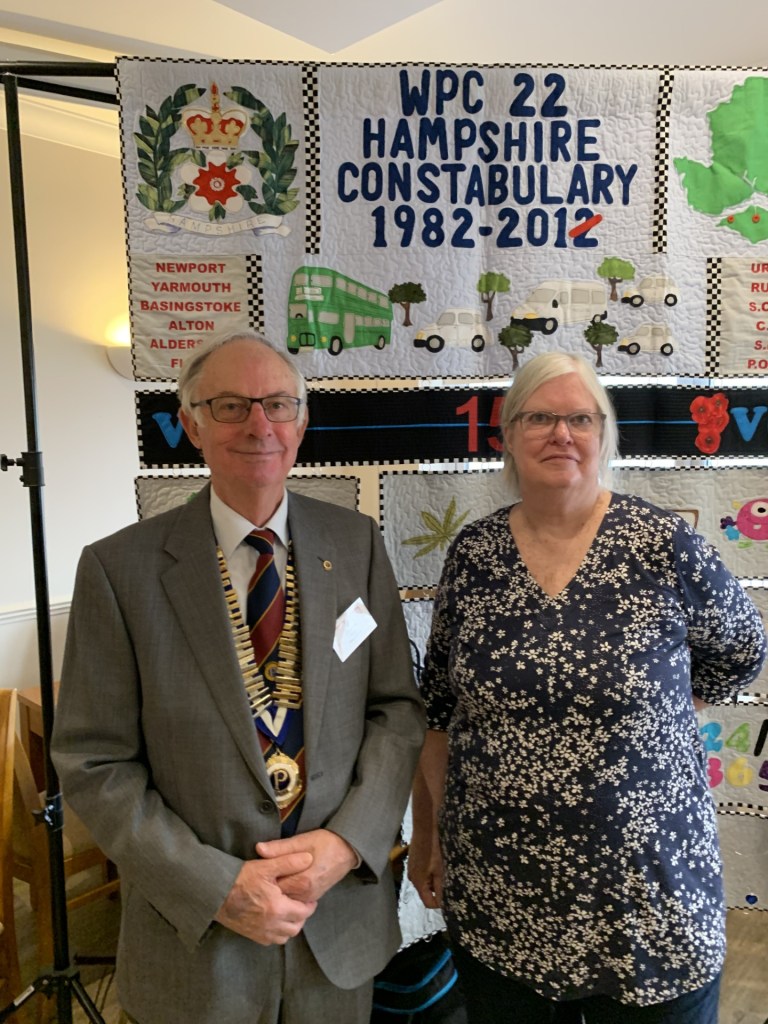
The other guest at this meeting was speaker Jackie Dimmock who reminisced about her lengthy career as a WPC in the Hampshire Police Force. She gave many examples of her experiences, some serious, others amusing, in a varying service in Scenes of Crime, working with Children’s Services and for many years as a Schools’ Liaison officer.
The Probus Club of Basingstoke is a club for retired men who had some management experience in the professions or business, hence the acronym Probus. Interested? Then see www.probusbasingstoke.club for more information or phone their secretary Andrew Barton for an informal chat on 07814 937202.
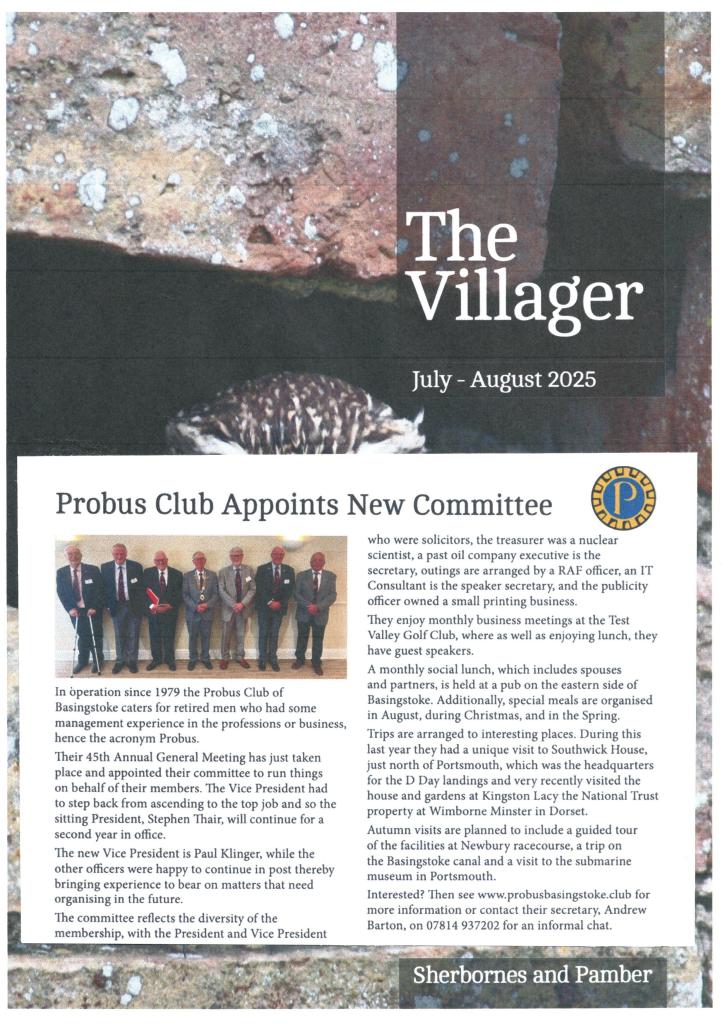
The appointment of the new committee of the Probus Club of Basingstoke was covered by the usual supporting magazines around Basingstoke. The exception was the Loddon Valley Link in Sherfield on Loddon and I failed to see if the Basingstoke Gazette carried our report.
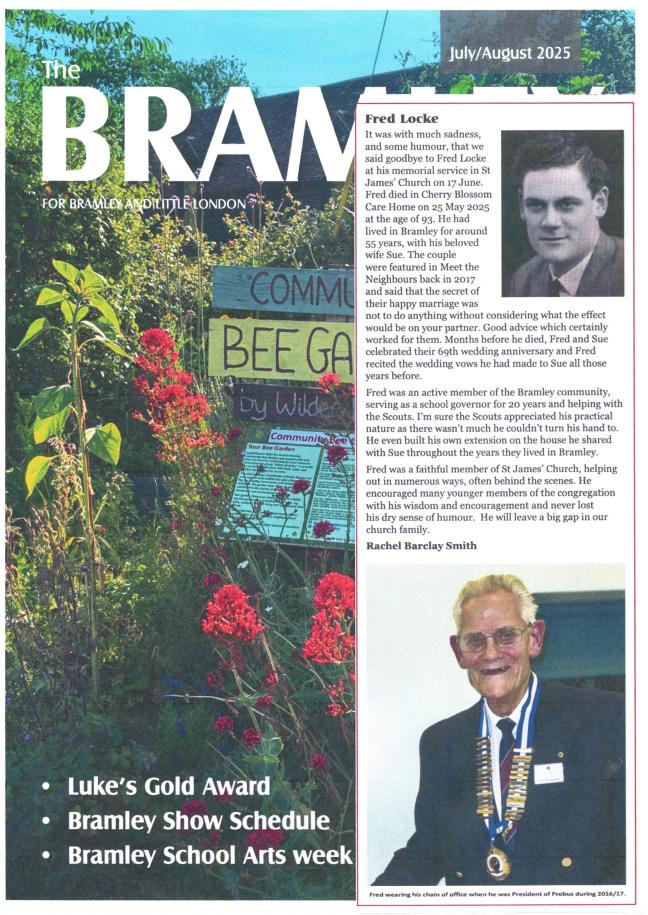
The Bramley magazine also carried a separate report about the funeral of Fred Locke and used part of our photograph when Fred was installed as President in 2016.
SELF-DRIVE TRIP TO KINGSTON LACY – Report by Stephen Thair
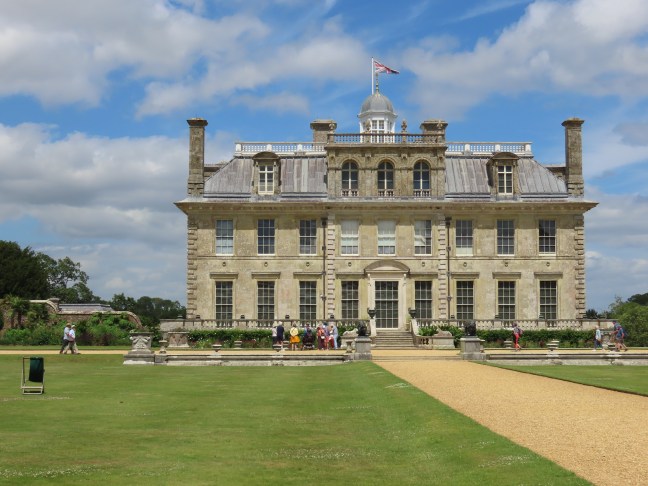
Seventeen members and guests enjoyed an excellent day out to the National Trust property at Kingston Lacy, near Wimborne in Dorset on 26th June. Unfortunately Chris Perkins who had kindly organised the expedition, was indisposed and unable to go.
The House dates mostly from the 1700-1800s and is a “nice size” and set in attractive grounds and gardens. The Bankes family who had owned the estate before donating it to the National Trust had furnished the house with many paintings, including some by Rubens and Titian. One member of the Bankes family had lived in Venice, and sent back paintings and furniture from Italy, including a painted ceiling – the painting (on canvas) dates from the 1600s and was purchased in Italy, taken down from its original location, and shipped to England and then fixed to the ceiling of one of the rooms in the house.
There are two singularly unpleasant paintings each side of the magnificent staircase, which were apparently previously hung in the dining room, and would not have been conducive to enjoyable dining!
Not far from the House is a large stable block which in the best NT tradition, now has the café in it, and some of us gravitated there initially for a coffee.
Lion & Snake Statue
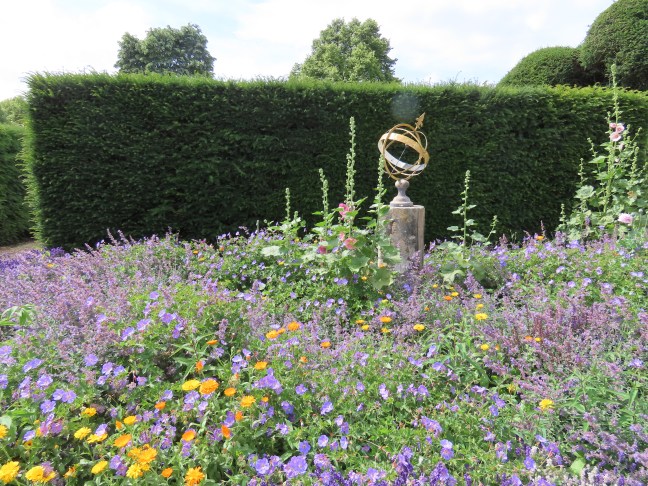
Part of the formal garden
The grounds include a splendid Japanese Garden, which has a Tea Garden within it.
Japanese Garden
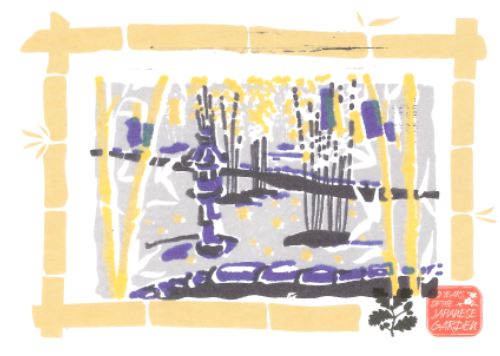
There are four decorated boxes on poles as you go through the garden, and they contain postcards and stamps (not postage) and ink so you can make your own small Japanese-style painting as you proceed through by stamping your card at each box.
Japanese Artwork by Margaret Thair
After passing through the Japanese Garden, you reach the kitchen garden which is very extensive with a lot of greenhouses and a café, and must have produced large quantities of vegetables for the big house in its day.
Enjoying the good weather at Kingston Lacy
There was plenty to see and enjoy and thanks go to Chris Perkins for arranging the trip.
This took place at the Church of St James, Bramley from 1.45 pm following on from a family only cremation. This was a service of remembrance that was attended by 101 people that illustrated how well Fred was known and liked in the village.
Mention was made about Fred’s involvement in the Probus Club and how proud he was to be the president in 2016/17.
Probus members attending were Stephen Thair, Paul Flint & Janet Fagg, Michael & Pam Luck, Alex & Sarah Marianos, Ian & Sandra Nicholson, Chris Perkins, Geoff & Elizabeth Twine, Nick Waring, and Richard Wood.
We have received positive feedback from all local magazines that receive our reports, with the exception of the Loddon Valley Link from Sherfield. A rarity was the Basingstoke Gazette carrying our report.
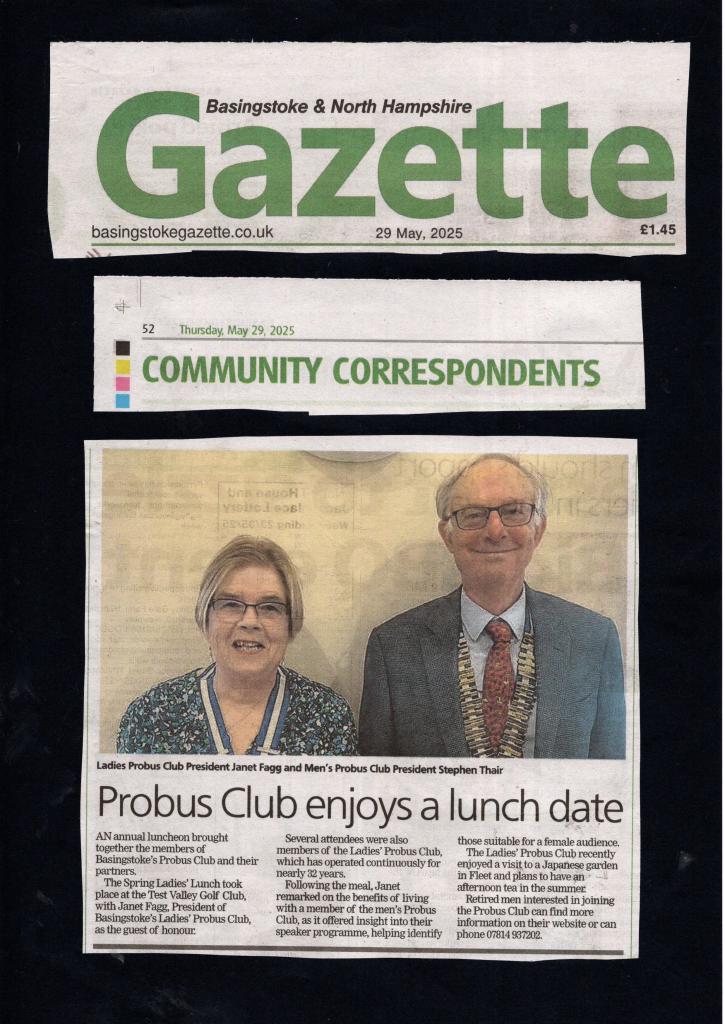
Otherwise, good coverage perhaps because of the two presidents on show which will be welcomed by the Ladies’ Probus Club.
Janet Fagg President of Ladies’ Probus Club with Stephen Thair, President of the Probus Club of Basingstoke
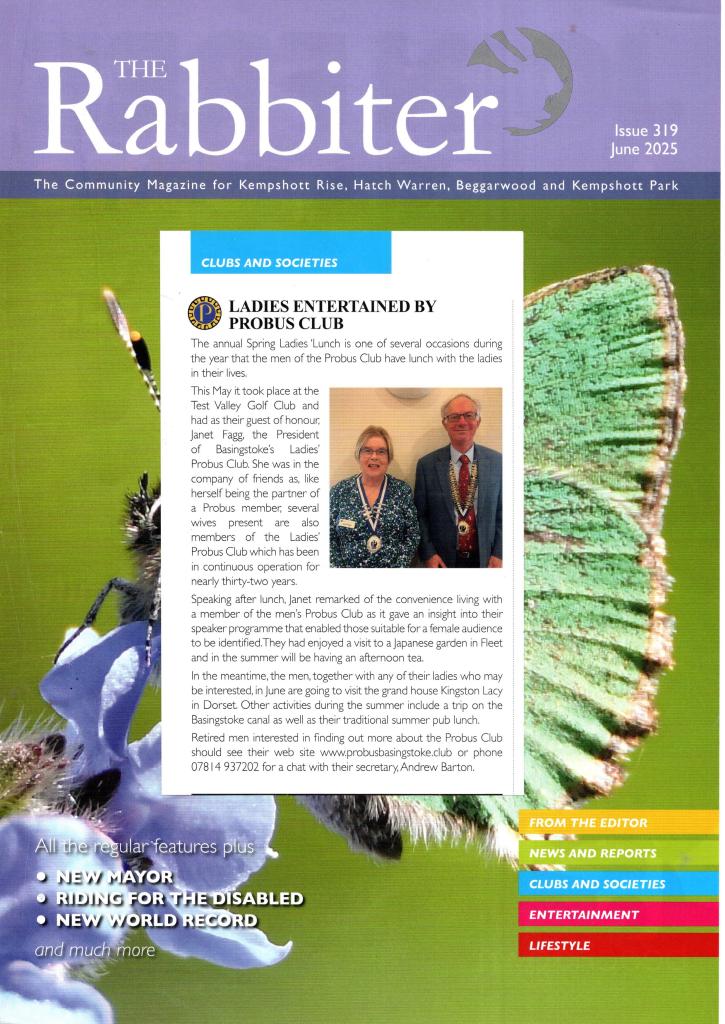
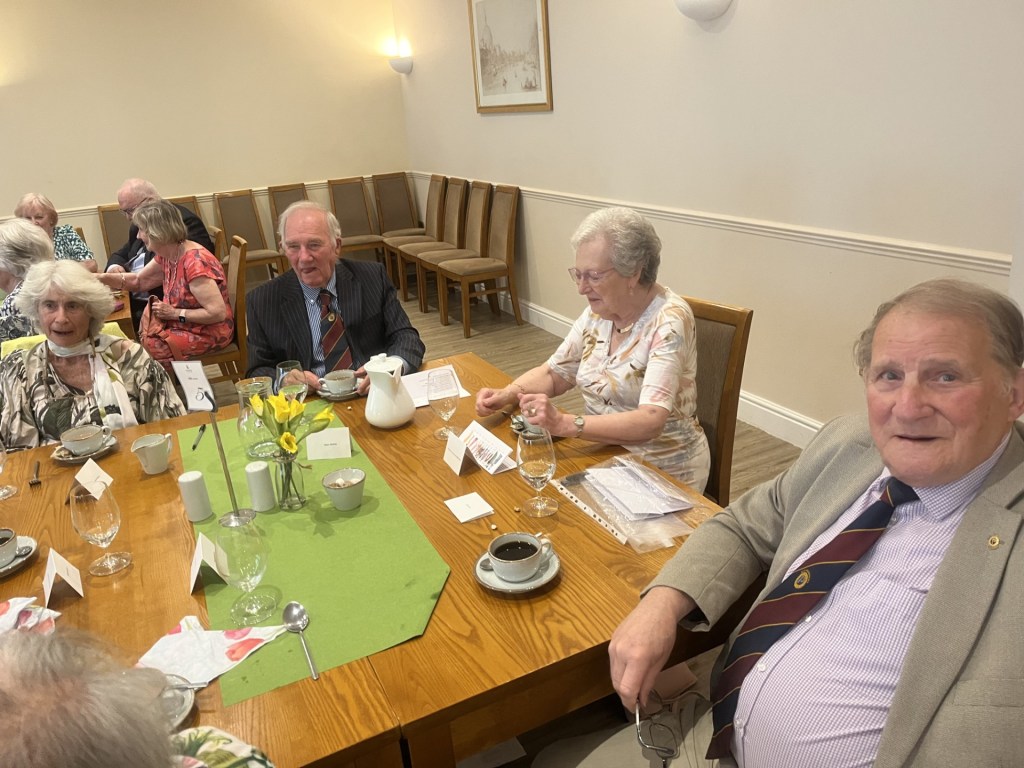
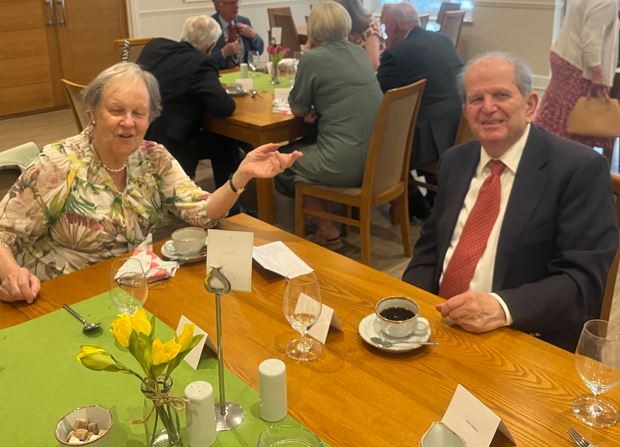
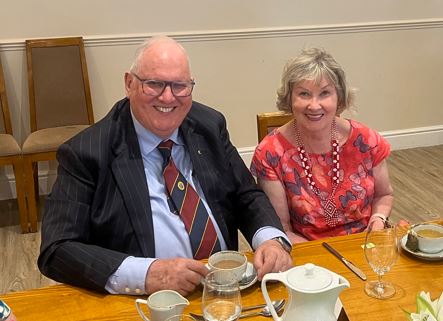
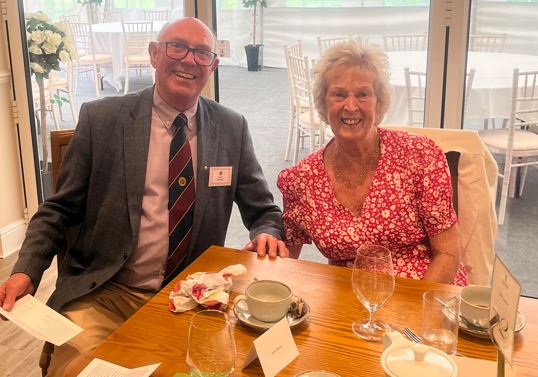
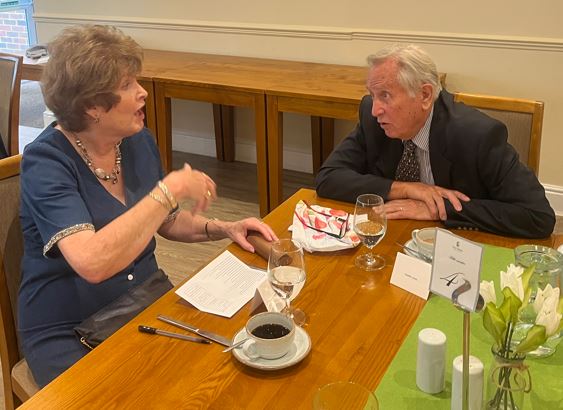
The annual Spring Ladies ‘Lunch is one of several occasions during the year that the men of the Probus Club have lunch with the ladies in their lives.
This May it took place at the Test Valley Golf Club and had as their guest of honour, Janet Fagg, the President of Basingstoke’s Ladies’ Probus Club. She was in the company of friends as, like herself being the partner of a Probus member, several wives present are also members of the Ladies’ Probus Club which has been in continuous operation for nearly thirty-two years.
Speaking after lunch, Janet remarked of the convenience living with a member of the men’s Probus Club as it gave an insight into their speaker programme that enabled those suitable for a female audience could be identified. They had enjoyed a visit to a Japanese garden in Fleet and in the summer will be having an afternoon tea.
In the meantime, the men, together with any of their ladies who may be interested, in June are going to visit the grand house Kingston Lacy in Dorset. Other activities during the summer include a trip on the Basingstoke canal as well as their traditional summer pub lunch.
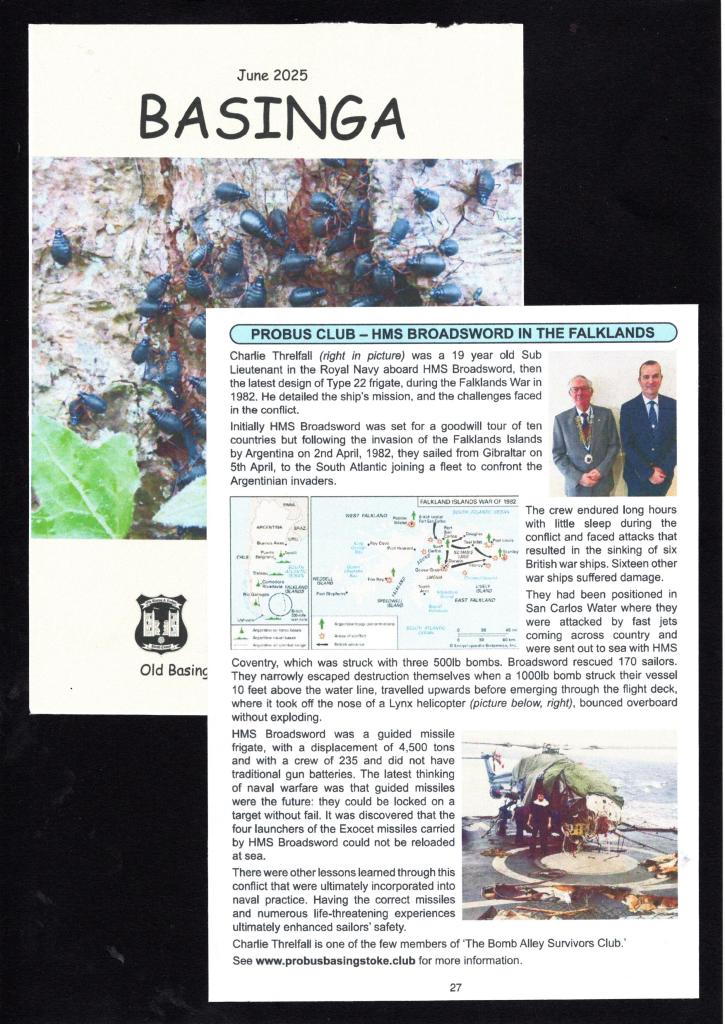
Good coverage in all the local magazines in May and several full pages have had to be reduced to fit on the front covers on our web site. You will see that the Basinga and the Kempshott Kourier carried the Jaguar story while the remainder used the HMS Broadsword report about the 1982 Falklands war.
The Loddon Valley Link also joined in with both our HMS Broadsword feature as well as a report about the Ladies’ Probus Club visiting a Japanese garden in Fleet, as did the Rabbiter, Bramley, Villager and the Basingstoke Gazette.
President Stephen Thair with speaker Charlie Threlfall
For speaker Charlie Threlfall, as a short-term Royal Navy officer, the prospect of a goodwill tour of ten countries had great appeal.
Aged 19 in early April 1982 he was on HMS Broadsword at anchor in Gibraltar. They were readying for a series of social events and cocktail parties across the world as they planned to show off their three years old warship. Launched in 1979 as a Type 22 Guided Missile Frigate with a displacement of 4,500 tons and a crew of 235, HMS Broadsword was the epitome of the latest thinking in naval warfare. It had no traditional gun batteries but an assortment of guided missiles that could lock on a target without fail.
HMS Broadsword
That very week, on 2nd April 1982, Sub Lieutenant Charlie Threlfall’s life changed forever. The Falkland Islands in the South Atlantic were invaded by Argentinian forces. On 5th April HMSBroadsword left Gibraltar heading for Ascension Island, about halfway to the Malvinas, as the Argentinians called this British protectorate.
There, a group of twenty war ships and supply vessels was assembled, painting out any identification marks to confuse any attacking forces. Southbound, they sailed in close convoy using no radar and no lights at night so that they could not be located by the enemy. The crew went on Defence Watches of six hours on, six hours off. They were lucky to get four hours sleep each day for ten weeks.
The British submarine Conqueror sank the Argentinian cruiser General Belgrano on 2 May. Questions were asked in Britain if it was a legitimate target as it was purported to be sailing away from the conflict zone, a situation denied years later by the ship’s captain. All Argentinian naval ships were ordered back to port and then only aerial attacks continued at the extreme limits of their range.
Action stations came on 4h May when HMS Sheffield was hit by an air launched anti-ship Exocet missile. 170 sailors from the Sheffield were rescued by Broadsword.
HMS Broadsword, along with HMS Coventry were positioned in San Carlos Water, and were unable to spot enemy aircraft approaching over land, and were strafed and bombed, being unable to offer much resistance. Crew were instructed not to shoot at helicopters only fast jets.
Broadsword and Coventry were then positioned at sea to the west of the Falklands to draw aircraft fire from the troops. With two approaching enemy jets HMS Coventry was hit by three 500lb bombs, caught fire and eventually sank. But as it came across the bow of Broadsword it prevented them from firing their missiles.
It was then discovered that at sea it was impossible to reload the four Exocet launchers on Broadsword once the initial four missiles had been fired. One of many lessons learnt during this conflict and that were eventually incorporated into naval practice. Having the correct missiles and numerous life-threatening experiences ultimately enhanced sailors’ safety.
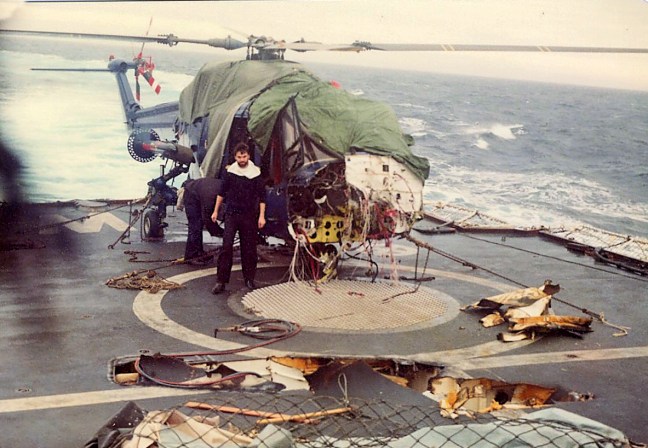
HMS Broadsword had a narrow escape from following the fate of HMS Coventry as a 1000lb bomb travelling at 450 mph hit the ship towards the stern, 10 feet above water level, travelled through two decks and emerged upwards through the flight deck, where it took off the nose of a Lynx helicopter, and bounced overboard, failing to explode.
Lynx Helicopter Missing its Nose
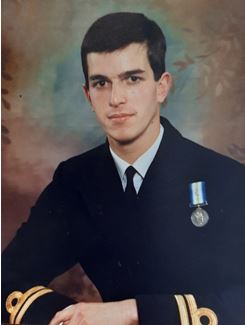
Charlie Threlfall promoted to Lieutenant
Six British war ships were lost and sixteen damaged during this conflict. 649 Argentinian military personnel, 255 British and three civilian islanders lost their lives. Charlie Threlfall knows the name of the Argentinian pilot who sent the 1000lb bomb into the side of HMS Broadsword. He says he would never shake his hand as two of his fellow schoolboys from his street on the Isle of Wight were in this conflict. One was a cook and was killed in this action while another, like himself, survived, thereby becoming a member of the ‘Bomb Alley Survivors Club’
























 Probus Club of Basingstoke
You must be logged in to post a comment.