A good result for our publicity in the October publications with six magazines and the Basingstoke Gazette giving coverage to the report on Life on the Magistrates’ Bench. Perhaps the upright standing of the various editors encouraged their interest about the goings on in the local magistrates’ court.
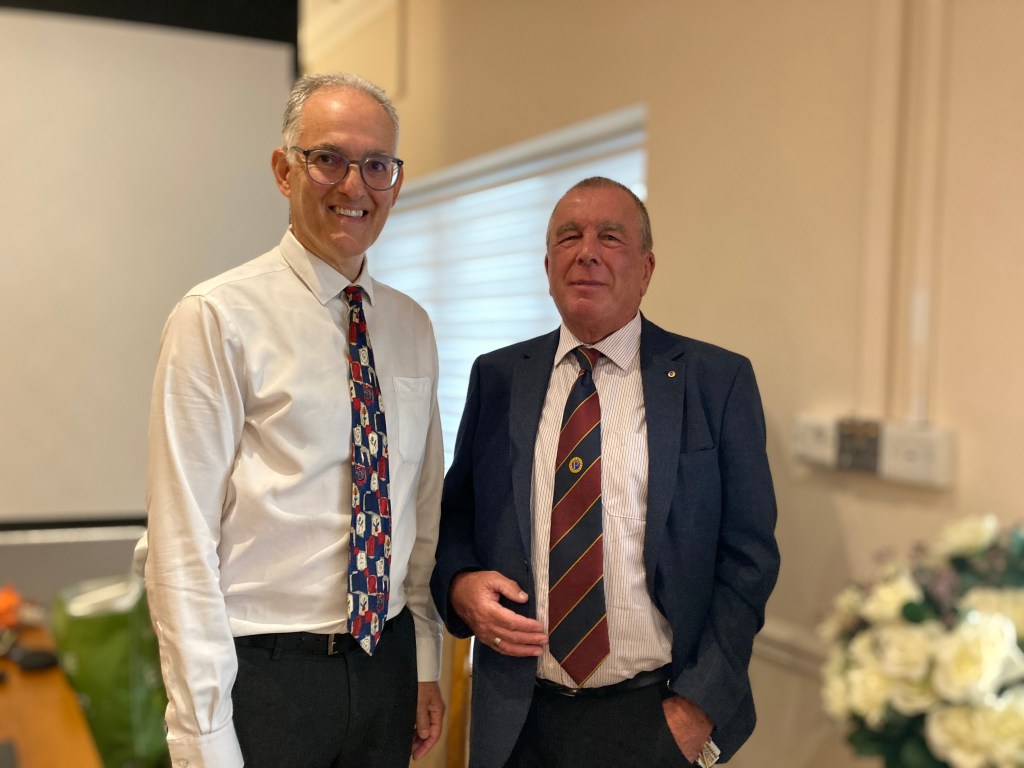
Dr Tony Hersh JP with Vice President Dr Jeff Grover
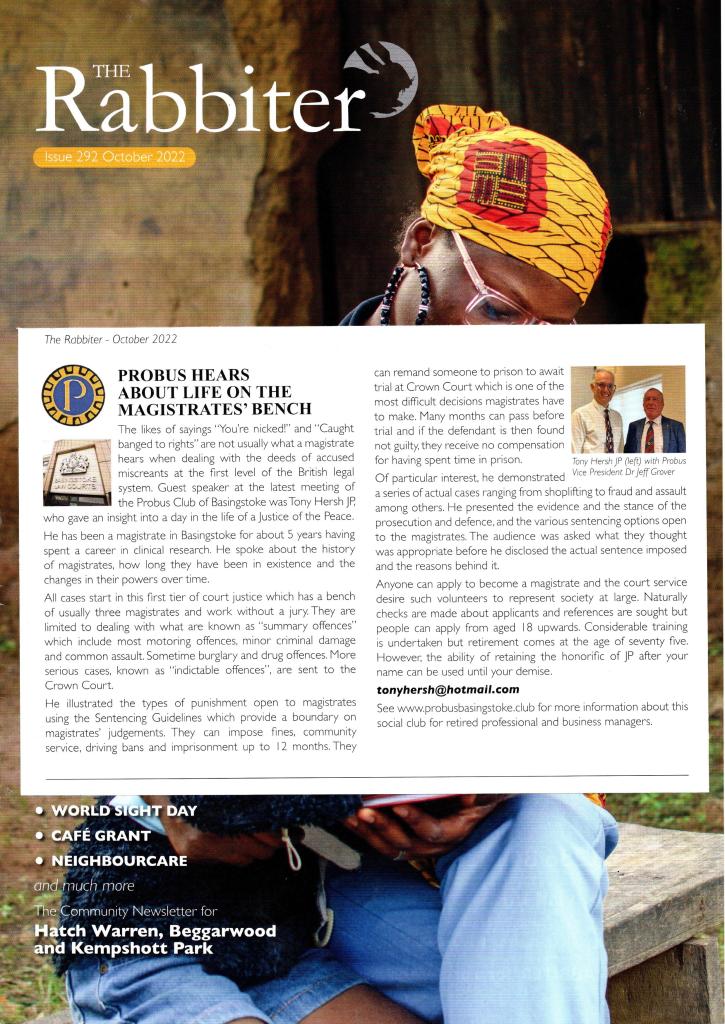
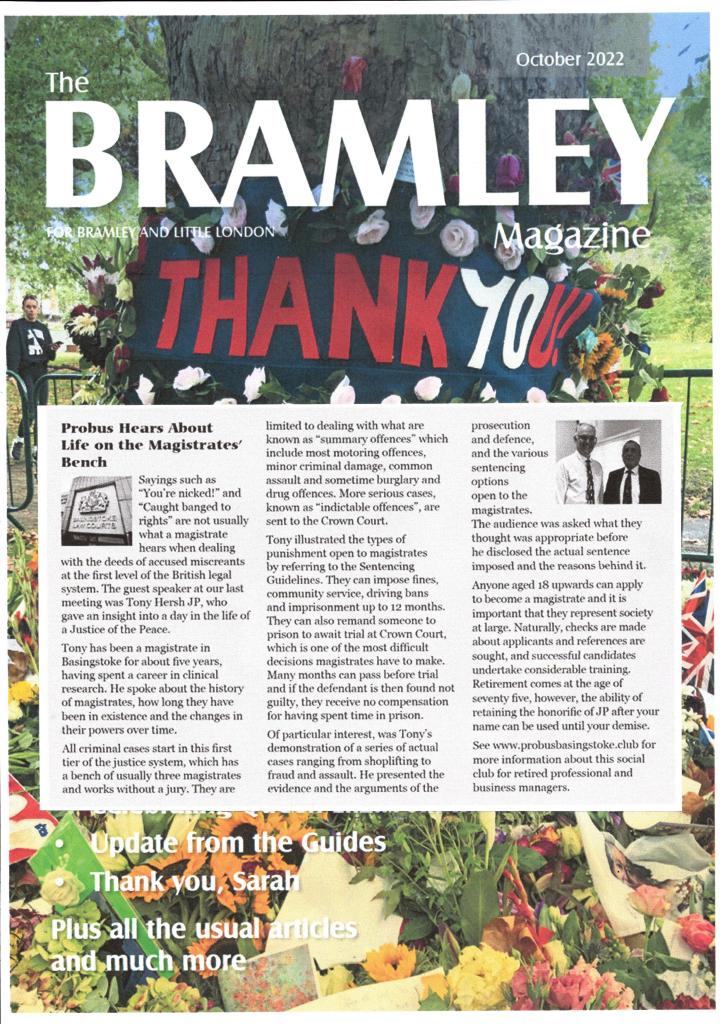
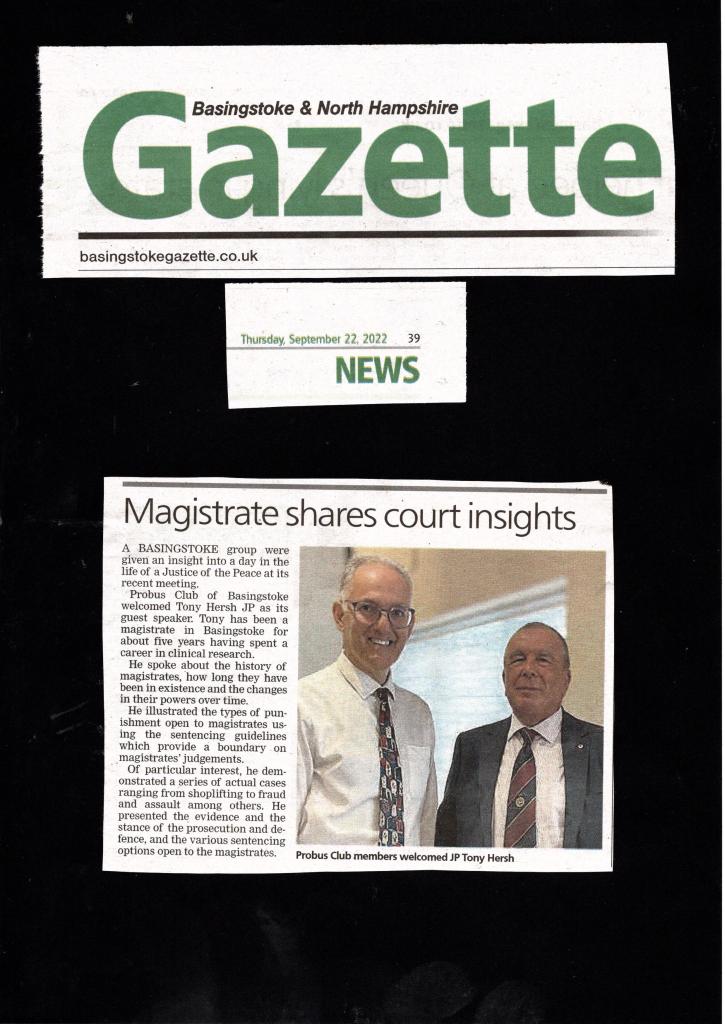
The likes of sayings “You’re nicked!” and “Caught banged to rights” are not usually what a magistrate hears when dealing with the deeds of accused miscreants at the first level of the British legal system. Guest speaker at the latest meeting of the Probus Club of Basingstoke was Tony Hersh JP, who gave an insight into a day in the life of a Justice of the Peace.
He has been a magistrate in Basingstoke for about 5 years having spent a career in clinical research. He spoke about the history of magistrates, how long they have been in existence and the changes in their powers over time.
All cases start in this first tier of court justice which has a bench of usually three magistrates and work without a jury. They are limited to dealing with what are known as “summary offences” which include most motoring offences, minor criminal damage and common assault. Sometime burglary and drug offences. More serious cases, known as “indictable offences”, are sent to the Crown Court.
He illustrated the types of punishment open to magistrates using the Sentencing Guidelines which provide a boundary on magistrates’ judgements. They can impose fines, community service, driving bans and imprisonment up to 12 months. They can remand someone to prison to await trial at Crown Court which is one of the most difficult decisions magistrates have to make. Many months can pass before trial and if the defendant is then found not guilty, they receive no compensation for having spent time in prison.
Of particular interest, he demonstrated a series of actual cases ranging from shoplifting to fraud and assault among others. He presented the evidence and the stance of the prosecution and defence, and the various sentencing options open to the magistrates. The audience was asked what they thought was appropriate before he disclosed the actual sentence imposed and the reasons behind it.
Anyone can apply to become a magistrate and the court service desire such volunteers to represent society at large. Naturally checks are made about applicants and references are sought but people can apply from aged 18 upwards. Considerable training is undertaken but retirement comes at the age of seventy five. However, the ability of retaining the honorific of JP after your name can be used until your demise.
The report on our Summer Pub Lunch was received well as six magazines and one web site gave us coverage. Perhaps the photograph of a relaxed mayor and mayoress helped in this regard.
We featured in five local magazines and one local newspaper since the last report. Two magazines do not publish in August (Rabbiter and the Bramley Mag) and the Basingstoke Observer report is from their 21 July edition (they publish fortnightly).
This report is late, yet again, as I only received the Kempshott Kourier this morning and it is not possible to blame the lateness on a local deliverer as we are the distributers around our retirement complex.
All the publications ran with the report about the mayor’s official visit.
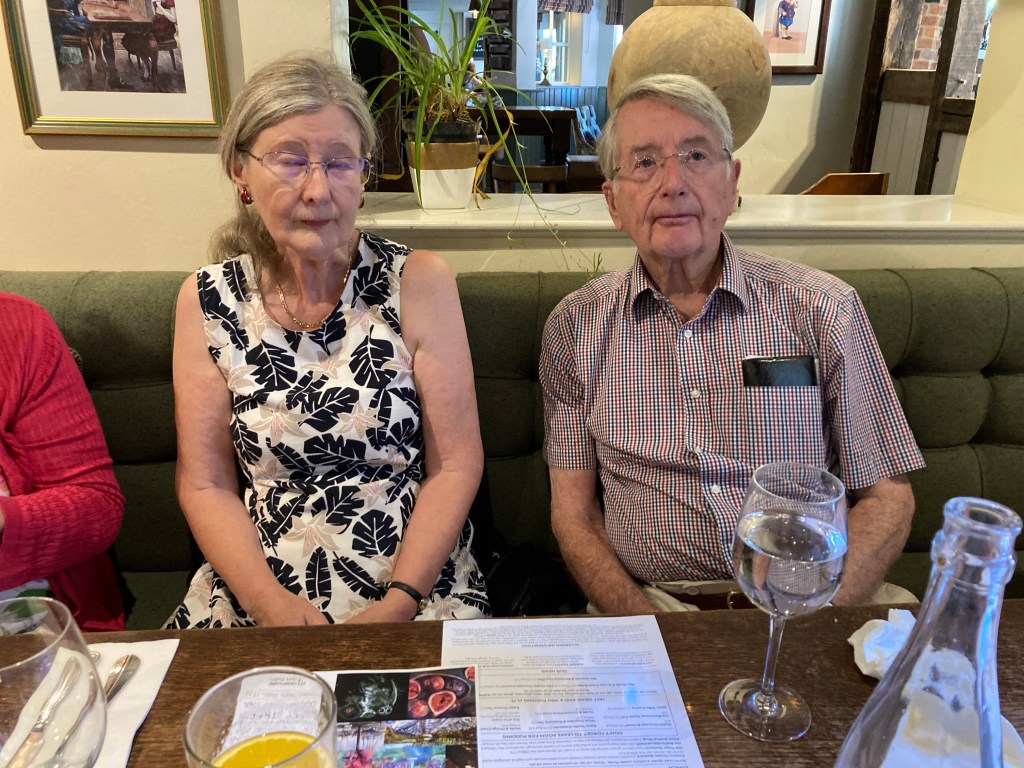
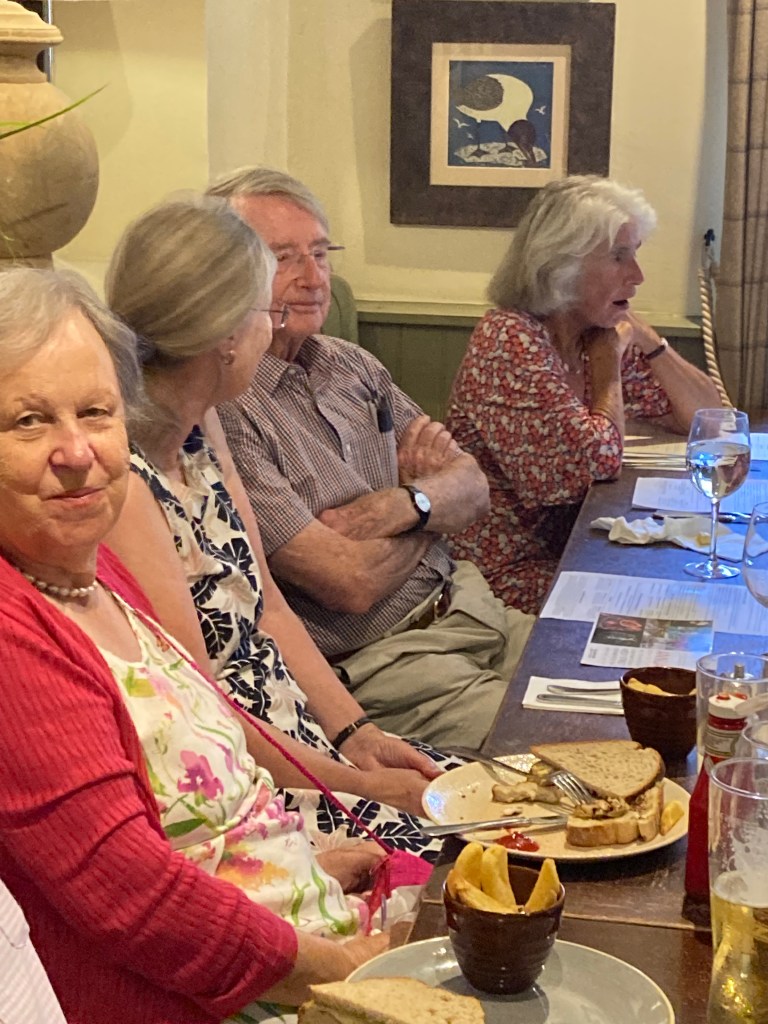
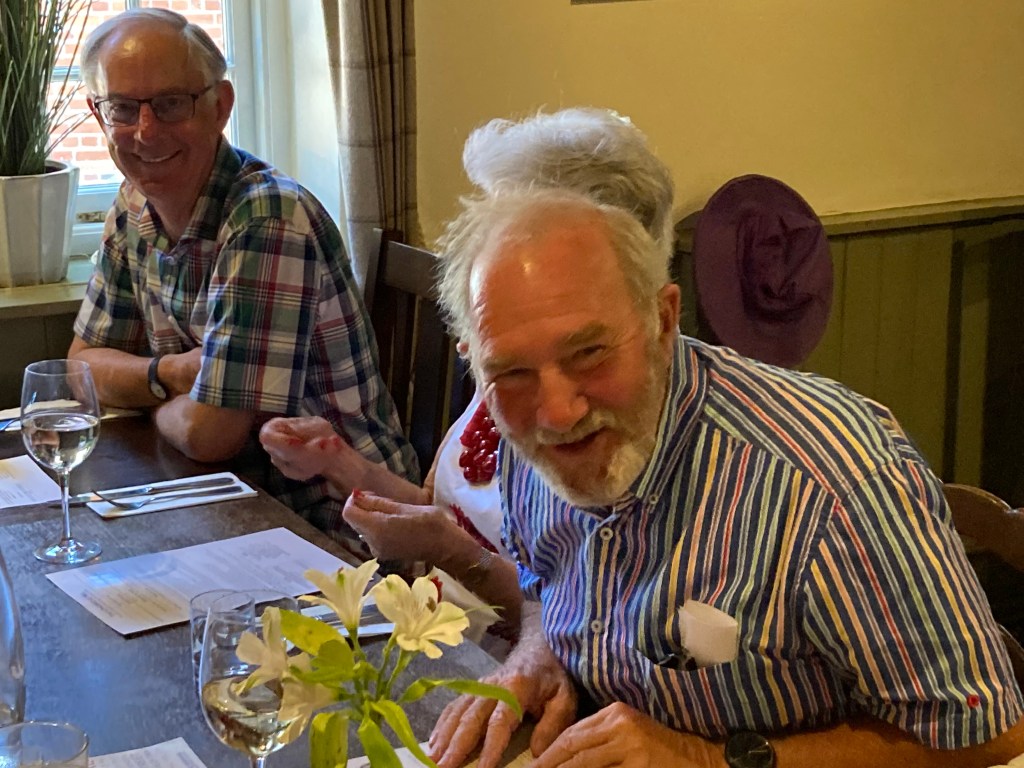
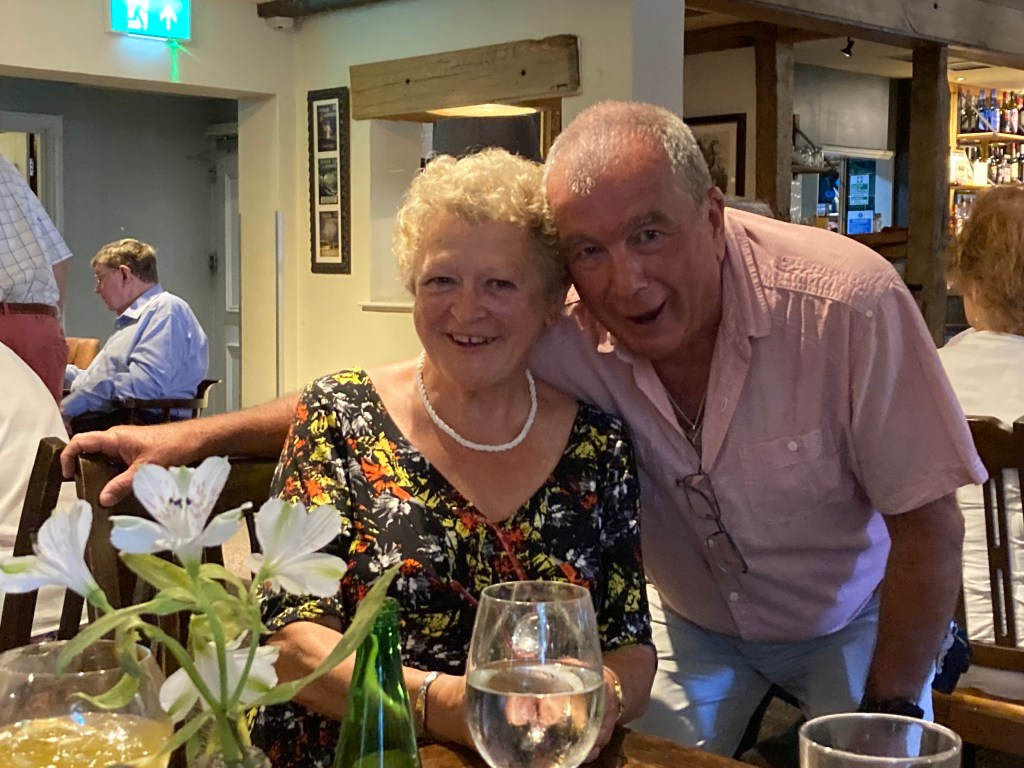
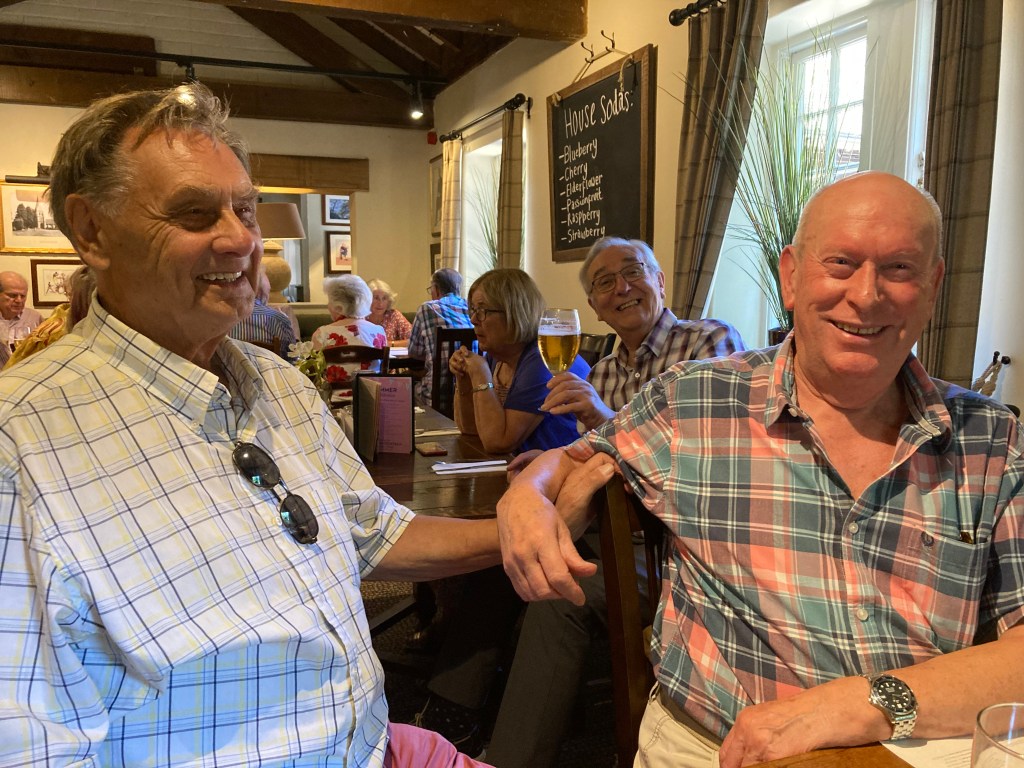
A repeat of hostelry choice this year with the Longbridge Mill on the A33 at Sherfield-on-Loddon for the annual Summer Pub Lunch. A few eager beavers arrived a little before the appointed time and had to wait in the baking sun until the door was opened spot on noon.
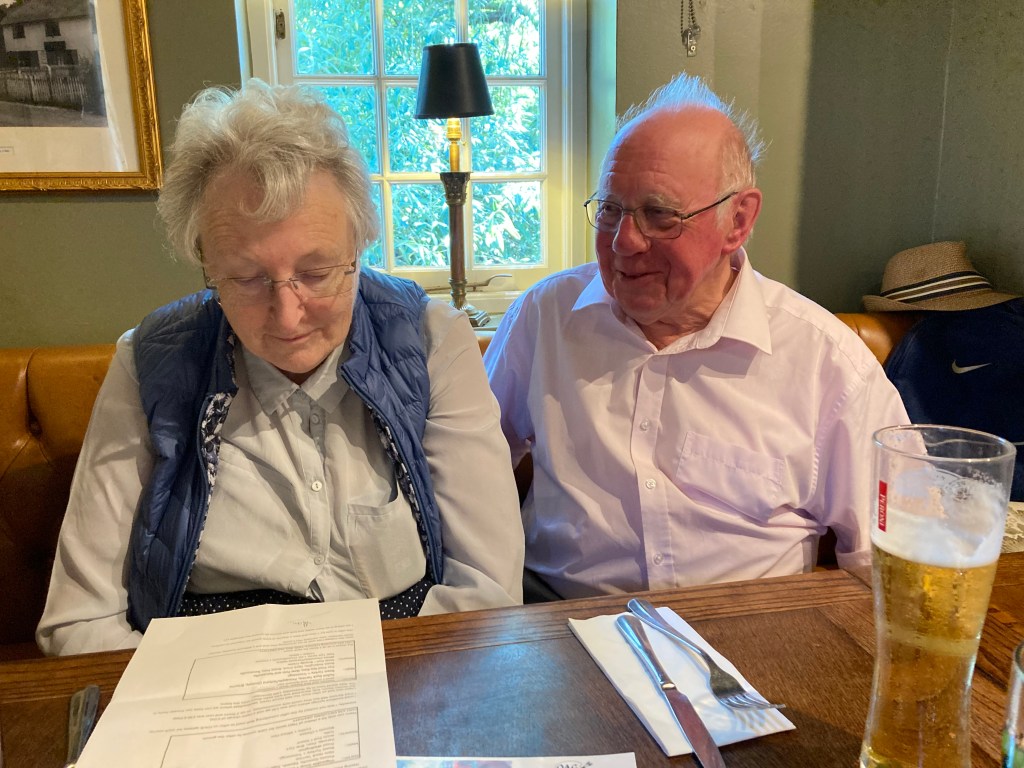
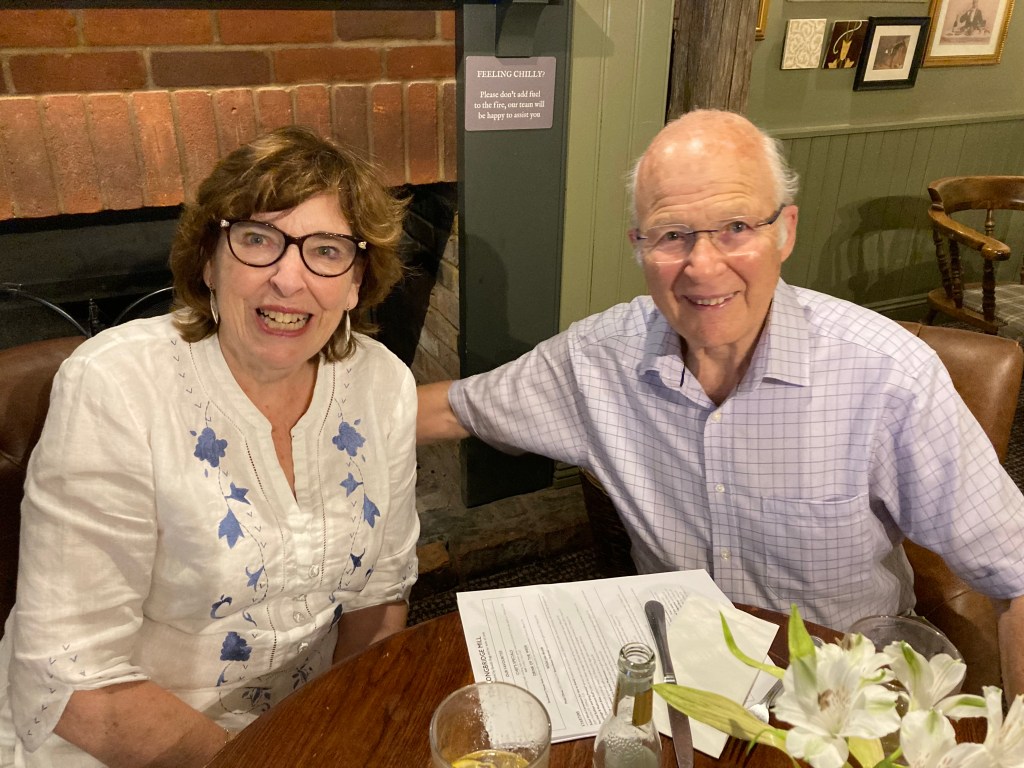
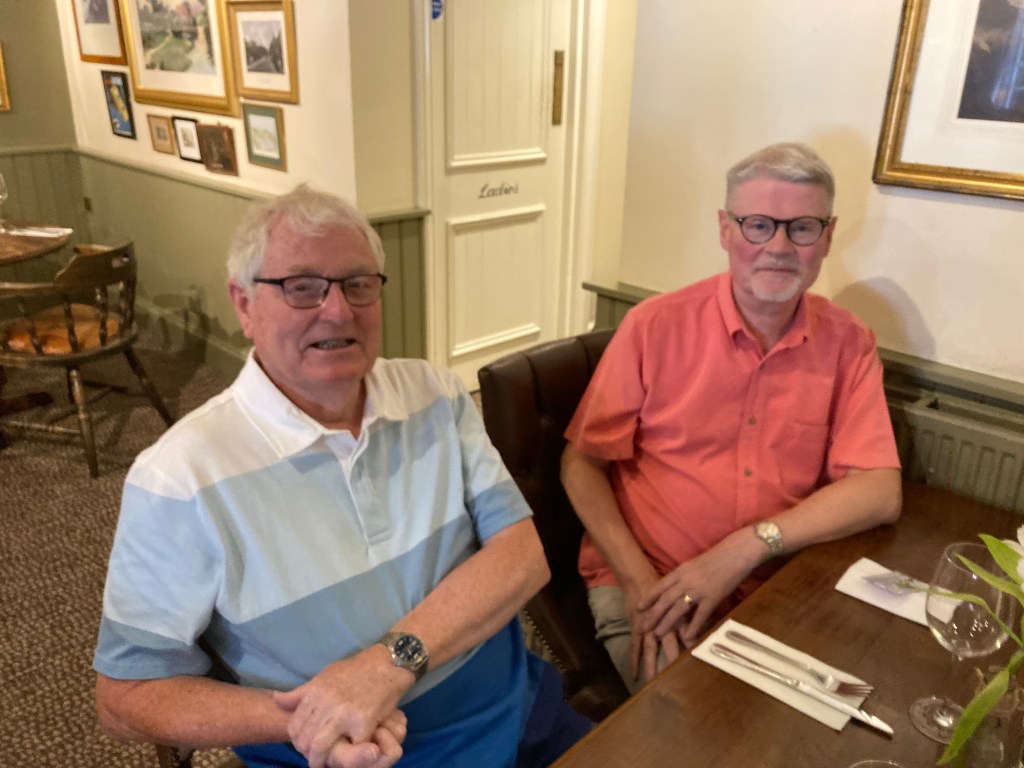
A special area had been arranged for our party of twenty-nine, including the young granddaughter of Alan & Liliane May and we settled down across six different sized tables. Then came the usual problem of deciding on what to drink and eat from the extensive choices available. Some managed three courses and coffee while others had to settle with two courses and no coffee, but a very pleasant time was had by all.
And it was good to see Paul & Sandra Miller with friends, away from their mayoral duties. Also grateful thanks to the photographer of the day, Jeff Grover.
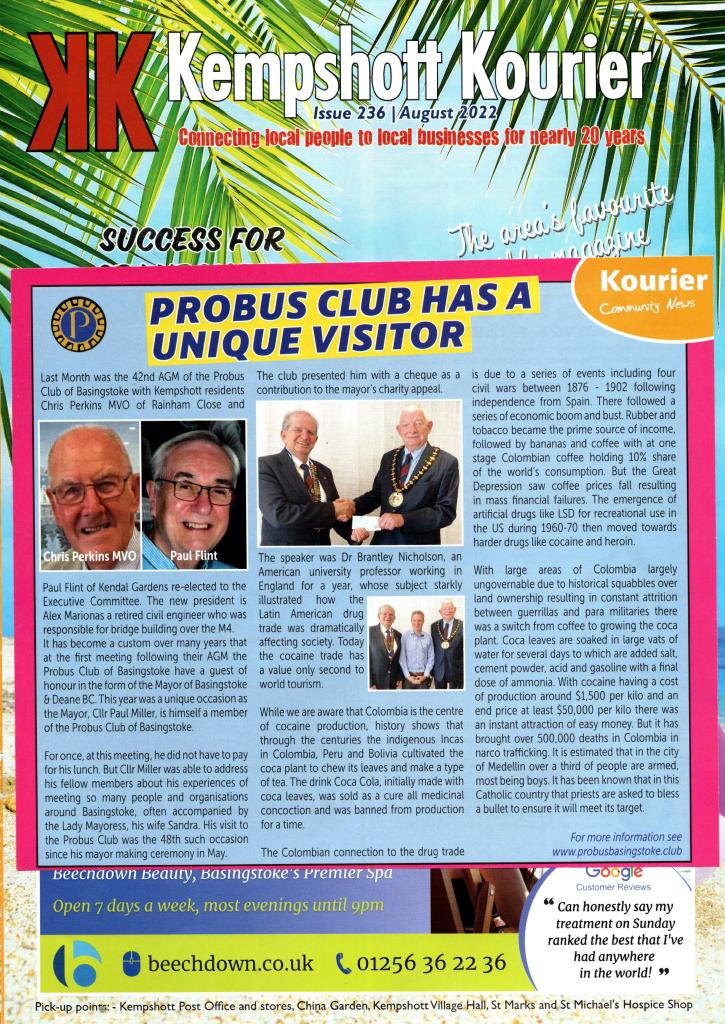
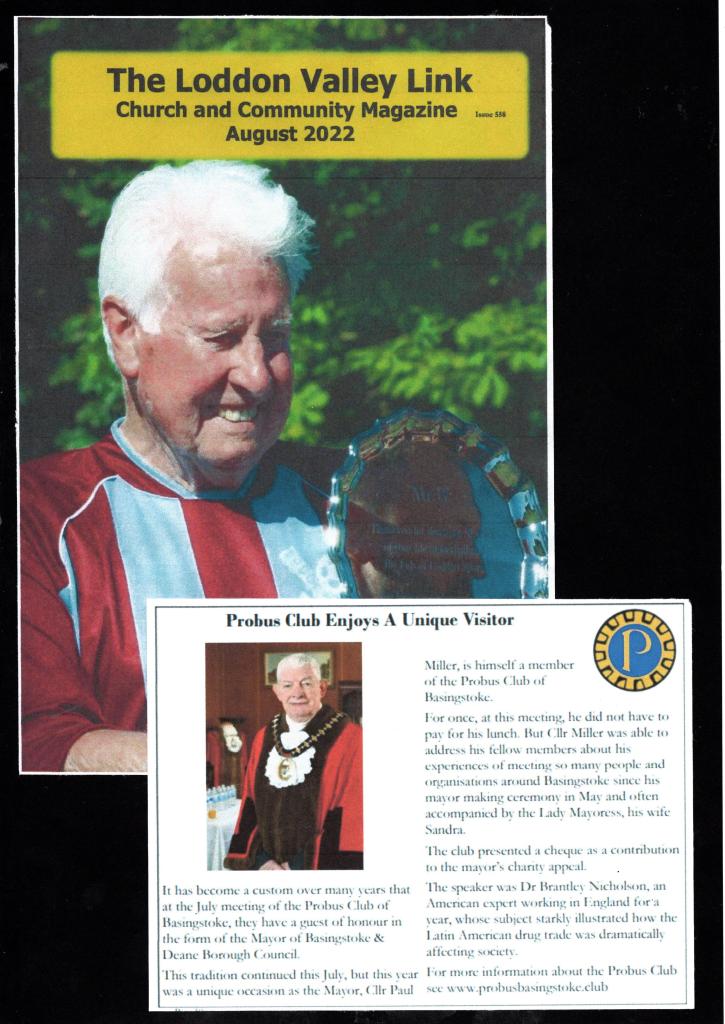
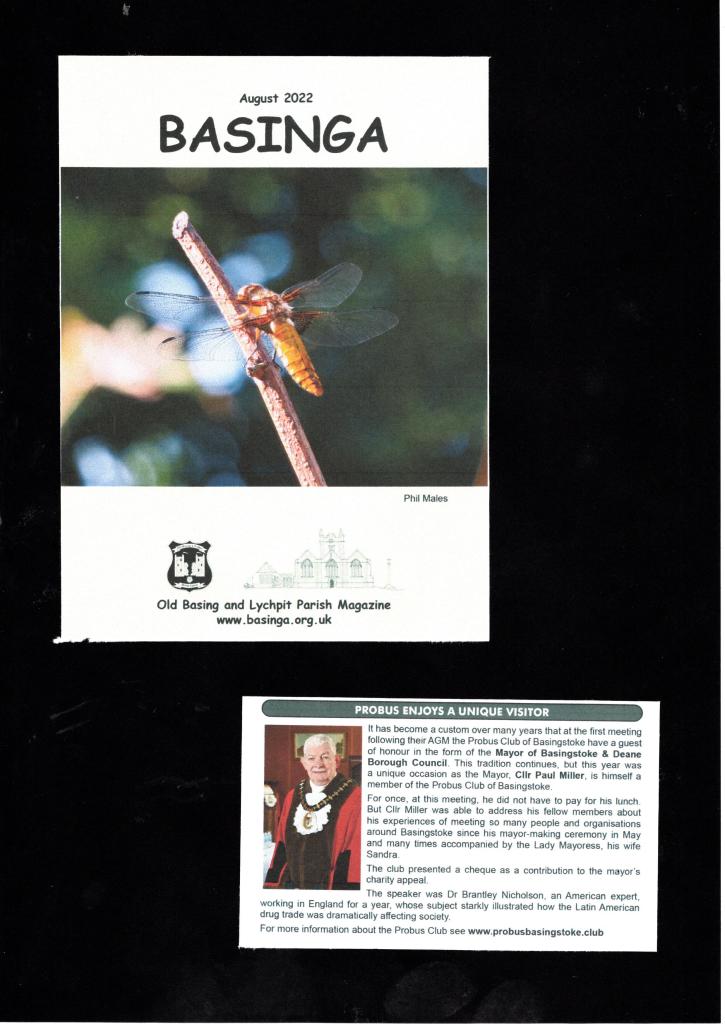
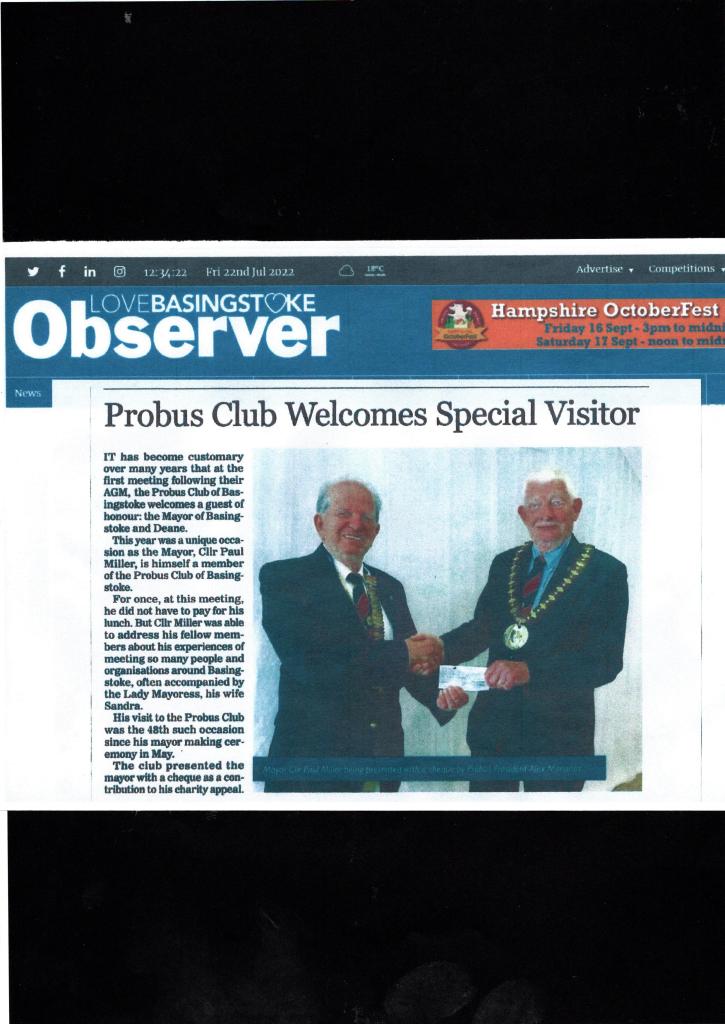
It has become a custom over many years that at the first meeting following their AGM the Probus Club of Basingstoke have a guest of honour in the form of the Mayor of Basingstoke & Deane BC. This year was a unique occasion as the Mayor, Cllr Paul Miller, is himself a member of the Probus Club of Basingstoke.
For once, at this meeting, he did not have to pay for his lunch. But Cllr Miller was able to address his fellow members about his experiences of meeting so many people and organisations around Basingstoke, often accompanied by the Lady Mayoress, his wife Sandra. His visit to the Probus Club was the 48th such occasion since his mayor making ceremony in May.
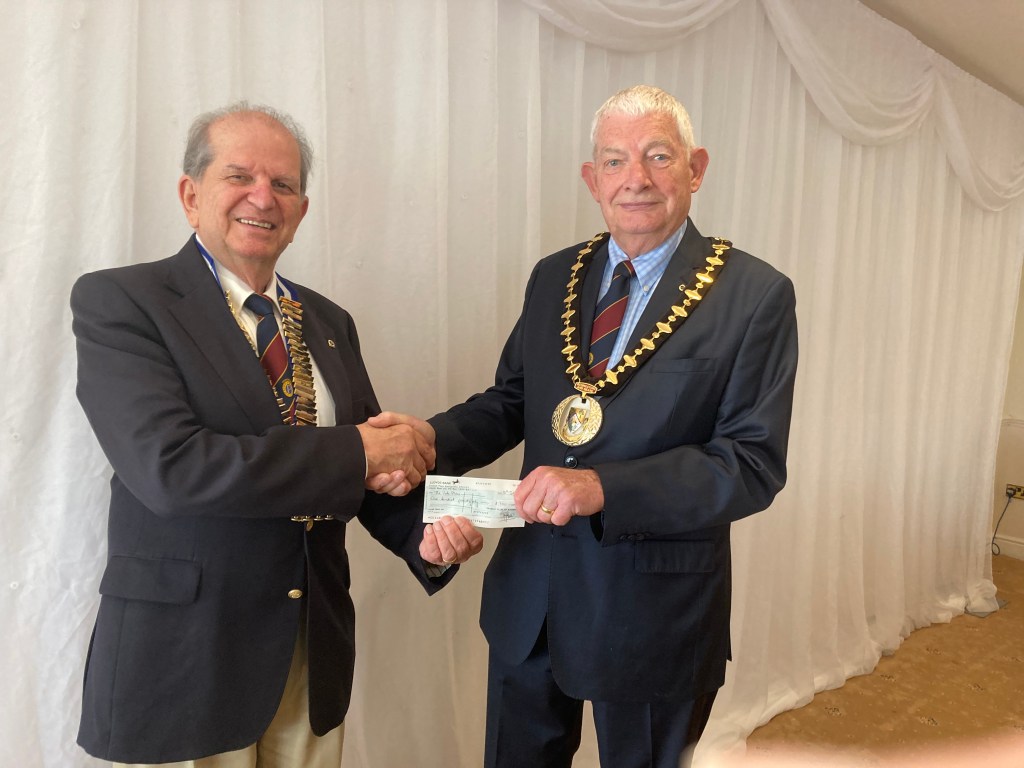
President Alex Marianos presents a cheque to the Mayor Cllr Paul Millerfor his charity appeal
The club presented him with a cheque as a contribution to the mayor’s charity appeal.
The speaker was Dr Brantley Nicholson, an American university professor working in England for a year, whose subject starkly illustrated how the Latin American drug trade was dramatically affecting society. Today the cocaine trade has a value only second to world tourism.
While we are aware that Colombia is the centre of cocaine production, history shows that through the centuries the indigenous Incas in Colombia, Peru and Bolivia cultivated the coca plant to chew its leaves and make a type of tea. The drink Coca Cola, initially made with coca leaves, was sold as a cure all medicinal concoction and was banned from production for a time.
The Colombian connection to the drug trade is due to a series of events including four civil wars between 1876 – 1902 following independence from Spain. There followed a series of economic boom and bust. Rubber and tobacco became the prime source of income, followed by bananas and coffee with at one stage Colombian coffee holding 10% share of the world’s consumption. But the Great Depression saw coffee prices fall resulting in mass financial failures. The emergence of artificial drugs like LSD for recreational use in the US during 1960-70 then moved towards harder drugs like cocaine and heroin.
With large areas of Colombia largely ungovernable due to historical squabbles over land ownership resulting in constant attrition between guerrillas and para militaries there was a switch from coffee to growing the coca plant. Coca leaves are soaked in large vats of water for several days to which are added salt, cement powder, acid and gasoline with a final dose of ammonia. With cocaine having a cost of production around $1,500 per kilo and an end price at least $50,000 per kilo there was an instant attraction of easy money. But it has brought over 500,000 deaths in Colombia in narco trafficking. It is estimated that in the city of Medellin over a third of people are armed, most being boys. It has been known that in this Catholic country that priests are asked to bless a bullet to ensure it will meet its target.
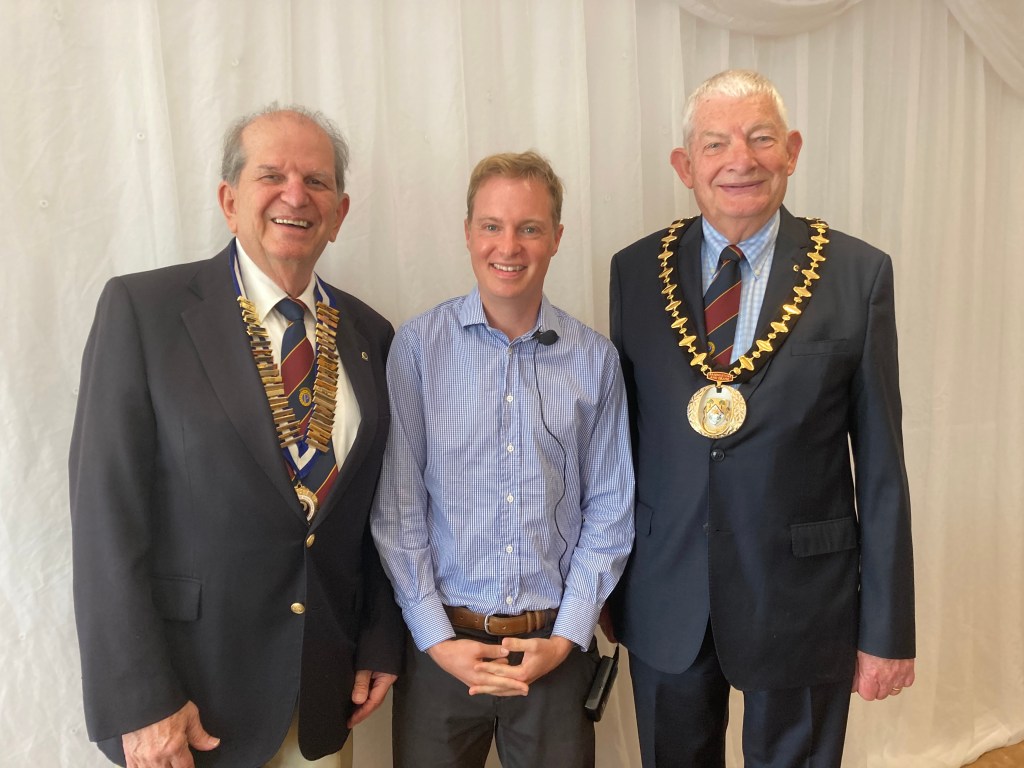
President Alex Marianos with speaker Dr Brantley Nicholson & Mayor Cllr Paul Miller
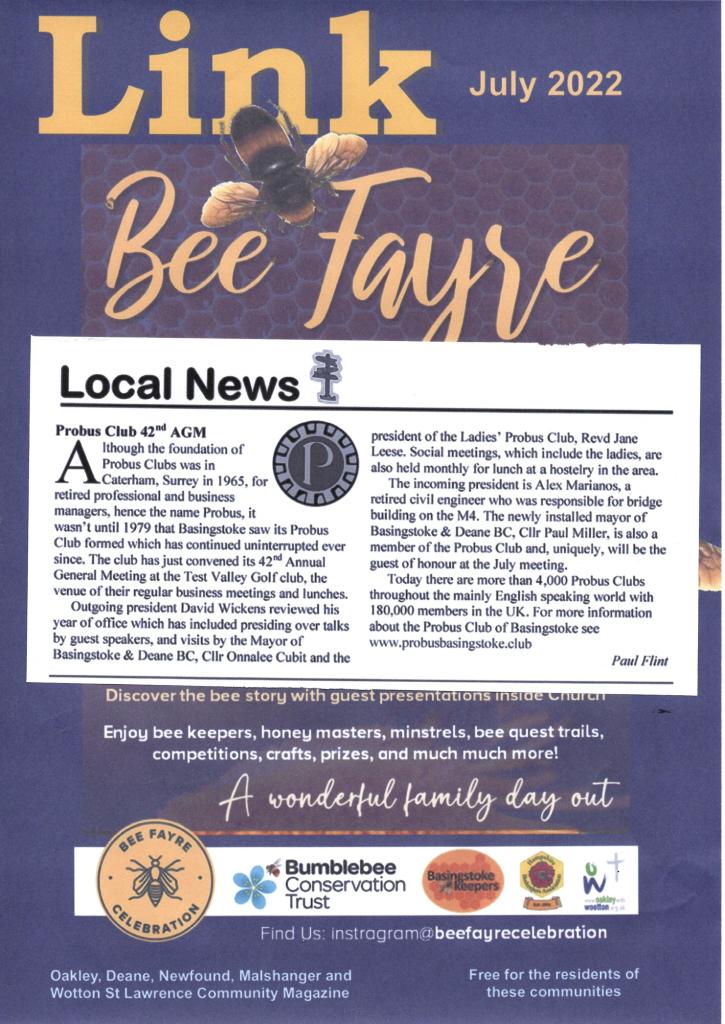
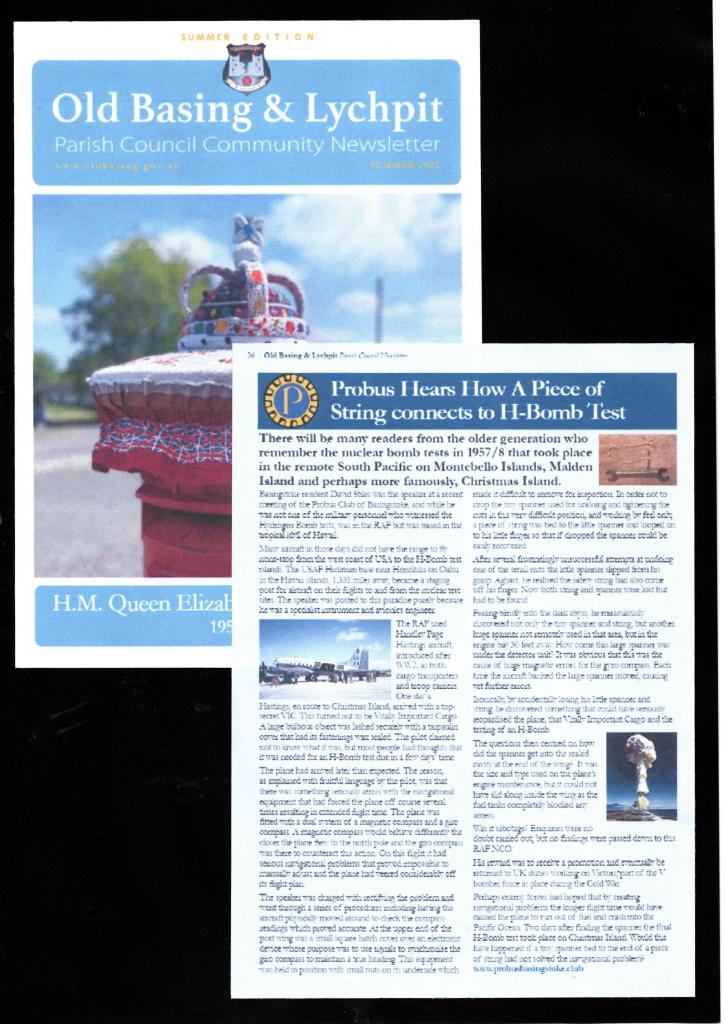
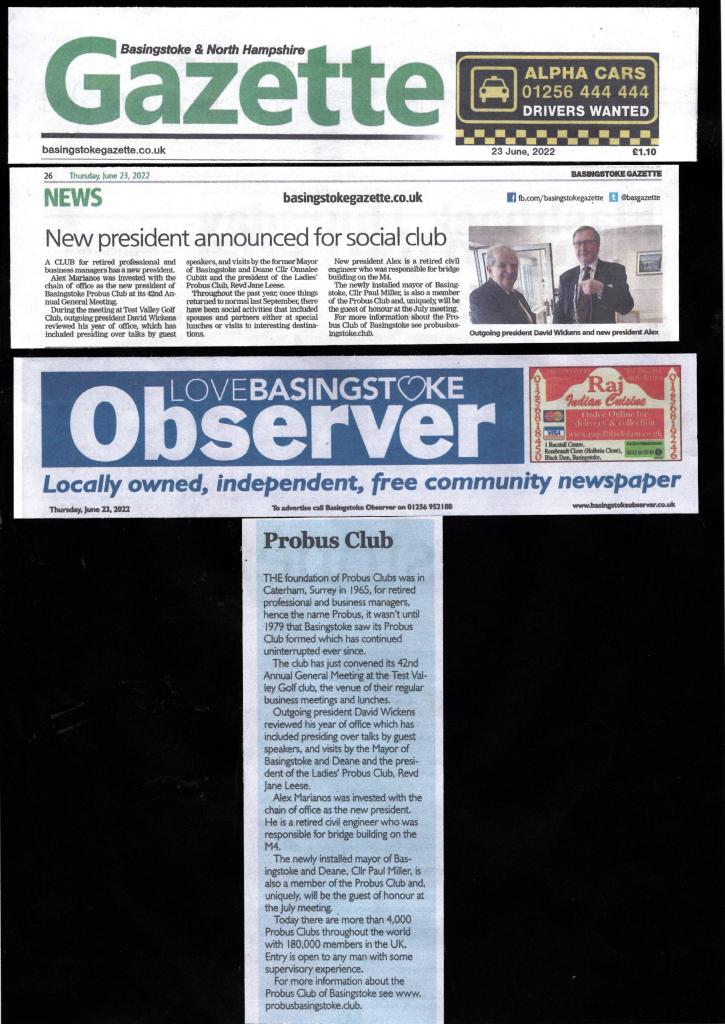
The July magazine publicity results are shown below. There was support in both the Basingstoke Gazette and Observer newspapers about our AGM. Two publications from the CommunityAd company, the Old Basing & Lychpit magazine carried the old report about the string and H Bomb tests while their Bramley& Sherfield version ran the story of our trip to Salisbury. The Rabbiter, Bramley and Link published the short report about our AGM.
The Villager did not have a July edition returning in August whereas the Rabbiter and the Bramley magazine will not publish in August.
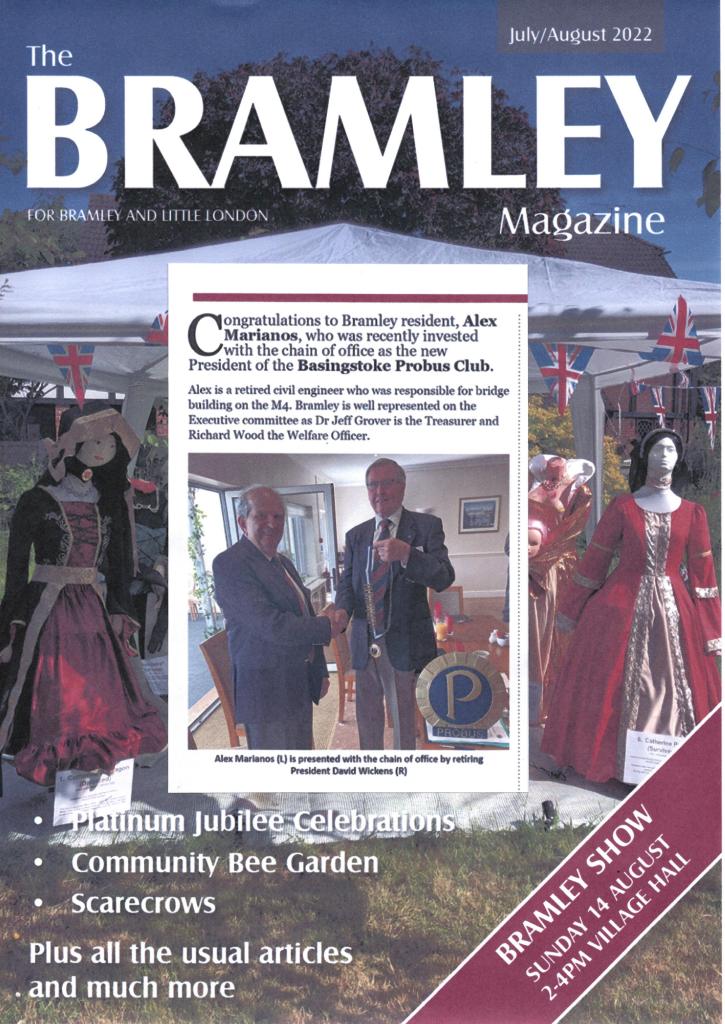
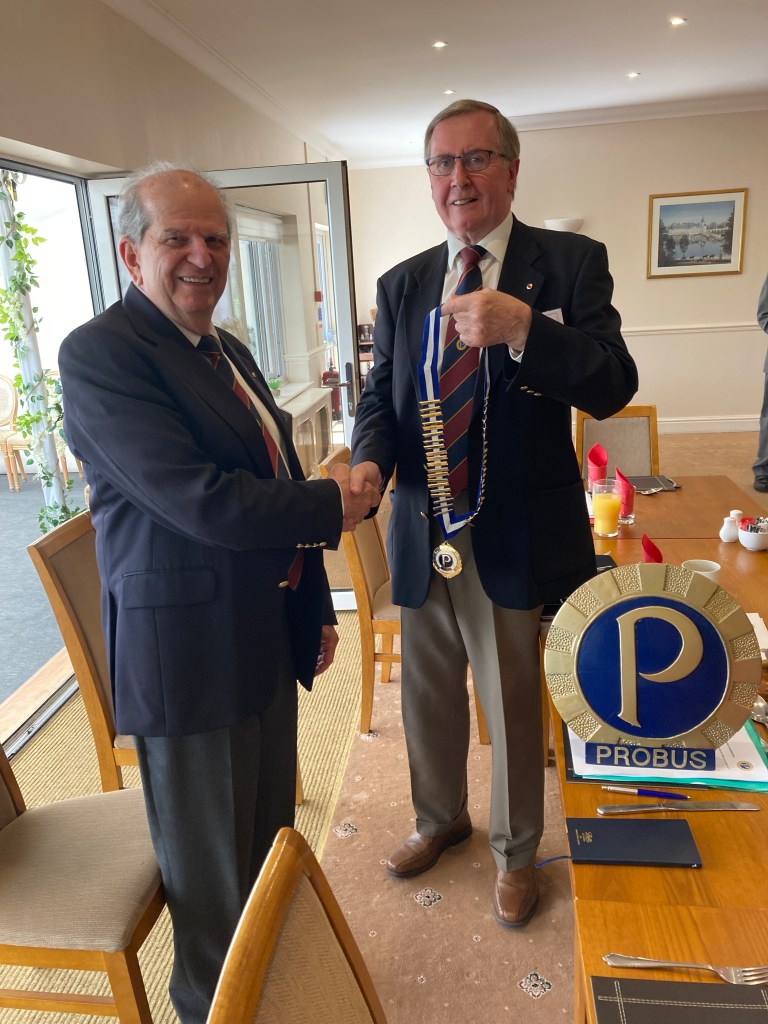
Alex Marianos (L) being invested as president by David Wickens (R)
Although the foundation of Probus Clubs was in Caterham, Surrey in 1965, for retired professional and business managers, hence the name Probus, it wasn’t until 1979 that Basingstoke saw its Probus Club formed which has continued uninterrupted ever since. The club has just convened its 42nd Annual General Meeting at the Test Valley Golf club, the venue of their regular business meetings and lunches.
Outgoing president David Wickens reviewed his year of office which has included presiding over talks by guest speakers, and visits by the Mayor of Basingstoke & Deane BC, Cllr Onnalee Cubit and the president of the Ladies’ Probus Club, Revd Jane Leese. Throughout the past year, once things returned to normal last September, there have been social activities that included wives/partners either at special lunches or visits to interesting destinations.
Social meetings, which include the ladies, are also held monthly for lunch at a hostelry in the area.
Alex Marianos was invested with the chain of office as the new president. He is a retired civil engineer who was responsible for bridge building on the M4.
The newly installed mayor of Basingstoke & Deane BC, Cllr Paul Miller, is also a member of the Probus Club and, uniquely, will be the guest of honour at the July meeting.
Today there are more than 4,000 Probus Clubs throughout the mainly English speaking world with 180,000 members in the UK. Entry is open to any man with some supervisory experience.
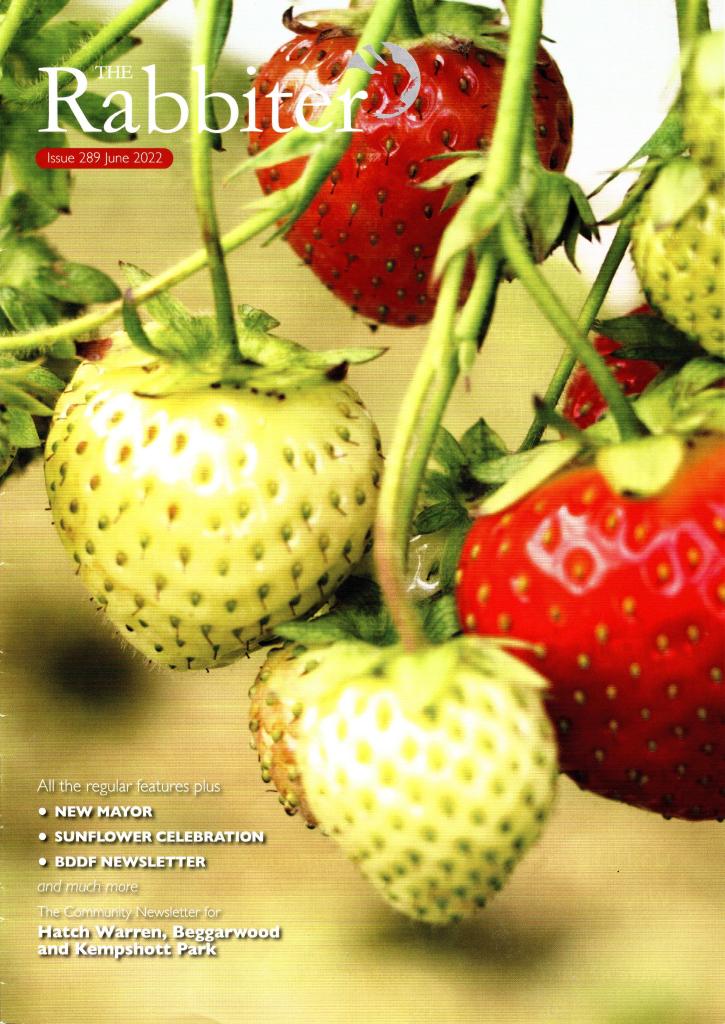
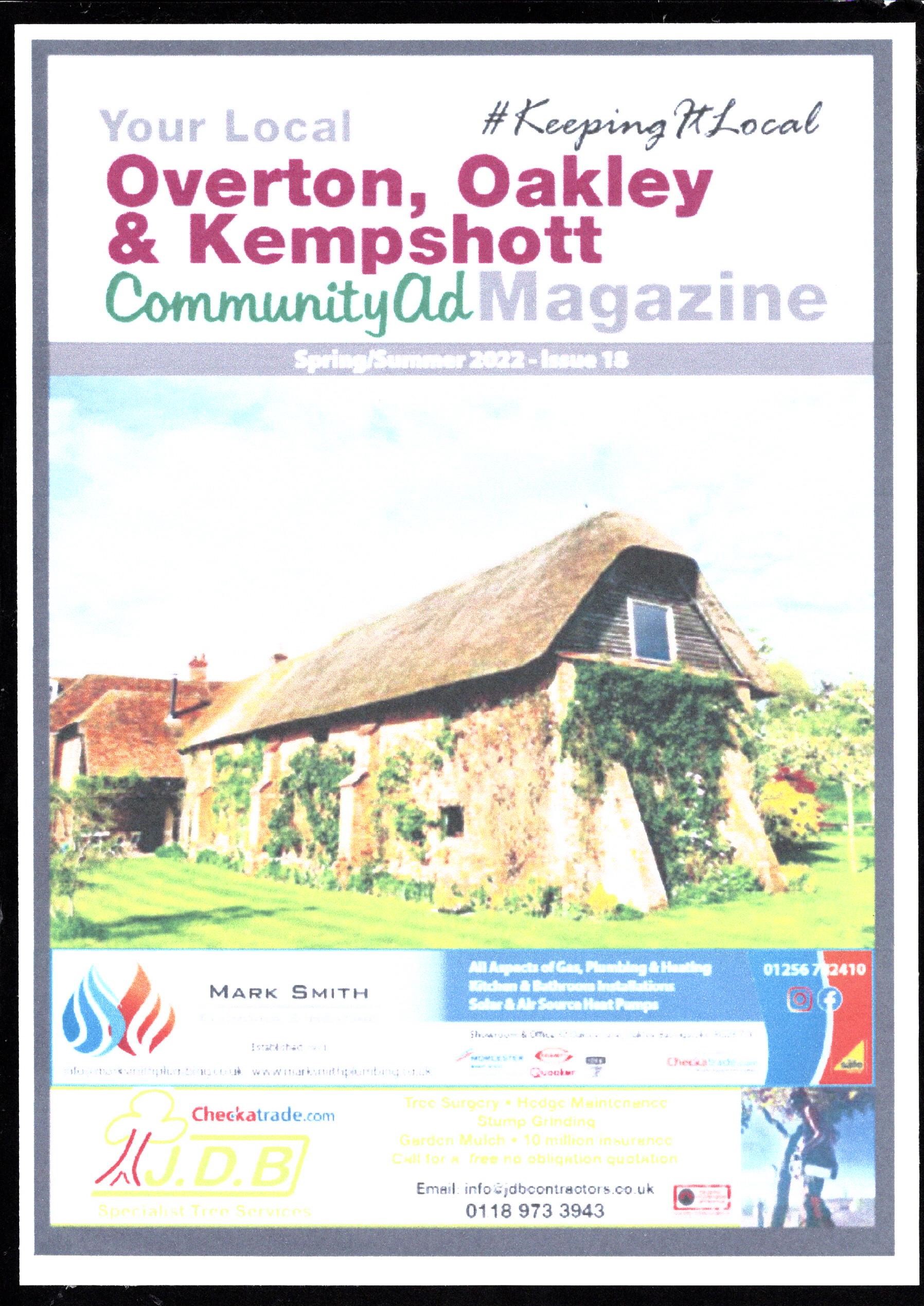
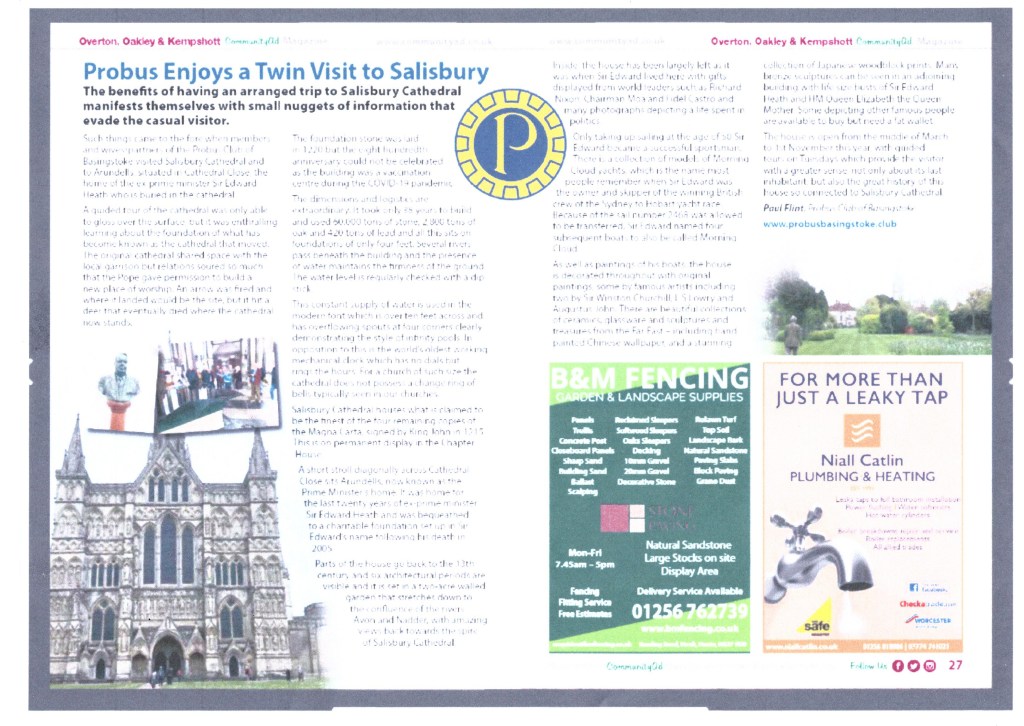
The visit members made to Winchester to see the Cathedral and Arundells, the home of ex–prime minister Sir Edward Heath has been picked up by our local magazines and in some cases gave us a full page which meant that it was considered best to show in the correct size which explains why the Rabbiter and the Bramley magazine have their cover and a separate image of the inside page.
Others, the Basinga and the Link used our report within their web sites.
The CommunityAd magazine for Overton, Oakley and Kempshott also gave a double page spread in their A5 size smaller publication.
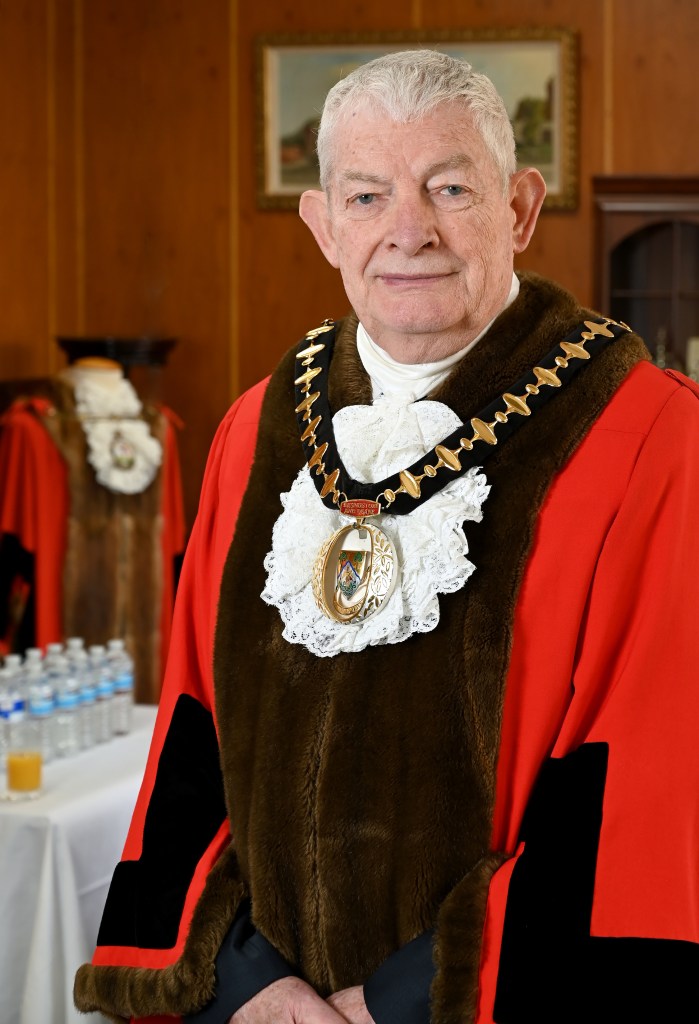
Image courtesy of Basingstoke and Deane Borough Council
Probus Club of Basingstoke member, Paul Miller, a member of the Executive Committee, has been appointed the new Mayor of Basingstoke & Deane following the Mayor Making ceremony at the Civic offices on Thursday 12 May.
Cllr Miller, who has served as a councillor in the Chineham ward since 2009, will represent the borough at events during the landmark Queen’s Platinum Jubilee year supported by the Mayoress, his wife Sandra.
Describing his appointment as “an honour”, Cllr Miller said at the meeting: “I am privileged to have been elected the 71st Mayor of Basingstoke and Deane during the reign of Her Majesty The Queen in her Platinum Jubilee year and as the 44th Mayor since the establishment of our borough. As first citizen I am here to dedicate my term in office to the residents of this borough.”
Cllr Miller is a retired Royal Air Force officer, who served in the armed forces for 25 years, followed by 10 years as an international staff member of NATO in Brussels. He continued as a contractor in the defence aerospace industry before retiring in 2014.
























 Probus Club of Basingstoke
You must be logged in to post a comment.