Probus Hears About Thelwell

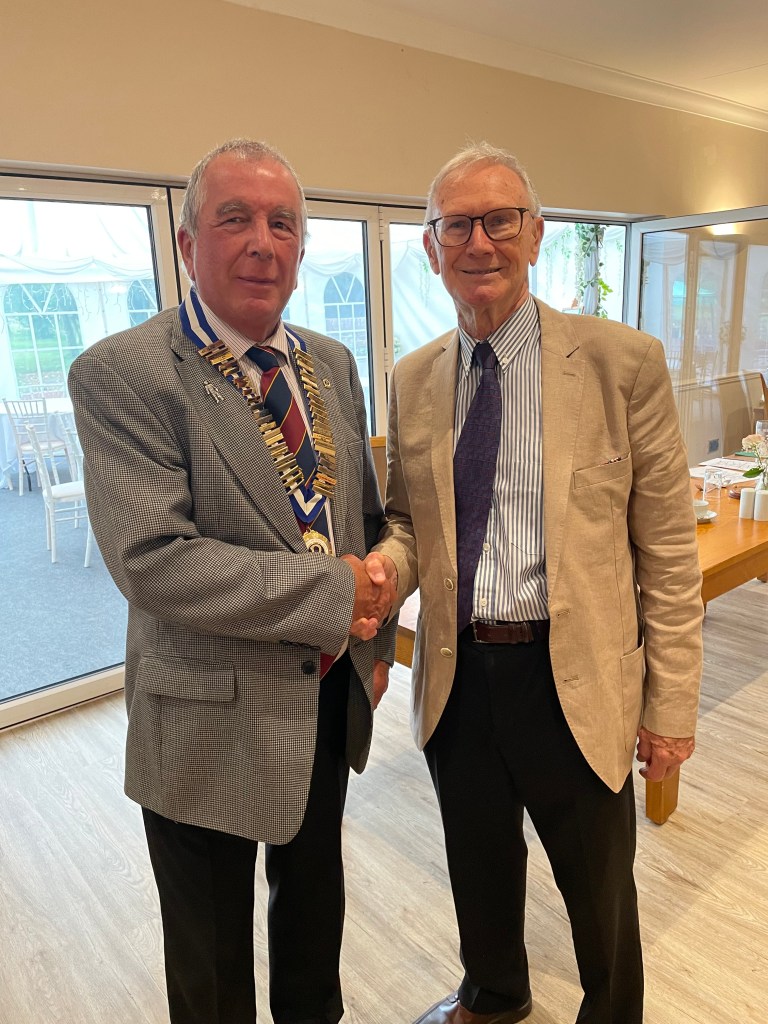
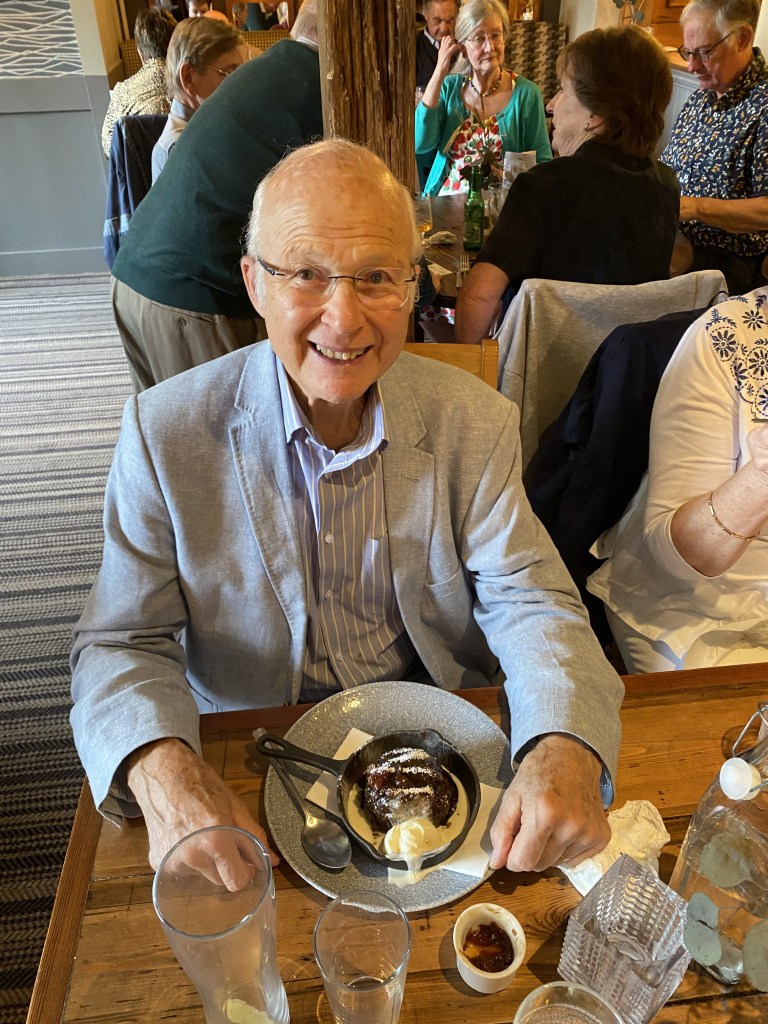
Speaker Tim Craven with President Dr Jeff Grover

Readers, probably over the age of thirty-five, when the name of Thelwell is mentioned, will remember iconic subjects of small, fat, hairy ponies ridden at full tilt by alarming young ladies. Indeed, the Thelwell pony has become part of the English language.
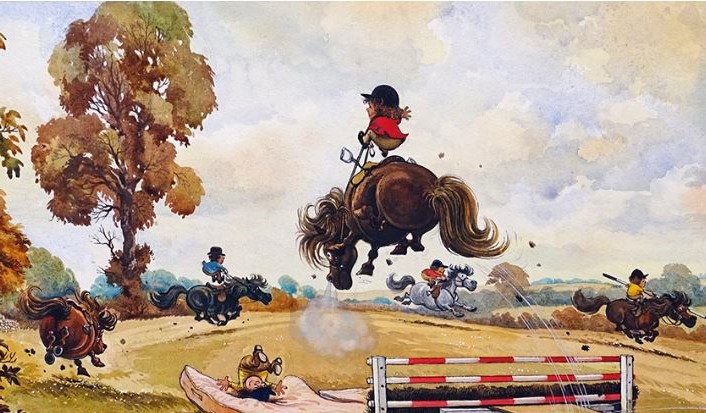
But, as speaker Tim Craven explained, Norman Thelwell’s range as a cartoonist went far beyond ponies and included fishing, gardening, house hunting, motoring, sailing, dogs, cats, farming, stately homes, children and country pursuits, all given the Thelwell treatment. There was much more to this artist than first appears as the speaker went on to outline.

Life for Norman Thelwell had started in lowly circumstances, born into a terraced house near Birkenhead, he just had a natural affinity for drawing. A pencil sketch of a self-portrait created when he was only ten demonstrated his skill.  Joining the army at eighteen in 1941 his artistic talent kept him away from hostilities, even when in India he became involved in producing the Victory magazine which prevented him from action in Burma.

His time in the army enabled him to develop cartoon illustrations of military life. He came to recognise that selling a picture to a magazine was worth more than a month’s army pay so it dawned on him that there could be a living to be made using his artistic talent.

Formal artistic education at Nottingham and Gateshead schools of art was followed by a degree at Liverpool School of Art so it was natural that he became an art teacher. He persevered with expanding freelance work until it reached such a level that he decided to go completely freelance as an artist. He worked in this manner for Punch Magazine for twenty-five years during which time he produced over 1,500 cartoons and sixty front covers. National newspapers were another outlet for his work.

Tim Craven was the curator at Southampton City Art Gallery when, in 2001, he received a phone call from Mrs Thelwell about the conservation of water colour paintings. By this time Norman Thelwell was outside the mainstream of being a public figure and had lived for thirty-five years near Romsey in Hampshire, so Tim was eager to become involved in conserving the extensive work of this local world-famous artist.

There was a large quantity of paintings to consider but what became apparent was that while cartoons had made him famous having published 32 books, selling over two million copies which had been translated into several languages and earned him a good living, it was his interest in painting landscapes that was his real passion. The quality of work was so good that Thelwell’s country scenes could sit alongside those of the greatest English artists.

Thelwell was very much an adopted countryman and did his best to support the protection of rural England and especially the Test Valley fighting against gravel extraction. There have been several exhibitions of Thelwell’s artwork, showing his various styles that were curated by Tim Craven with one exhibition attracting 64,000 visitors.

Today, a century after his birth, it is still possible to use Thelwell’s images for many types of merchandising opportunities, so the drawings of his small, fat, hairy ponies continue.

Probus Publicity in October 2023

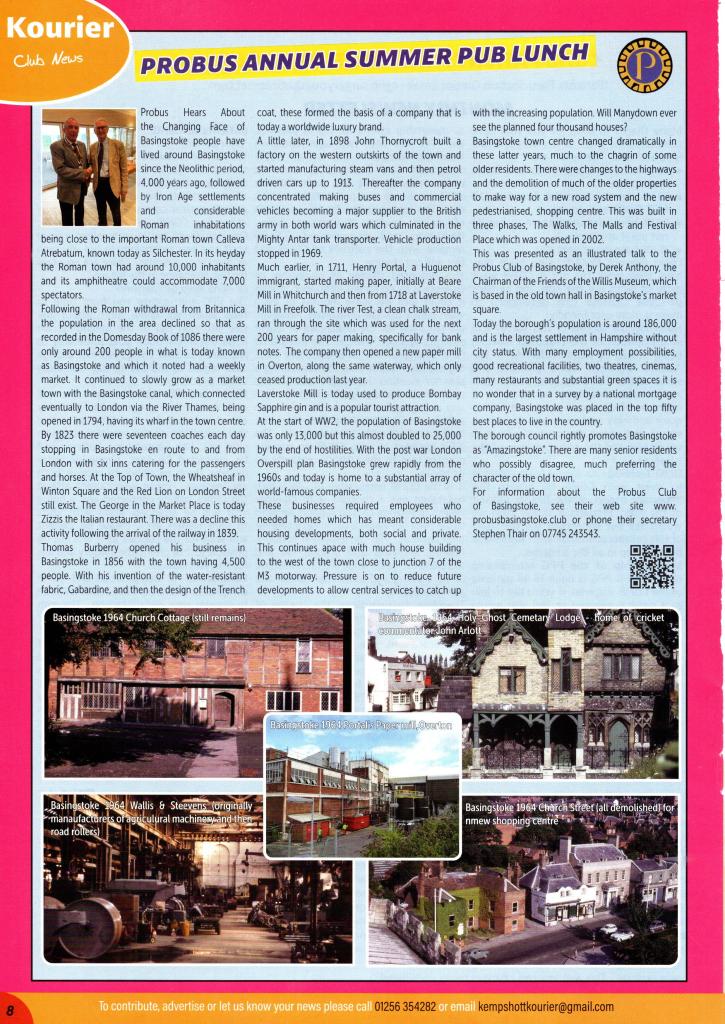
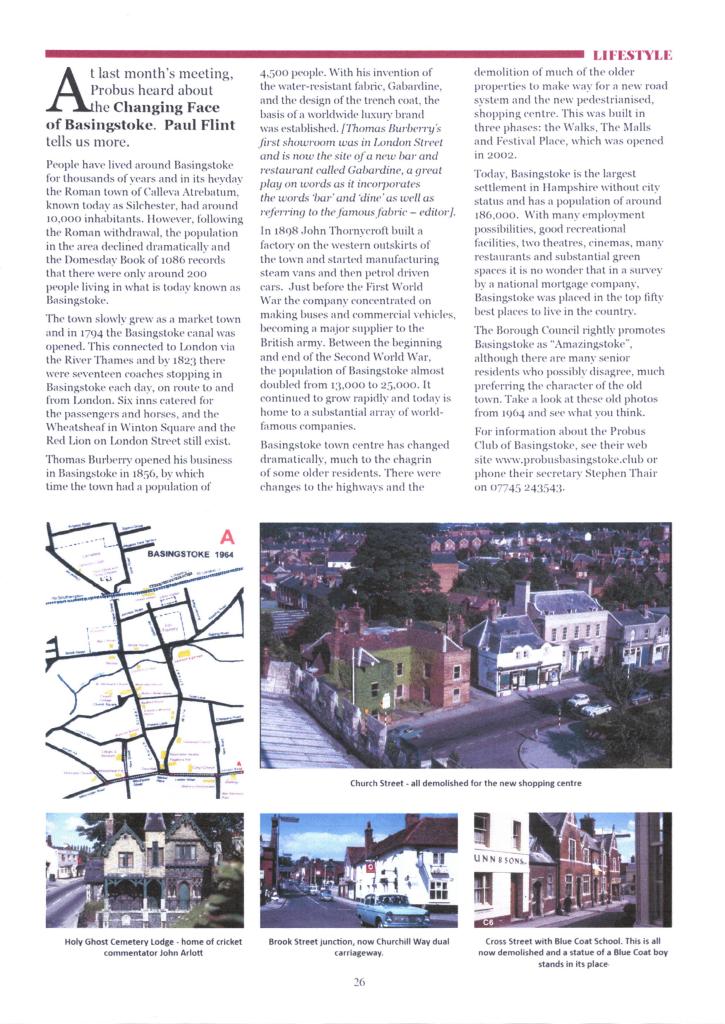
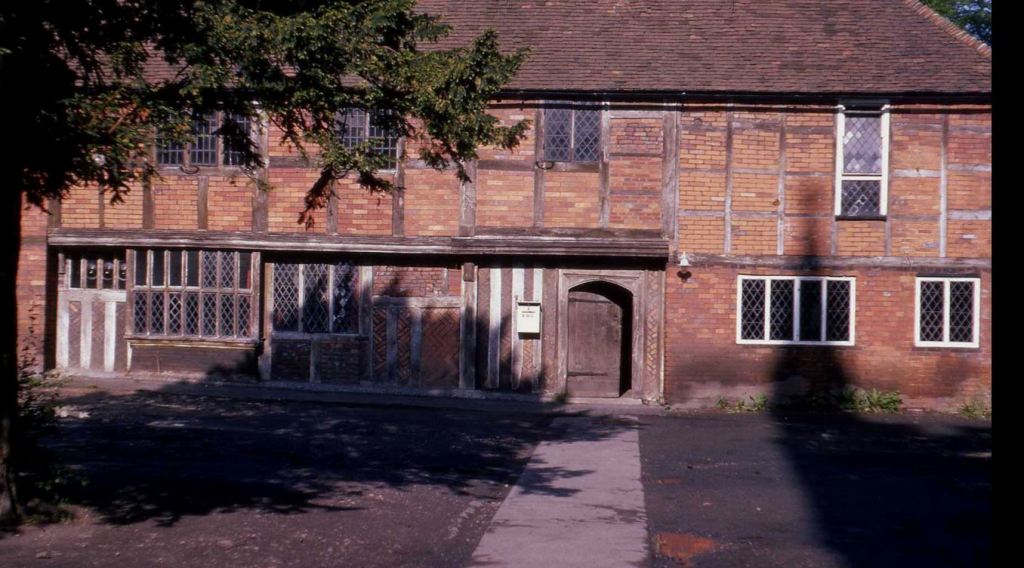
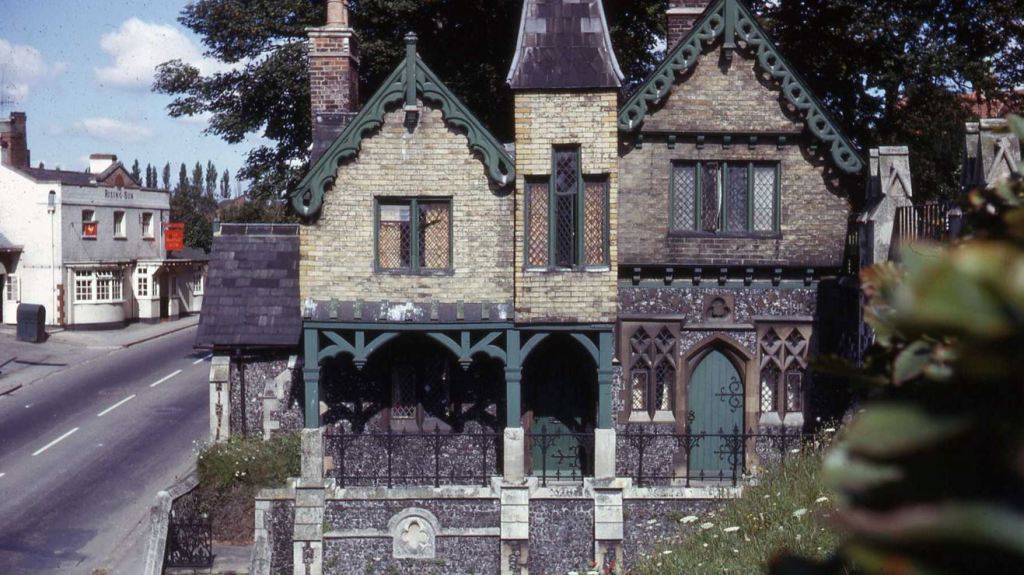
The October magazines did us proud with all featuring the report about changes that have impacted on Basingstoke. While the talk by Derek Anthony concentrated around visual images of the town prior to the extensive changes that took place in the 1960s I expanded it to include historical points and the current position of our modern town.
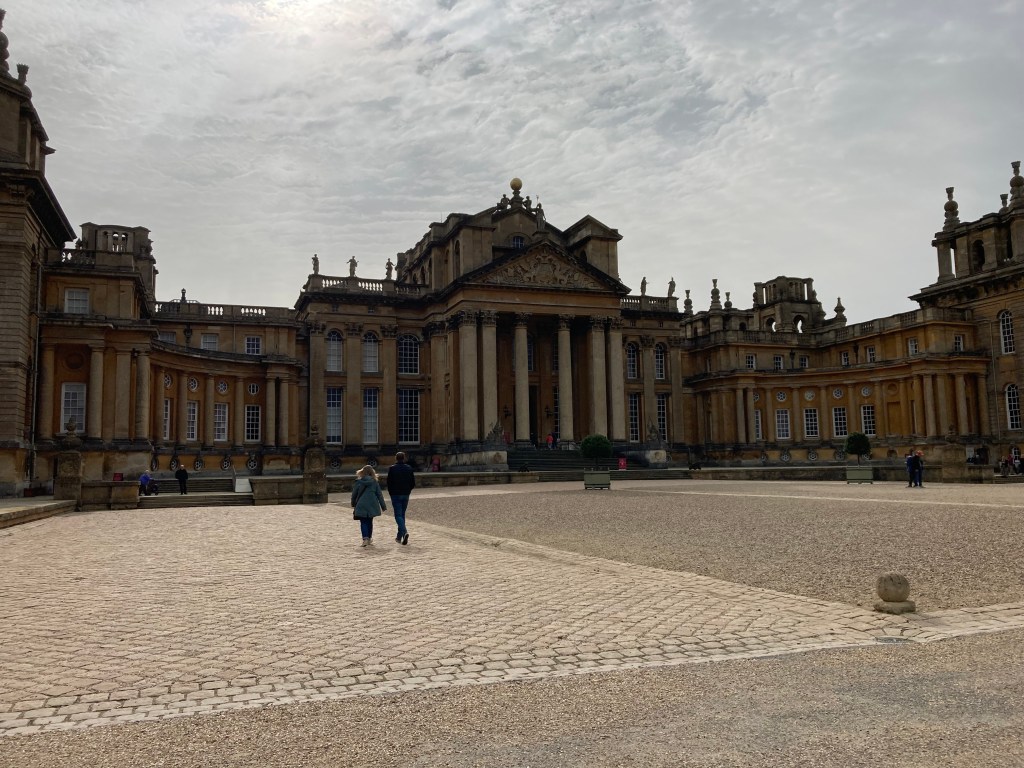
Probus Visits Blenheim Palace

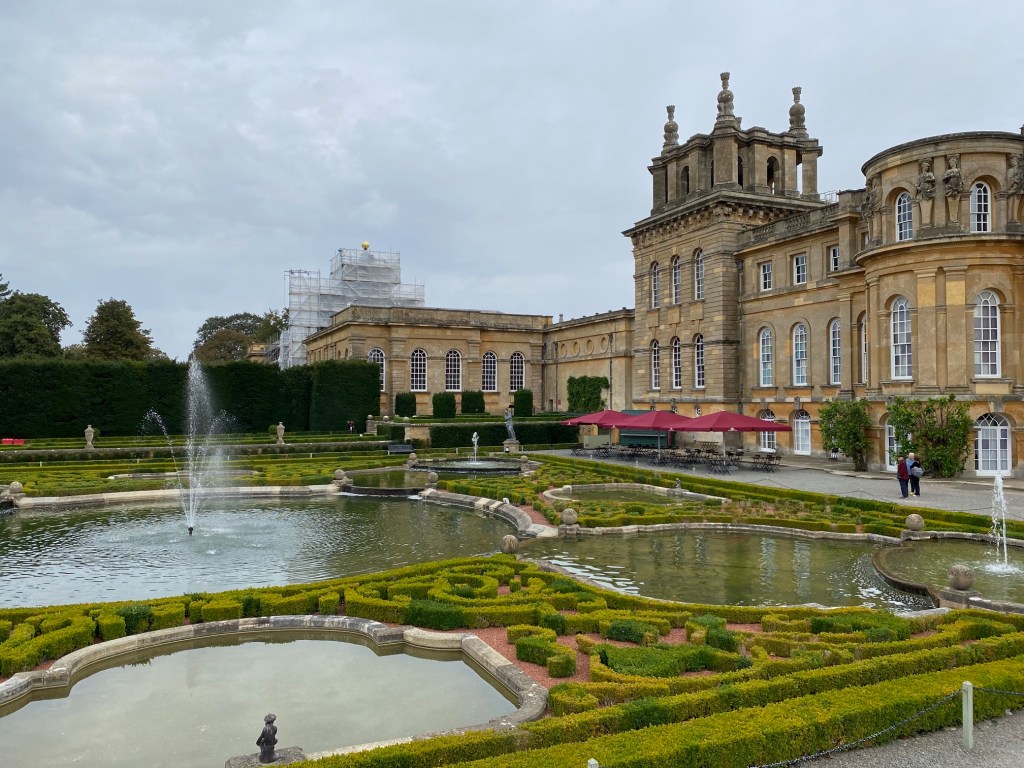
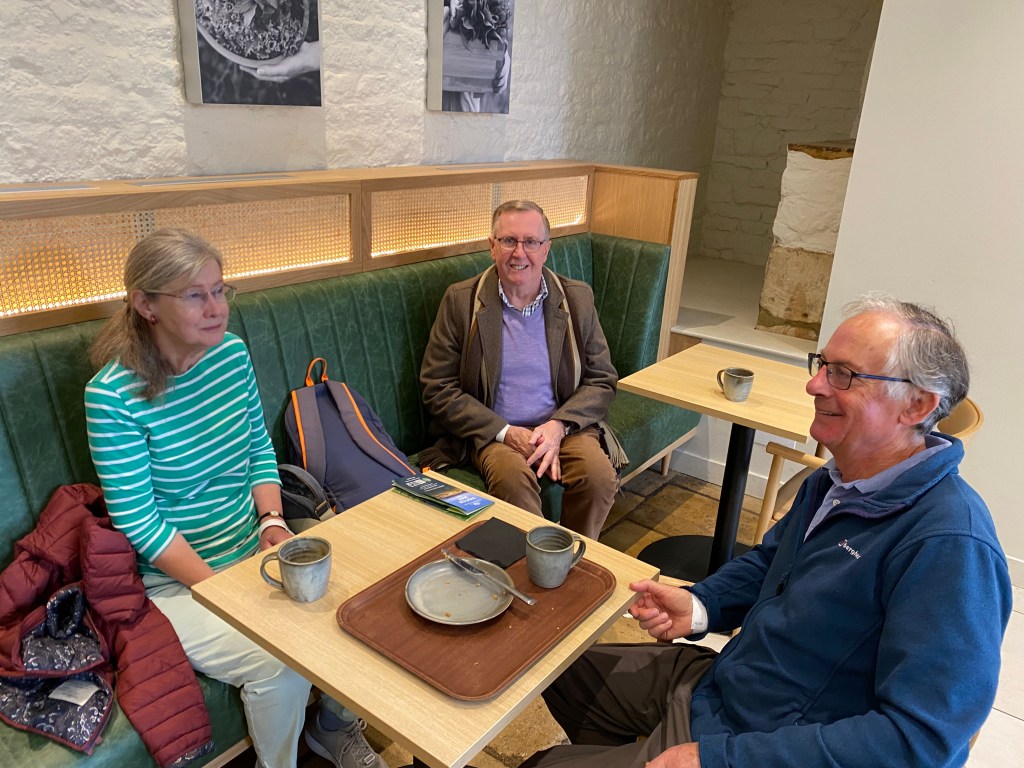
After much planning by Outings Organiser, Chris Perkins, beset with several delays over a year, the day dawned on Thursday 28 September for the self-drive trip to Blenheim Palace in Oxfordshire.

Sixteen in total made the easy drive, all arriving ahead of schedule and had to wait for Chris and Carolyn who then obtained the wrist bands that were to gain us entry into this magnificent edifice built to celebrate the victorious battle of Blenheim in 1704. Queen Anne, in 1705, made a gift to the Duke of Marlborough, of Woodstock Park and a promise of £240.000 to build a substantial house as a gift from a grateful Crown.

Well known as the birthplace of Winston Churchill, this building and grounds is a splendid place to visit but the first call was in the Oxfordshire Pantry which housed a shop and café but most importantly also had toilets. After that it was left up to ourselves where to visit first. Probably most headed into the house for a tour of the magnificent state rooms with wonderful tapestries and paintings which was aided by an audio guide. Nick Waring was surprised that his guide started the commentary in Russian before selecting English from the six languages available.

In the lower part of the palace was the Churchill exhibition which was a spectacle of his life with facsimiles of letters to his wife Clementine, his writings, several of his paintings and the famous speech of “blood, toil, tears and sweat”.

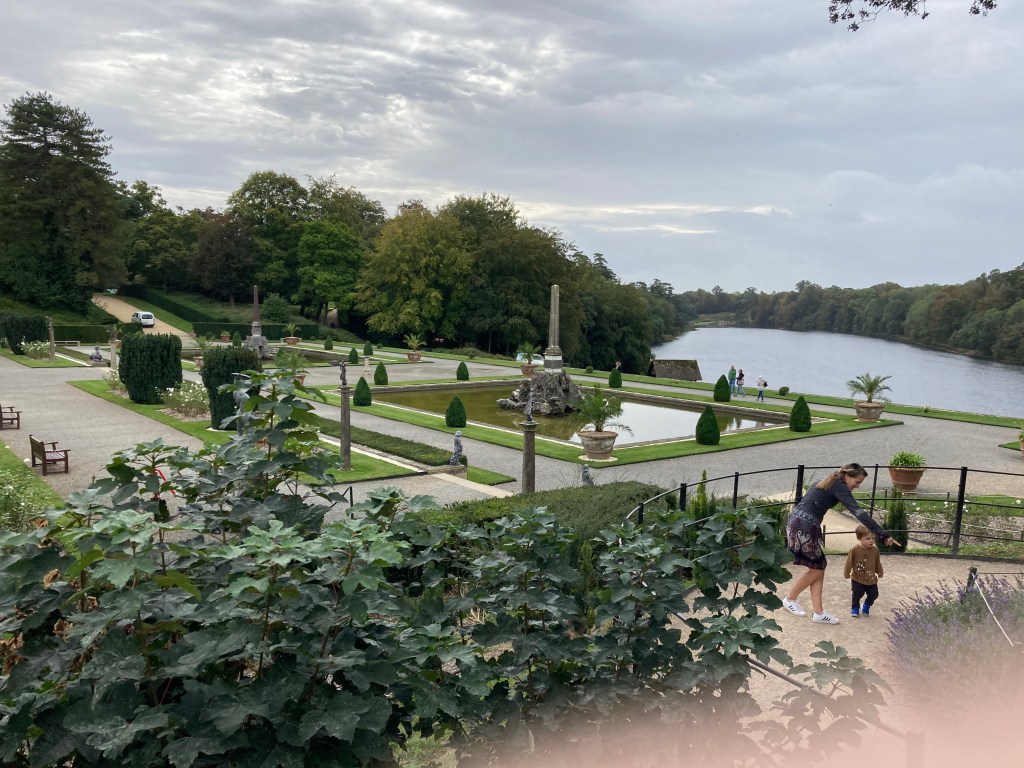
The park land is so large that it was not possible to include much of this within our time although many did reach the formal gardens that faced the Great Lake.

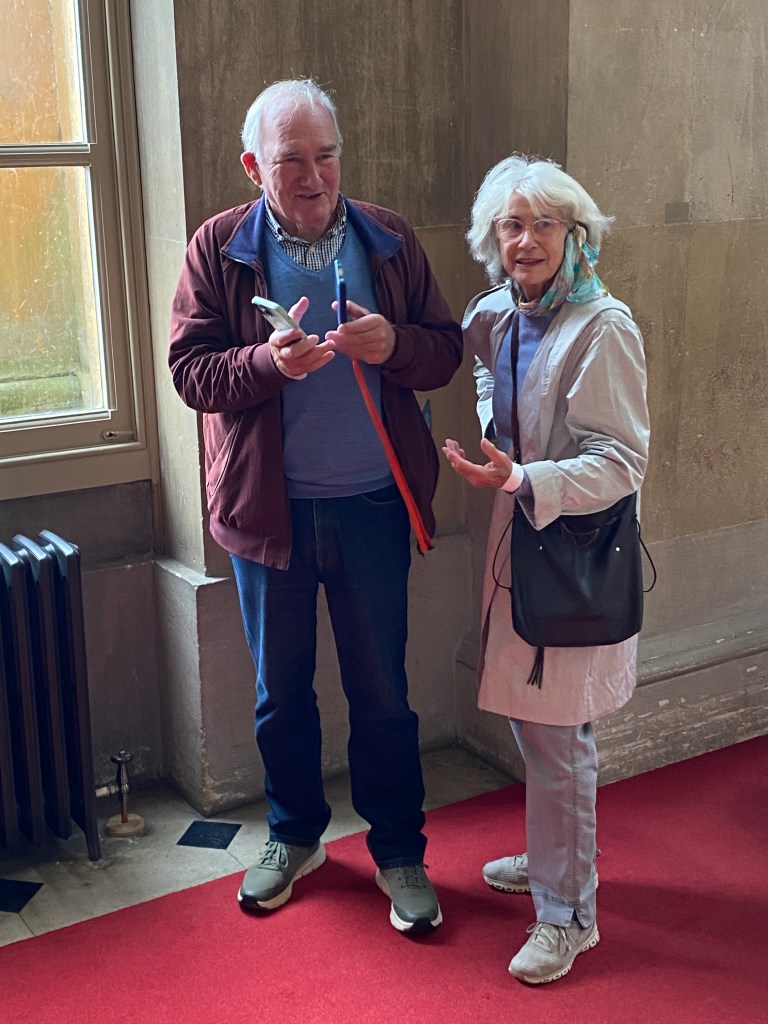
The following photographs give an indication of the richness of the contents of the palace.

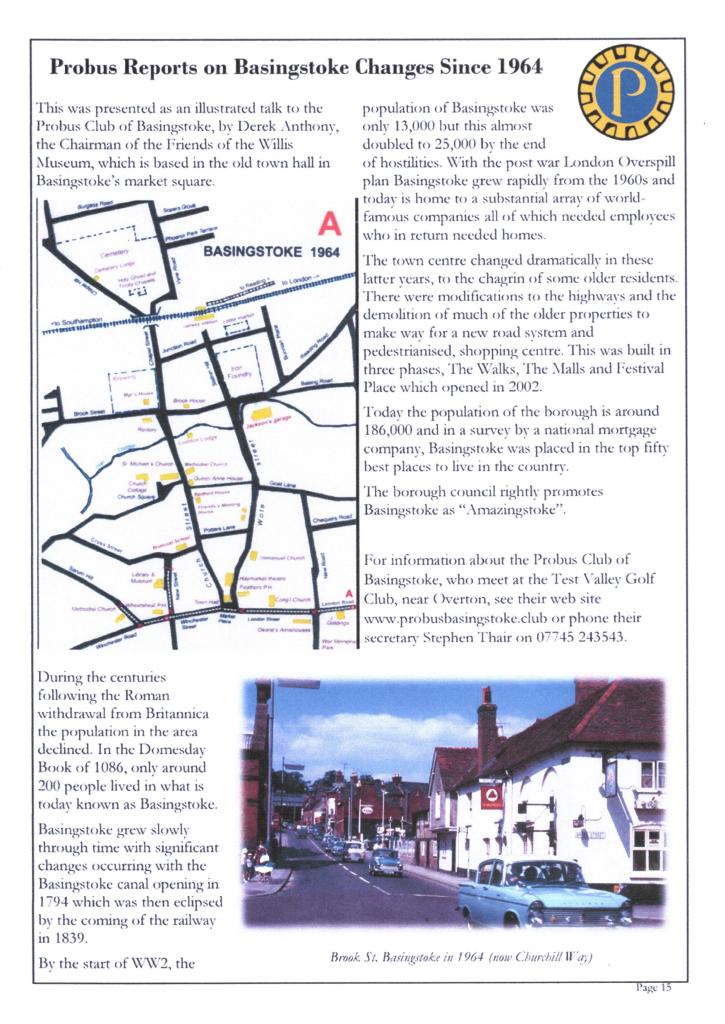
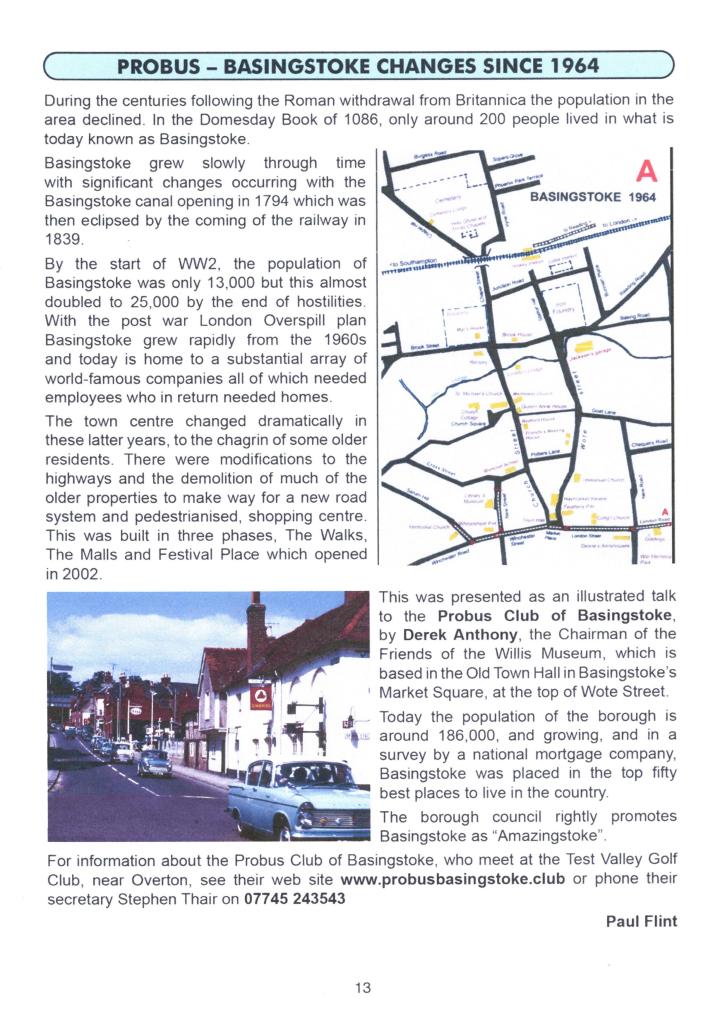
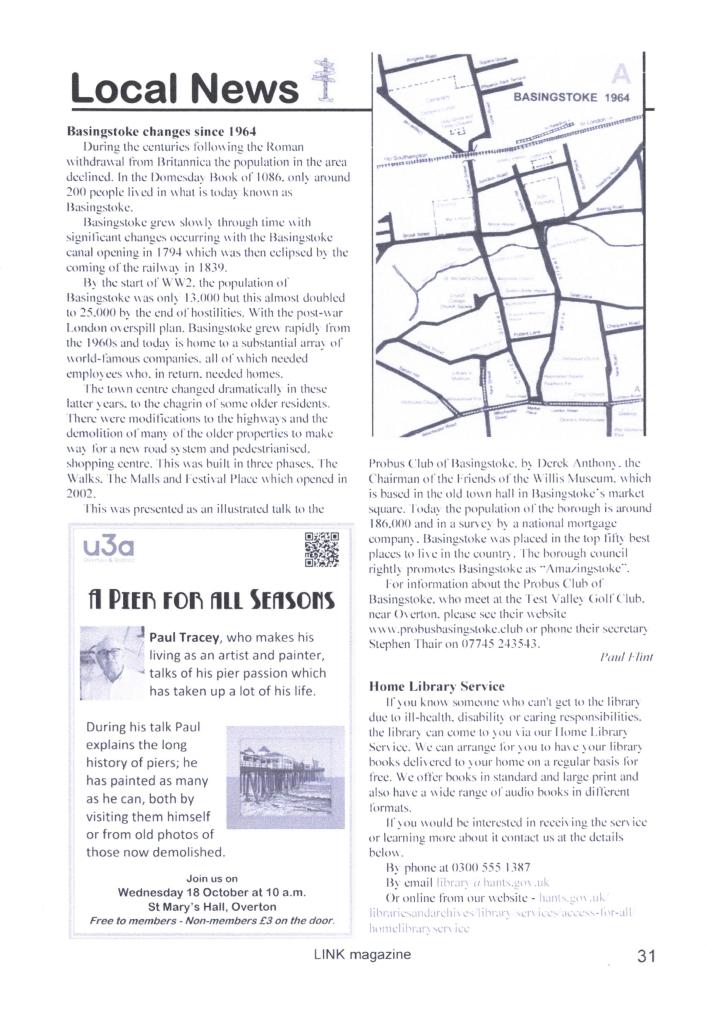
Probus Hears About Changes in Basingstoke

President Dr Jeff Grover with Derek Anthony

During the centuries following the Roman withdrawal from Britannica the population in the area declined. In the Domesday Book of 1086, only around 200 people lived in what is today known as Basingstoke but it noted that it had a market.

Basingstoke grew slowly through time with significant changes occurring with the Basingstoke canal opening in 1794 which was then eclipsed by the coming of the railway in 1839. Previously there had been 17 coaches a day passing through Basingstoke where several inns attended to horses and passengers. Today the Wheatsheaf in Winton Square and the Red Lion in London Street still remain while the George in the market place is now Zizzis Italian restaurant.

By the start of WW2, the population of Basingstoke was only 13,000 but this almost doubled to 25,000 by the end of hostilities. With the post war London Overspill plan Basingstoke grew rapidly from the 1960s and today is home to a substantial array of world-famous companies all of which needed employees who in return needed homes.

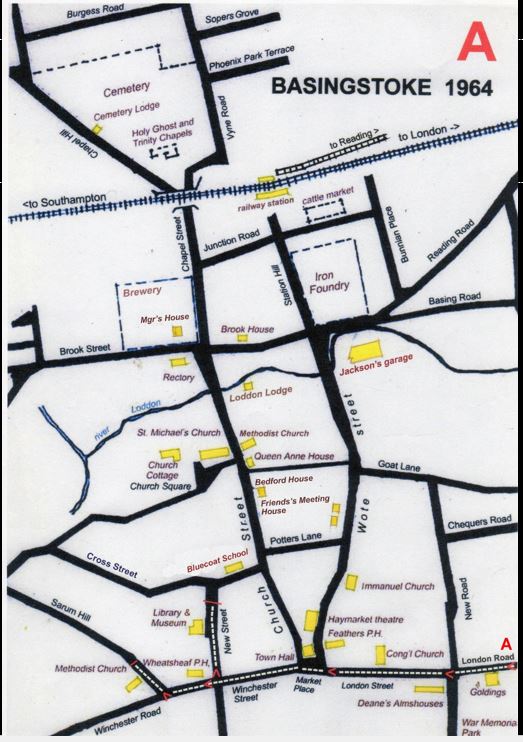
Basingstoke town centre in 1964

The town centre changed dramatically in these latter years, to the chagrin of some older residents. There were modifications to the highways and the demolition of much of the older properties to make way for a new road system and pedestrianised, shopping centre. This was built in three phases, The Walks, The Malls and Festival Place which opened in 2002.

This was presented as an illustrated talk to the Probus Club of Basingstoke, by Derek Anthony, the Chairman of the Friends of the Willis Museum, which is based in the old town hall in Basingstoke’s market square.

Today the population of the borough is around 186,000 and in a survey by a national mortgage company, Basingstoke was placed in the top fifty best places to live in the country.

The borough council rightly promotes Basingstoke as “Amazingstoke”.

There are some older residents who have a different opinion.

Publicity in September 2023

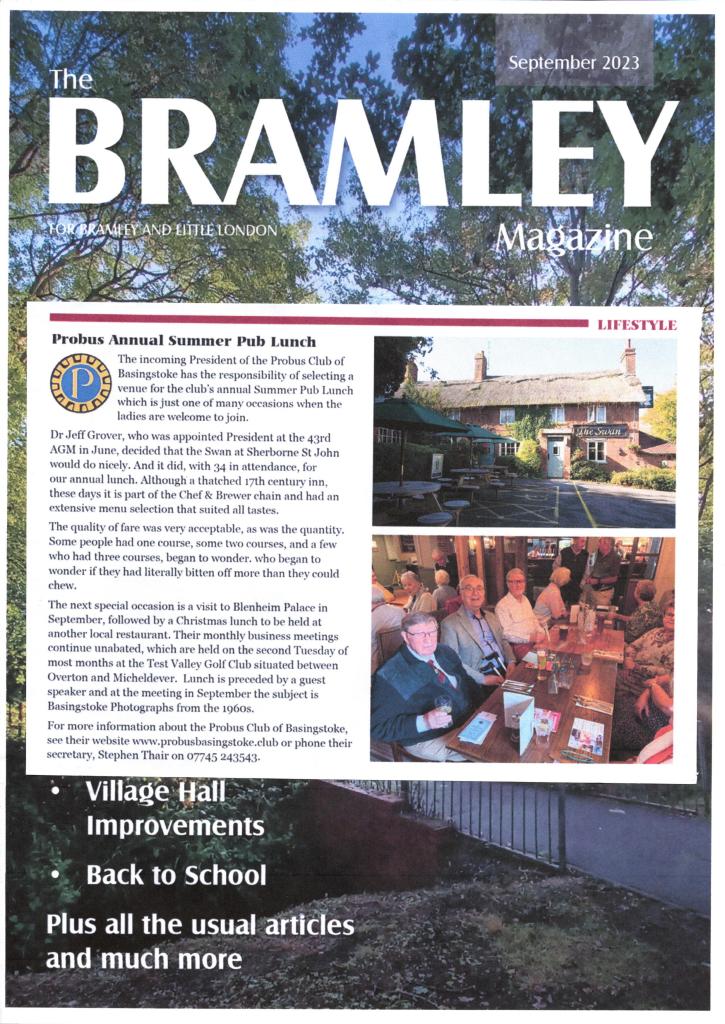
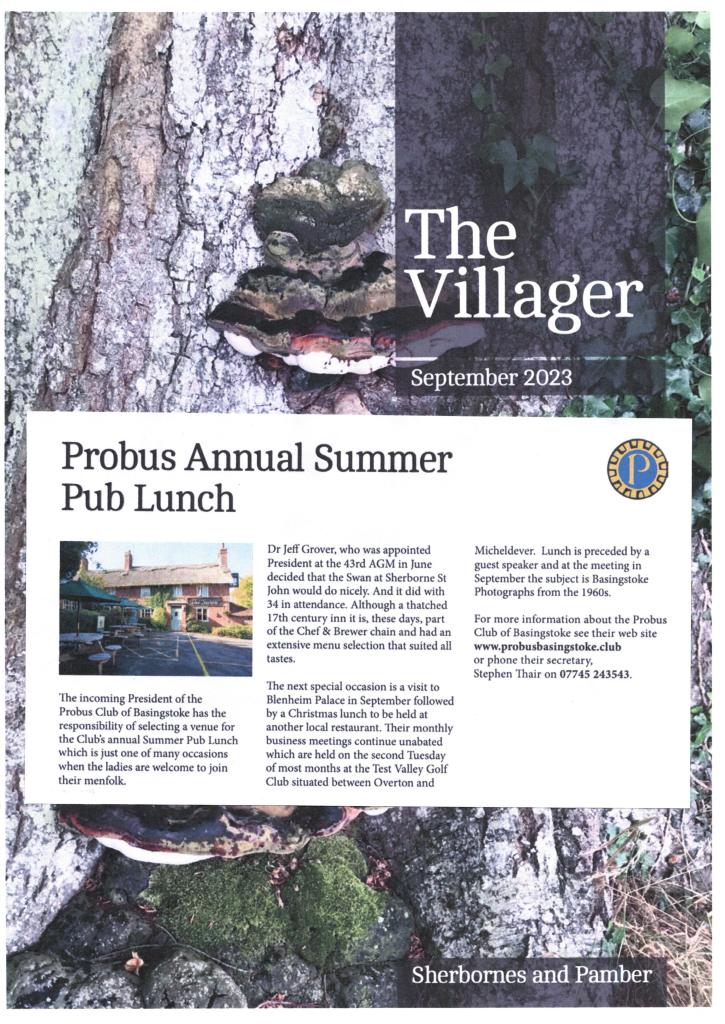
A good result for coverage of our Summer Pub Lunch although nothing in the Loddon Valley Link or, surprisingly, in the Basinga or the Basinga Extra.

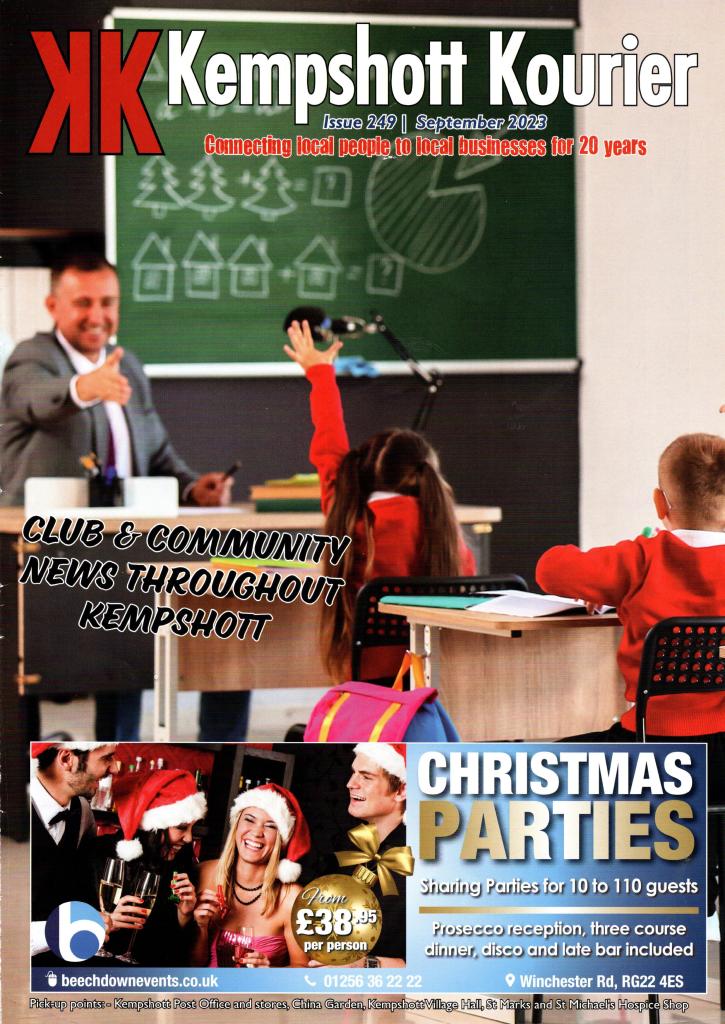
You will note the double pages for the Kempshott Kourier that carried our report with that about the Ladies’ Probus Club and their visit to Stratfield Saye.

Because our report was not very informative information was included about our future activities.

Fly Boys at Popham Airfield

Three of our members visited the Light Aircraft Fly-In at Popham airfield on Saturday 19 August – Chris Perkins MVO, Stephen Thair and Dave Kitson. While the first two had flying experiences, with Chris having spent many years in the RAF, and Stephen having held a private pilot’s licence, it has to be assumed that Dave’s claim to having interests in aviation lies in the fact that he had flown in Concorde.

All three declared the outing to be very enjoyable, as well as can be seen from the following two photographs where they are also enjoying an ice cream.

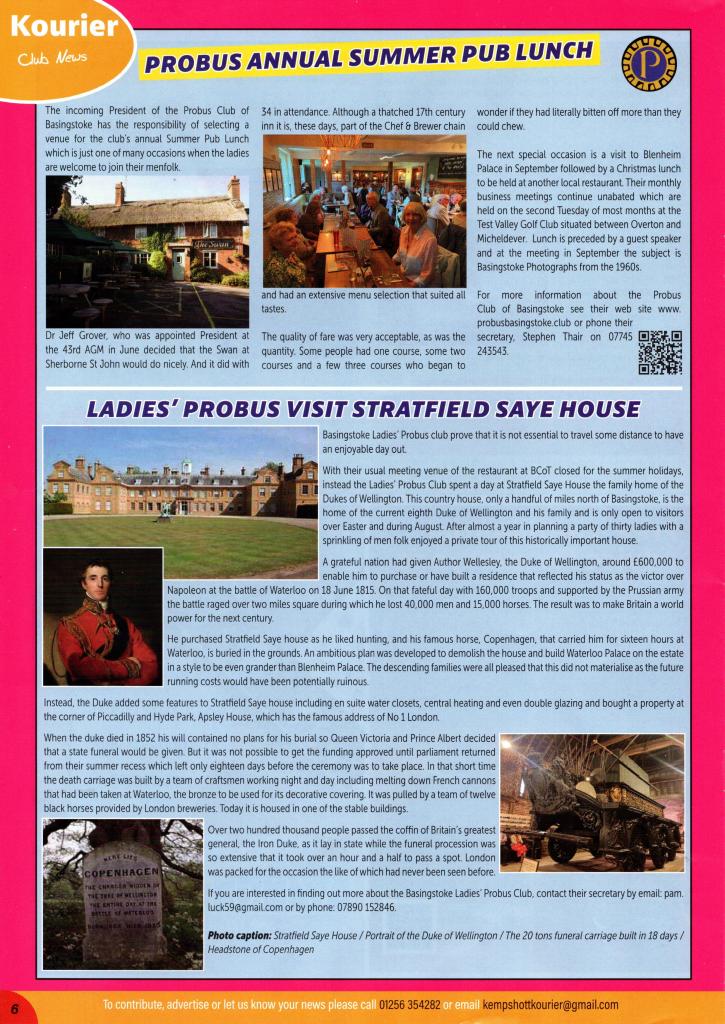
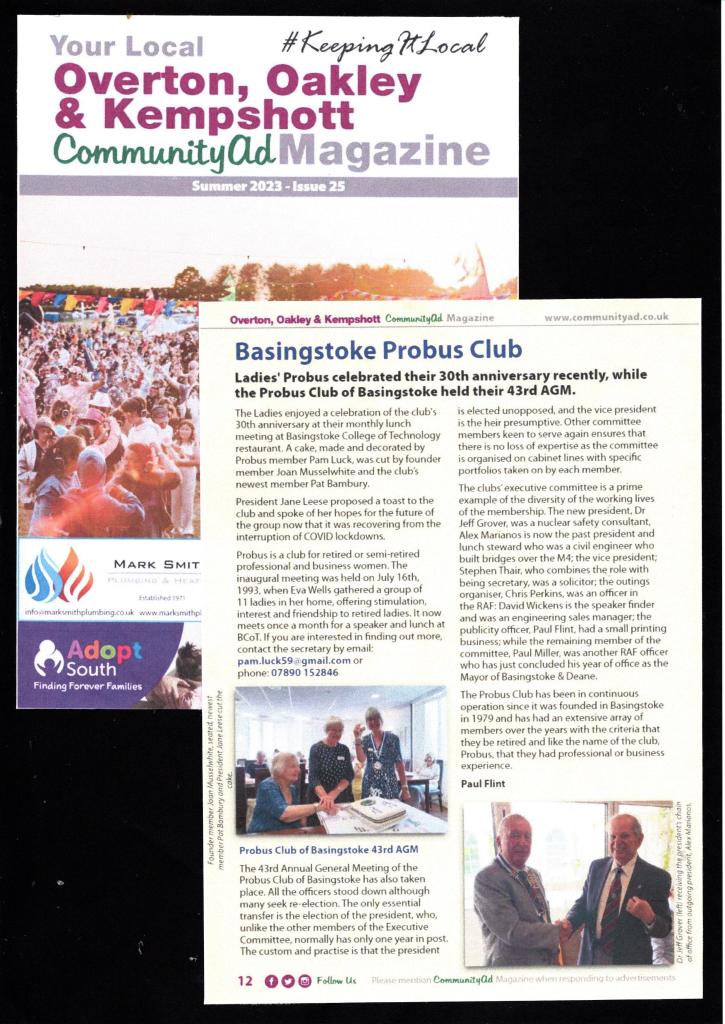
Probus Publicity in August 2023

August is a quiet month as some magazines take a break, but we managed to gain some space in the Kempshott Kourier, Villager, CommunityAd for Overton, Oakley & Kempshott and in the Basinga Extra web site.

Keen eyed readers will see that the CommunityAd magazine devoted a page to the Ladies Probus and their thirtieth birthday celebrations while the majority of the page was about our 43rd AGM.

Probus Summer Pub Lunch

Tuesday 8th August 2023

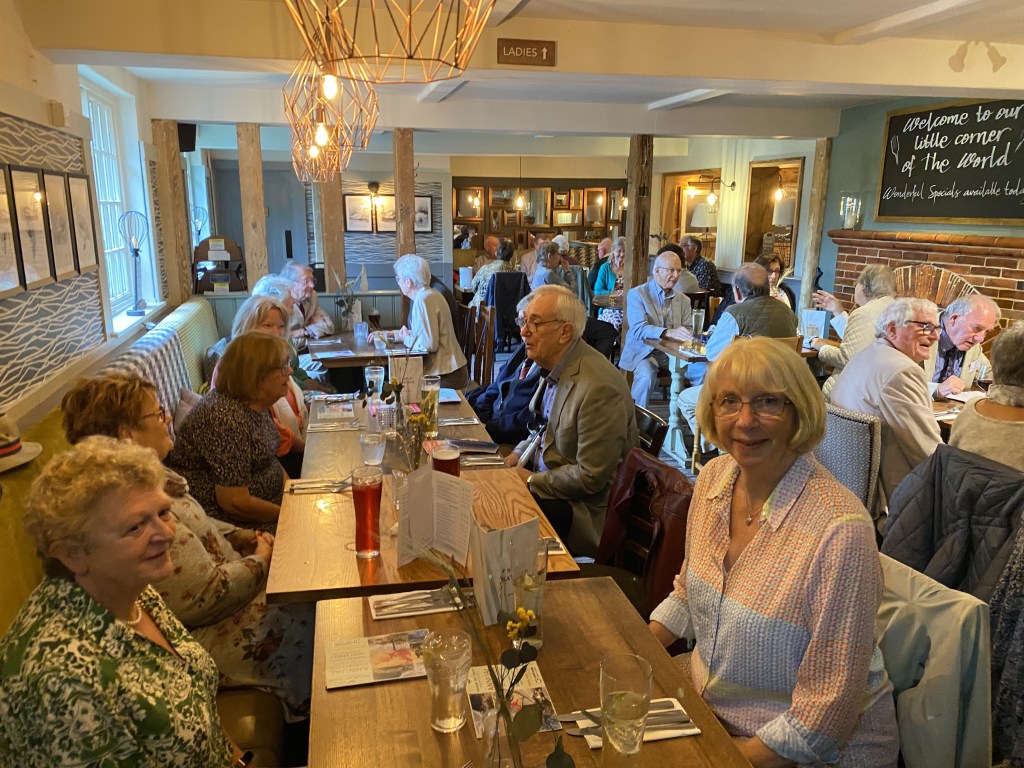
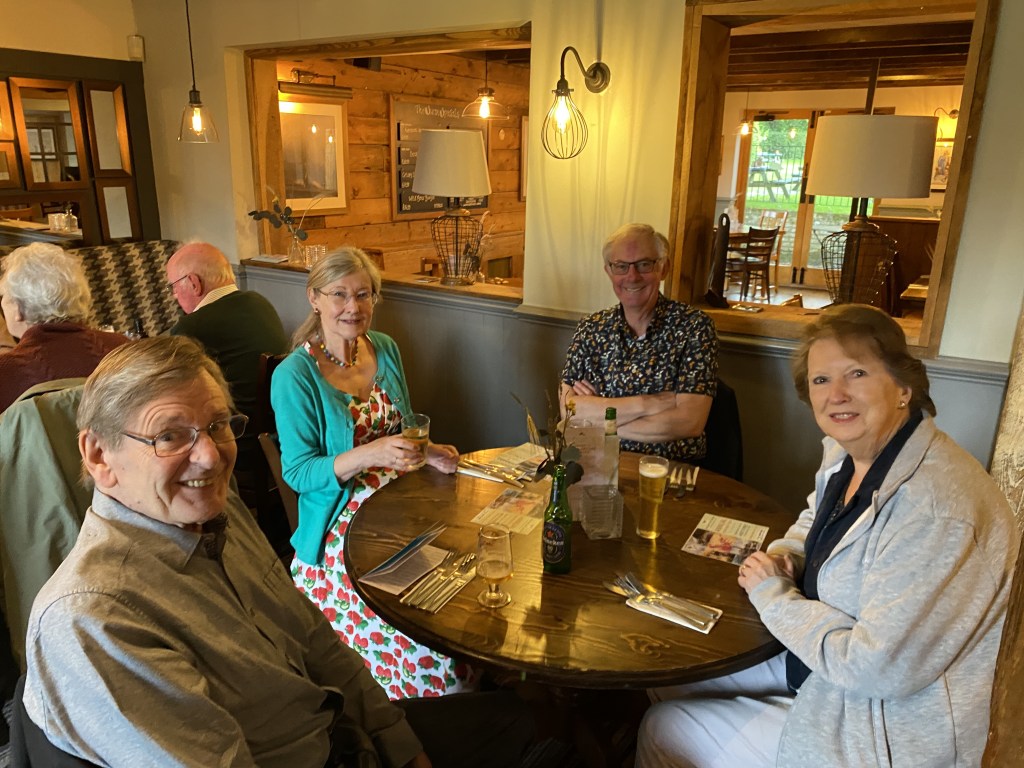
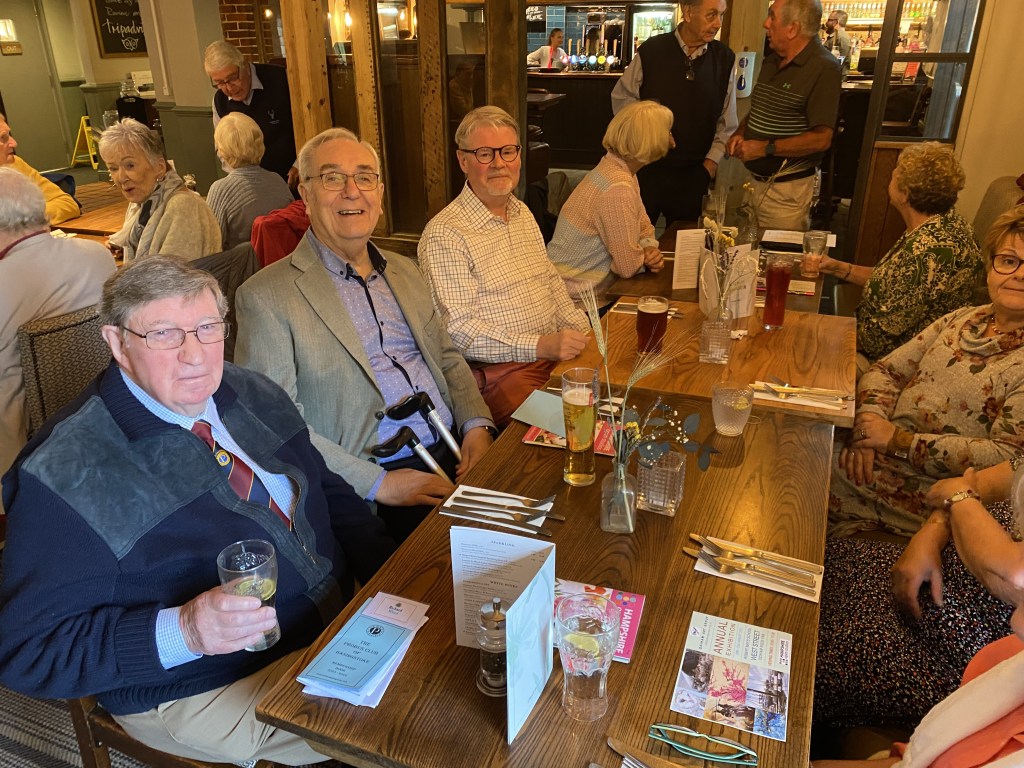
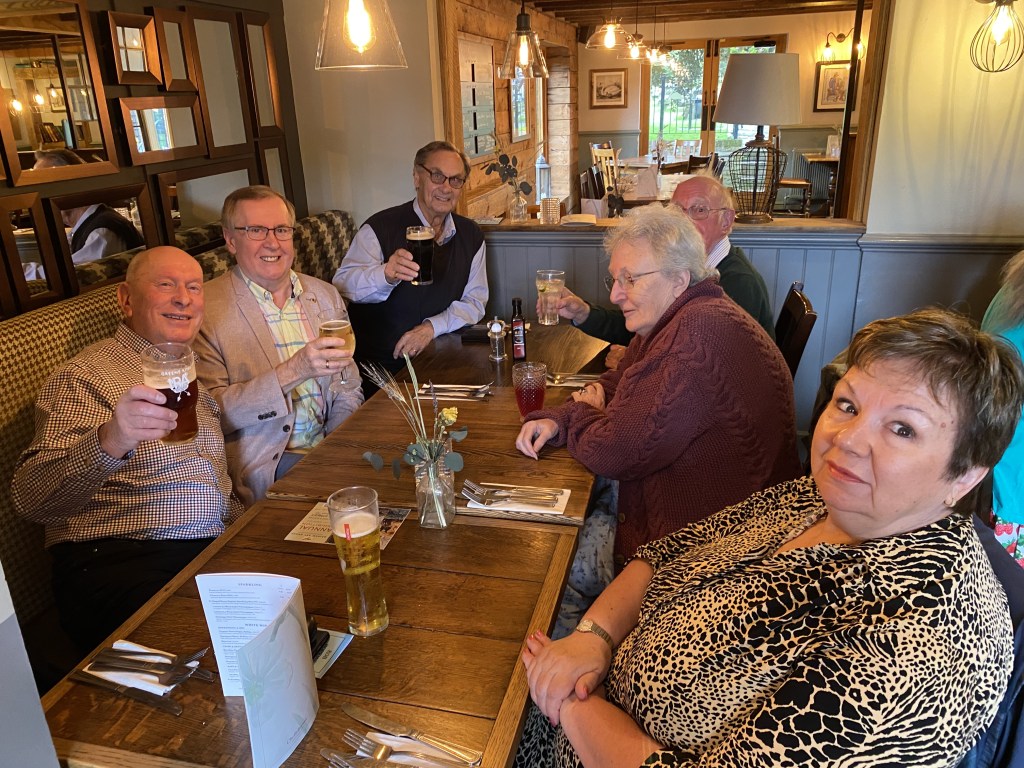
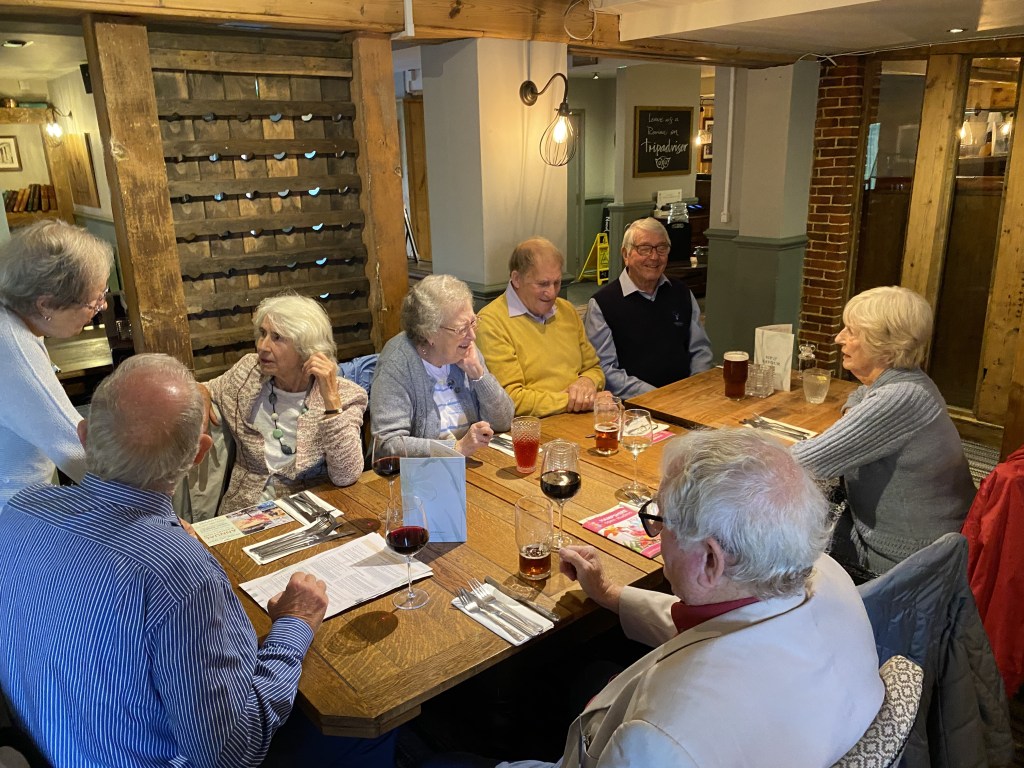
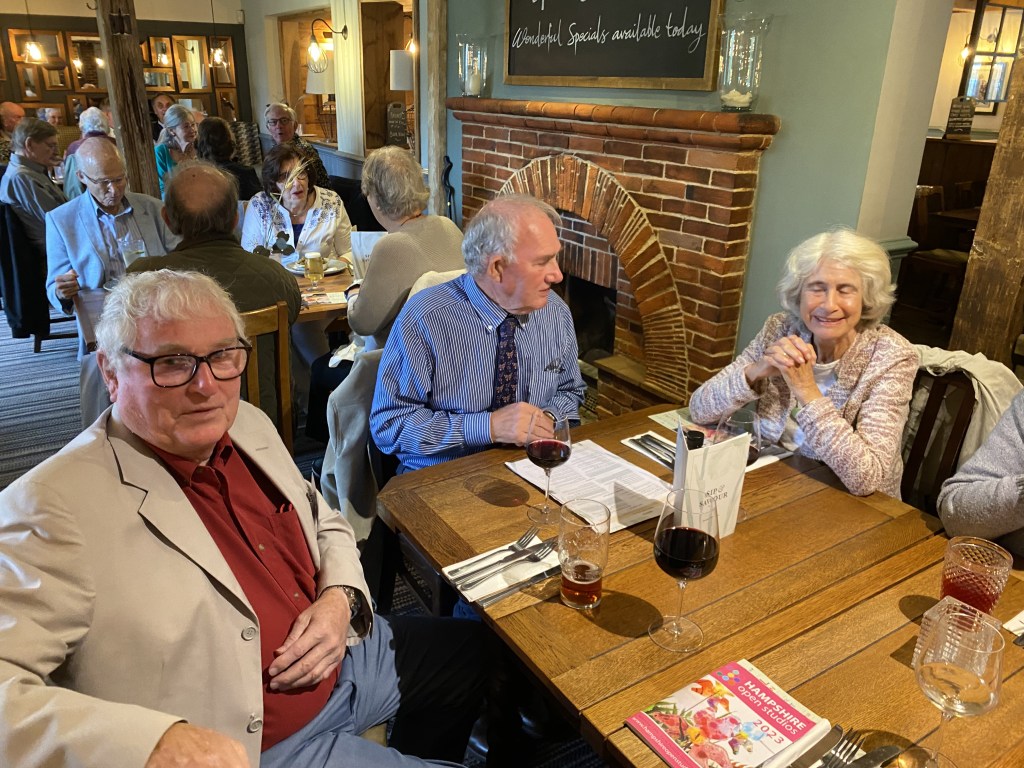
It was back in 2016 when the then President Fred Locke selected the Swan at Sherborne St John for the Probus summer pub lunch and going back this time was the choice of our current President Dr Jeff Grover. Perhaps the fact that they both live down the road in Bramley may have influenced their choice, but it turned out very satisfactorily in the event.

In the intervening years the quality of the food offering has improved with the selection this time probably suiting the 34 attendees with some having one course, some two courses and a few having three courses and coffee. And a drink from the bar. And good conversations were had all round.

Even though it had been necessary to tell Jeff in advance of our menu selections, always provided that one’s memory was able to recall what had been ordered the wiser members had a note with them when confirming and paying for their lunch at the bar.

Probus Hears About How Things Were Kept In The Family

President Dr Jeff Grover with speaker Heather Wylde

This was the true story about a girl and two brothers during WW2 that involved the trio in love, honour, bravery and tragedy as told by guest speaker, Heather Wylde.

It only came to light following the passing of the speaker’s mother, Viv. Her father, having previously passed away it was necessary to sort through her mother’s effects. Some items were packed off to her brother in Australia and some, including an old diary, were put in a case and consigned to her loft. In a phone call from her brother, he encouraged the speaker to read the diary wherein she discovered a record of the misfortunes of war during 1941.

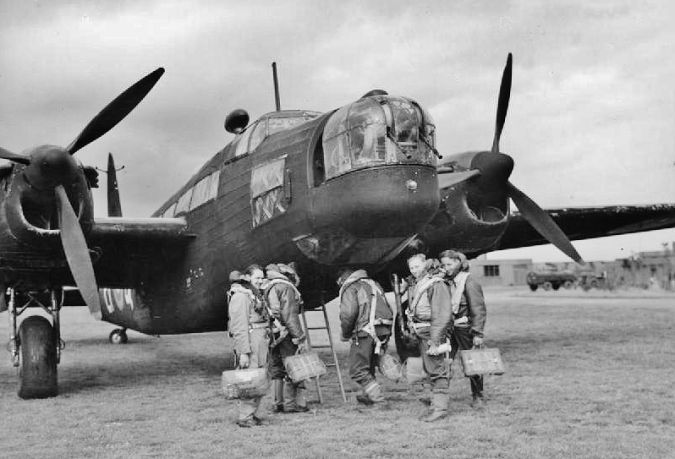
Just before the outbreak of the war, Viv and Les Butcher were persuaded not to get engaged as Viv was only seventeen. Les and his older brother, Ken, were apprenticed electricians and both joined the RAF with Ken providing electrical technical training throughout the hostilities while Les became a navigator/observer joining 103 squadron flying Vickers Wellington bombers.


The diary showed there had been much correspondence between Viv and Les and their plan to get engaged that summer with their marriage to be in the summer of 1942.

On a raid over Dusseldorf Les’ Wellington bomber was shot down into the river Rhine and the six-man crew perished. Three bodies were eventually brought ashore and were subsequently buried in a cemetery close to the Dutch border. Of Les there was no sign, and the dreaded telegram was received “missing in action”. He was one of over 55,000 air crew in RAF Bomber command who lost their lives in the war. The diary showed that it took several months for Viv to accept that Les was lost to her.

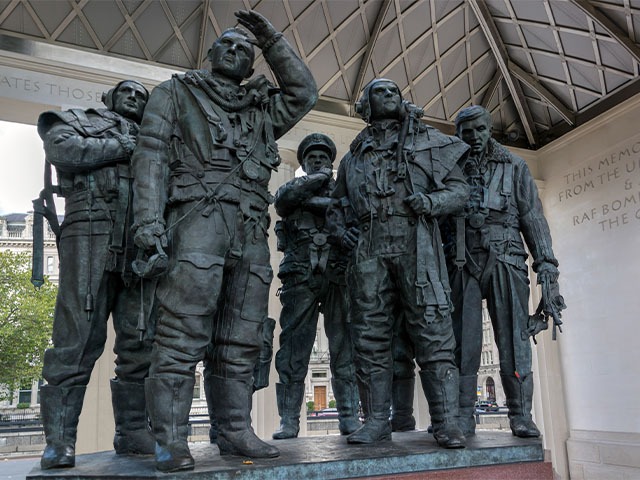
Statue near Green Park in central London which commemorates the loss of over 55,000 aircrew in Bomber Command during WW2

Fast forward to 1942 and Viv married Ken with the eventual birth of the speaker and her brother. Ken always knew that he was not the first love of Viv, but it was not known if he had read the diary. But the speaker accepts that she and her brother would not have been born had Les survived the war.

Probus Publicity in July 2023

July was a strange month for local magazines as the Villager took a break and for some unknown reason, we failed to get into the Basinga or their Basinga Extra and the usual lack of response from the Loddon Valley Link continues. The Basingstoke Gazette continues to ignore us. August will see the Villager returning while the Rabbiter has a break.

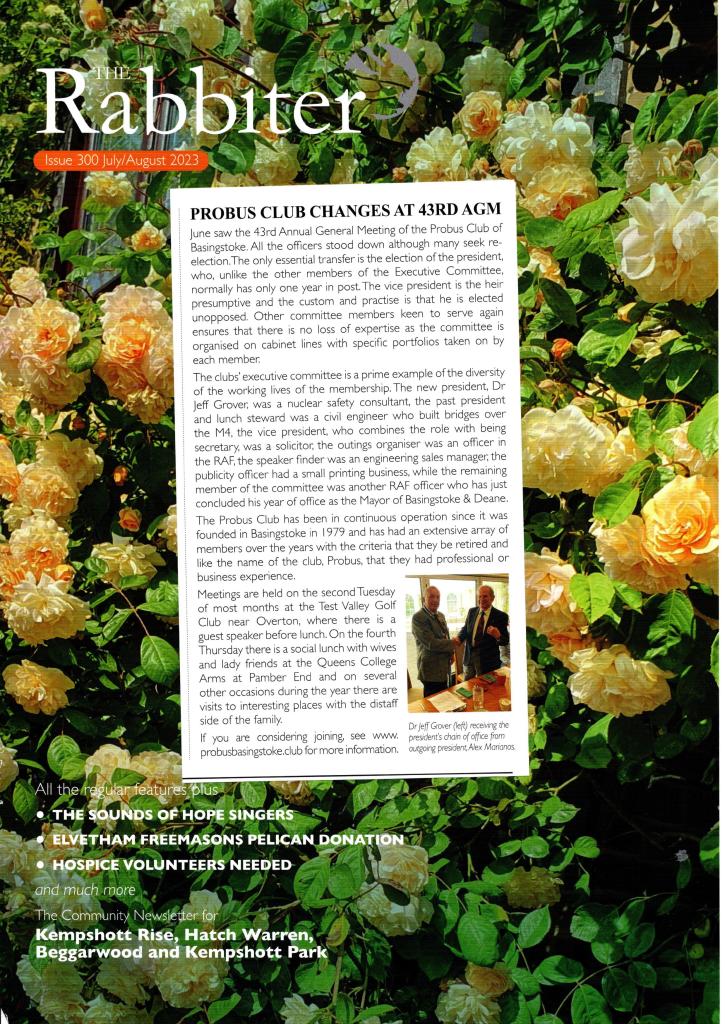
The Probus AGM was the feature in the four magazines that supported us.