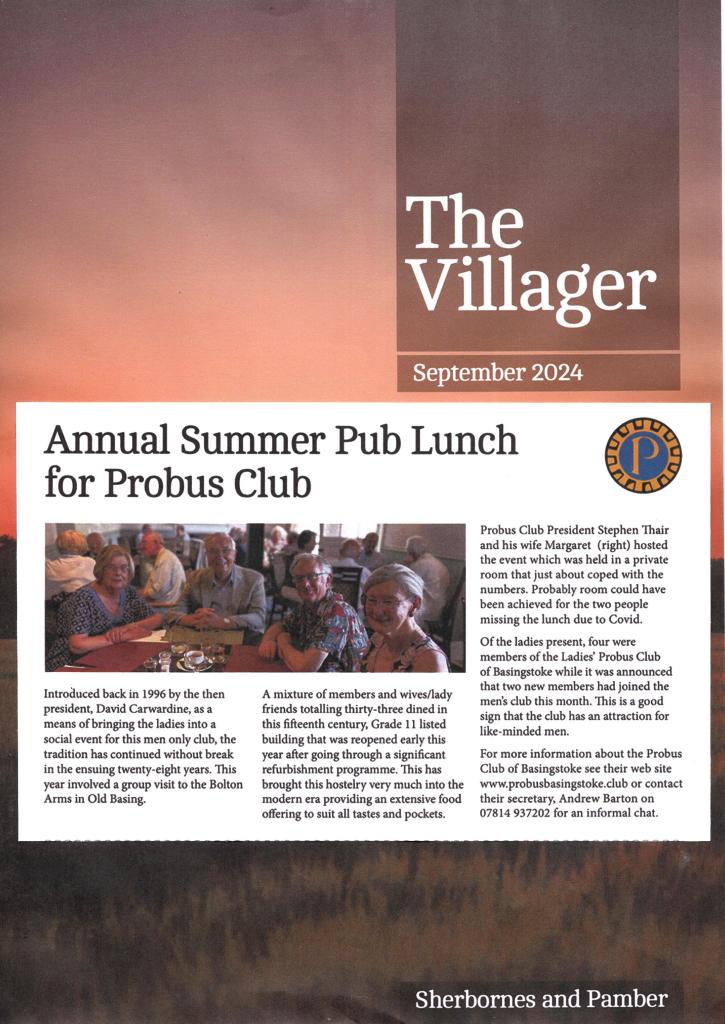
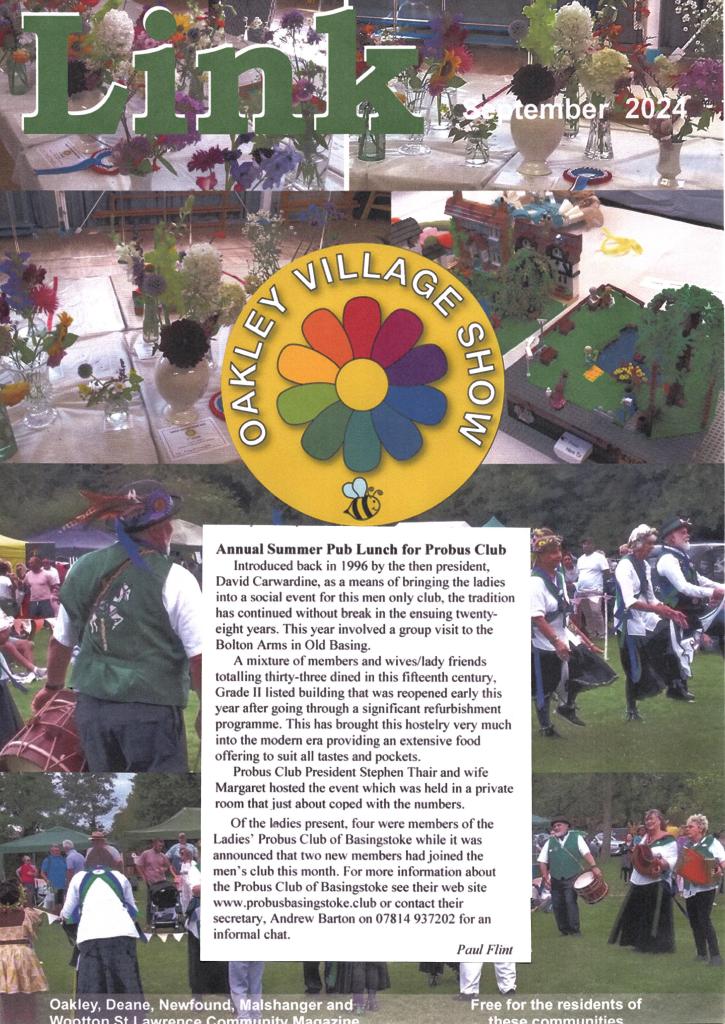
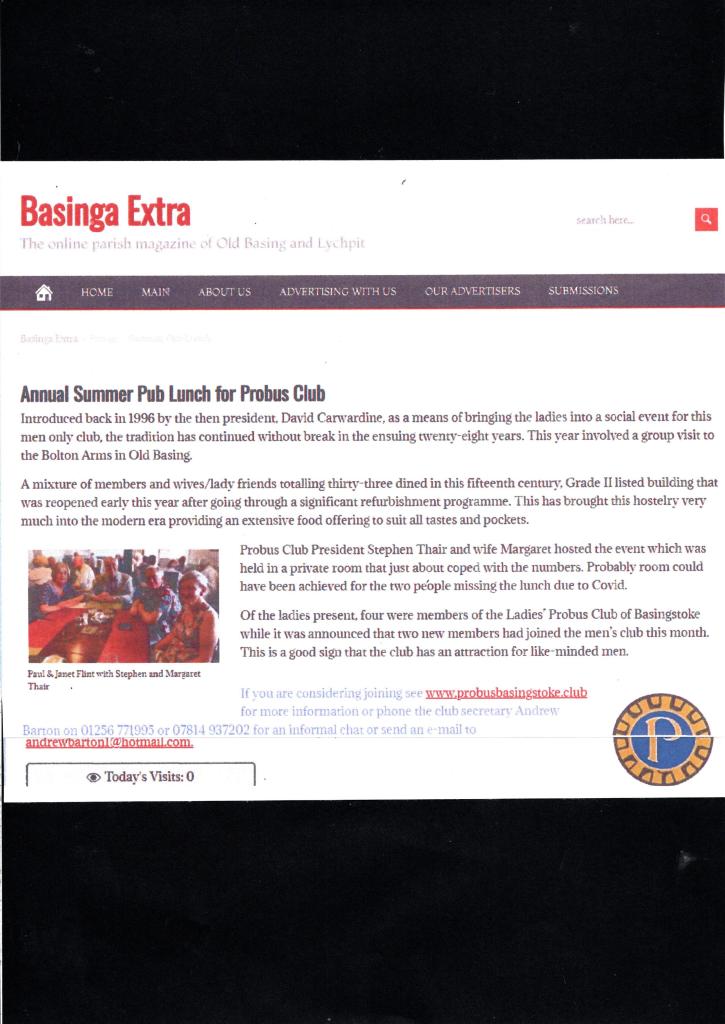
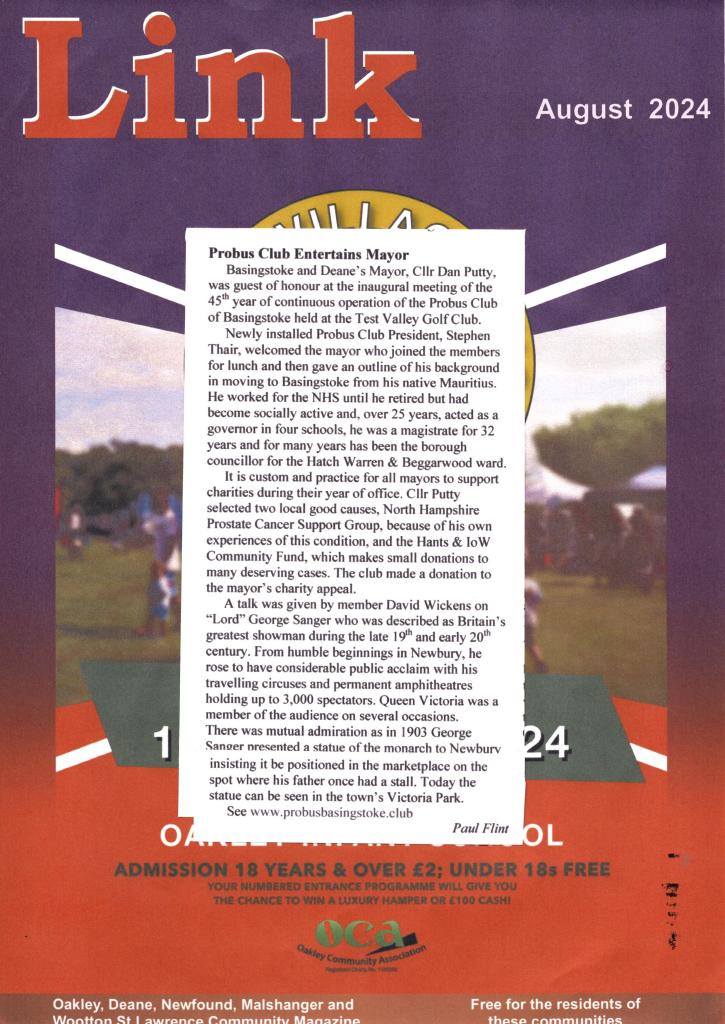
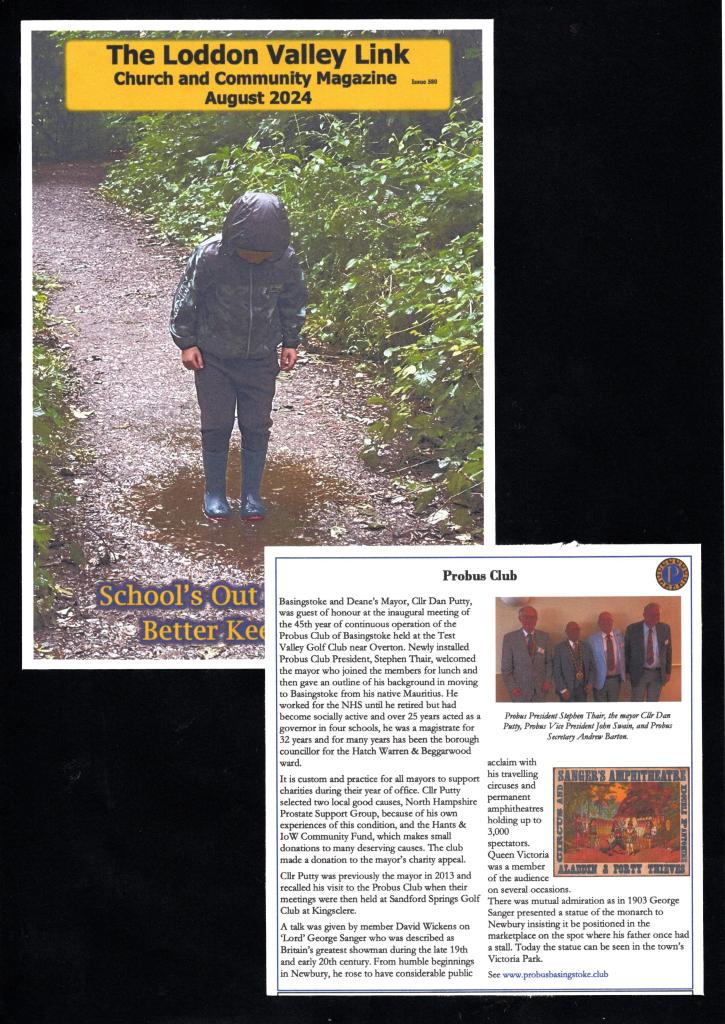
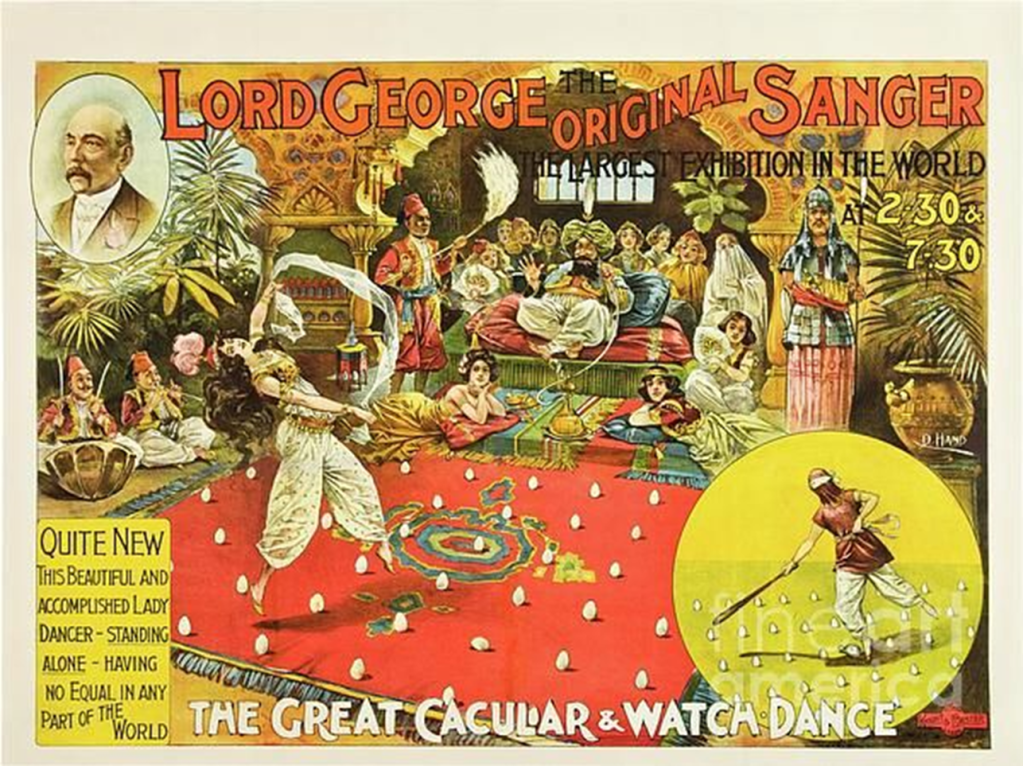
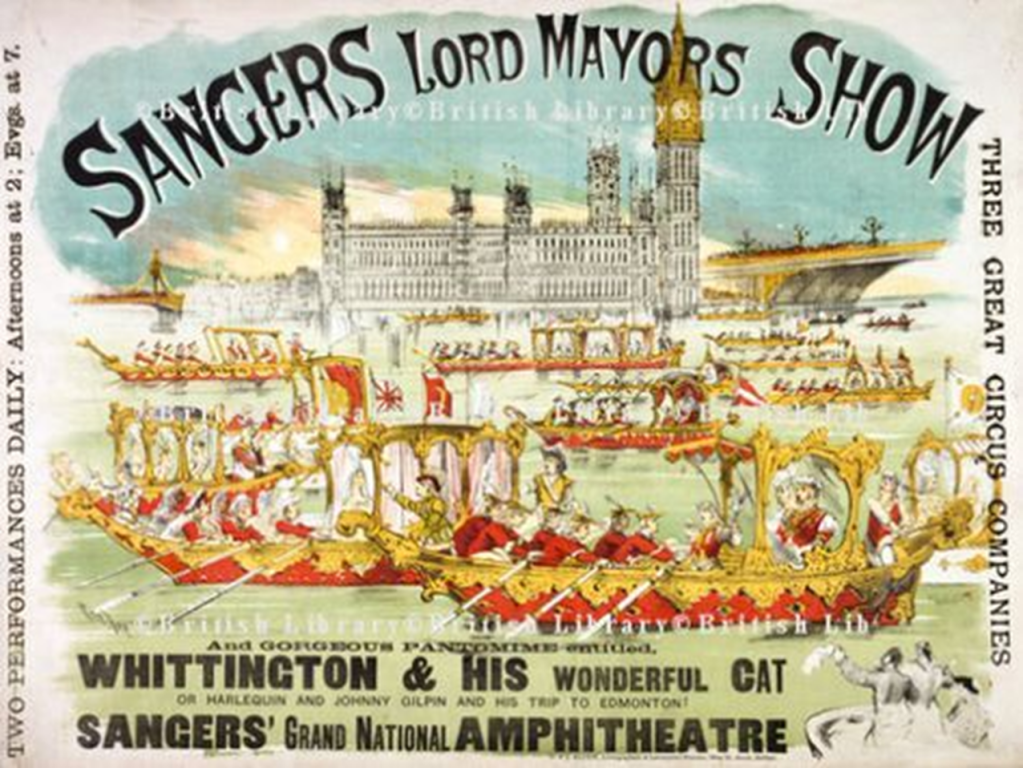
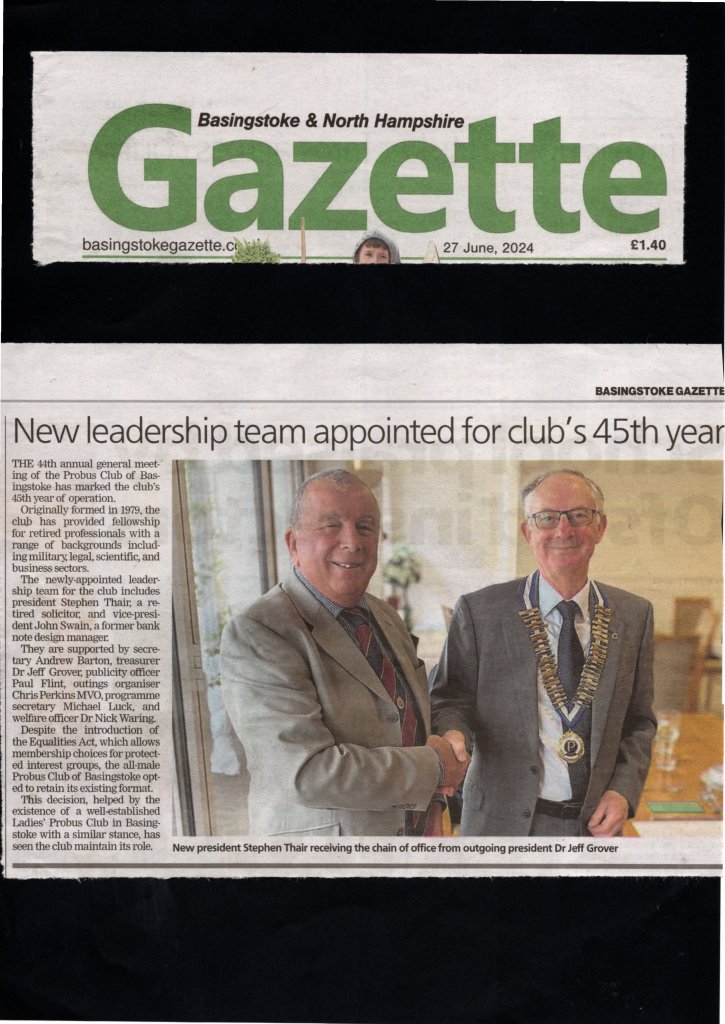
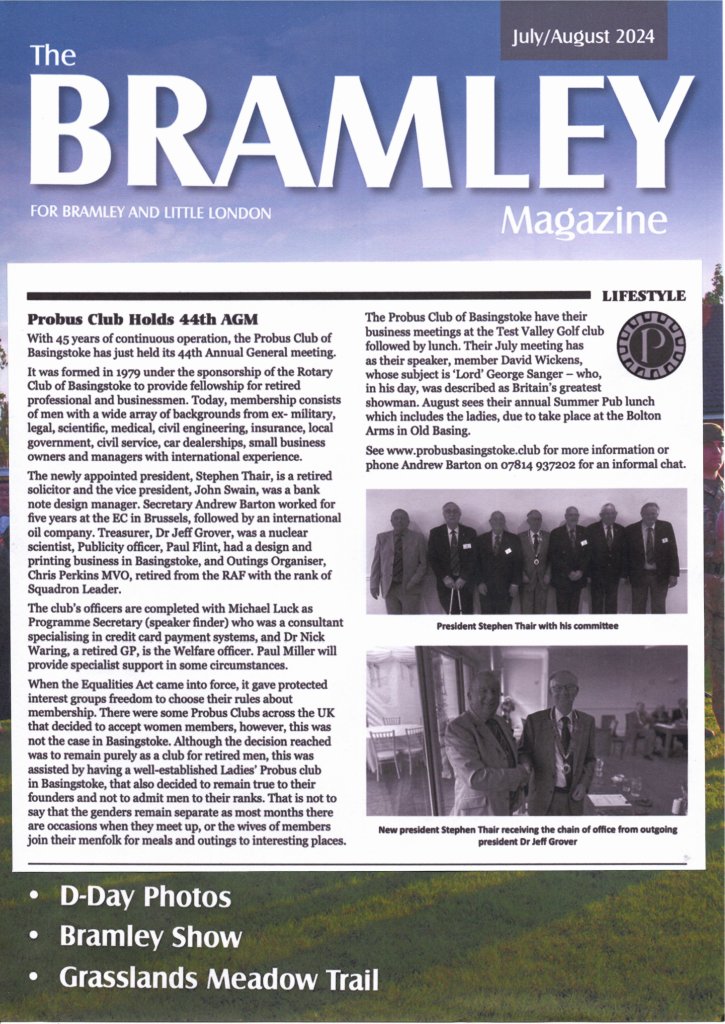
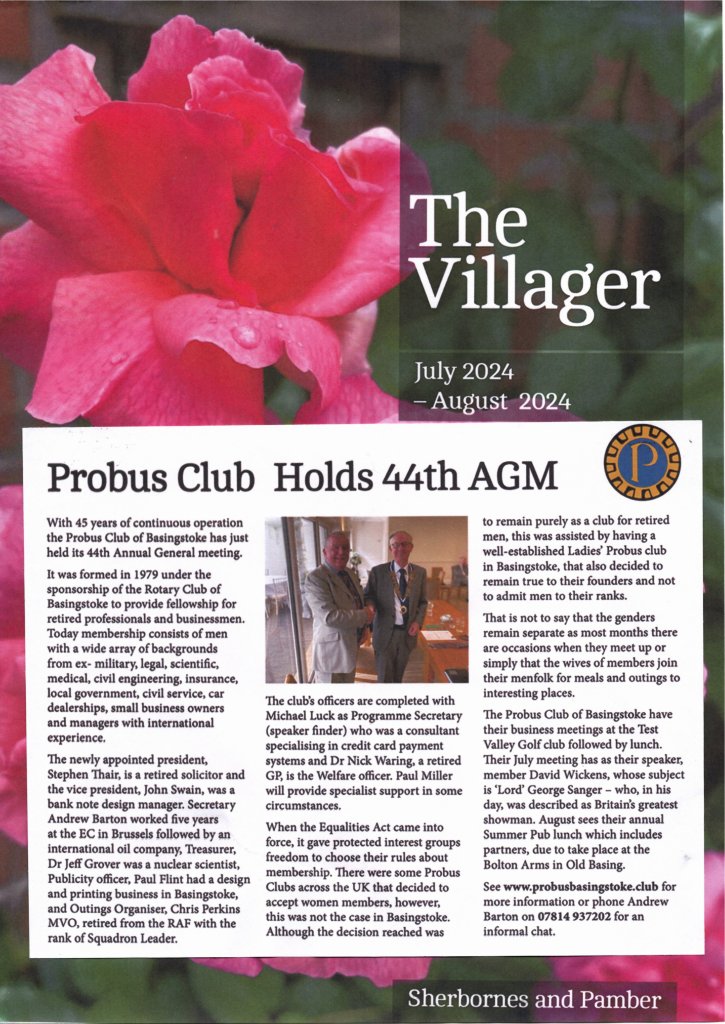
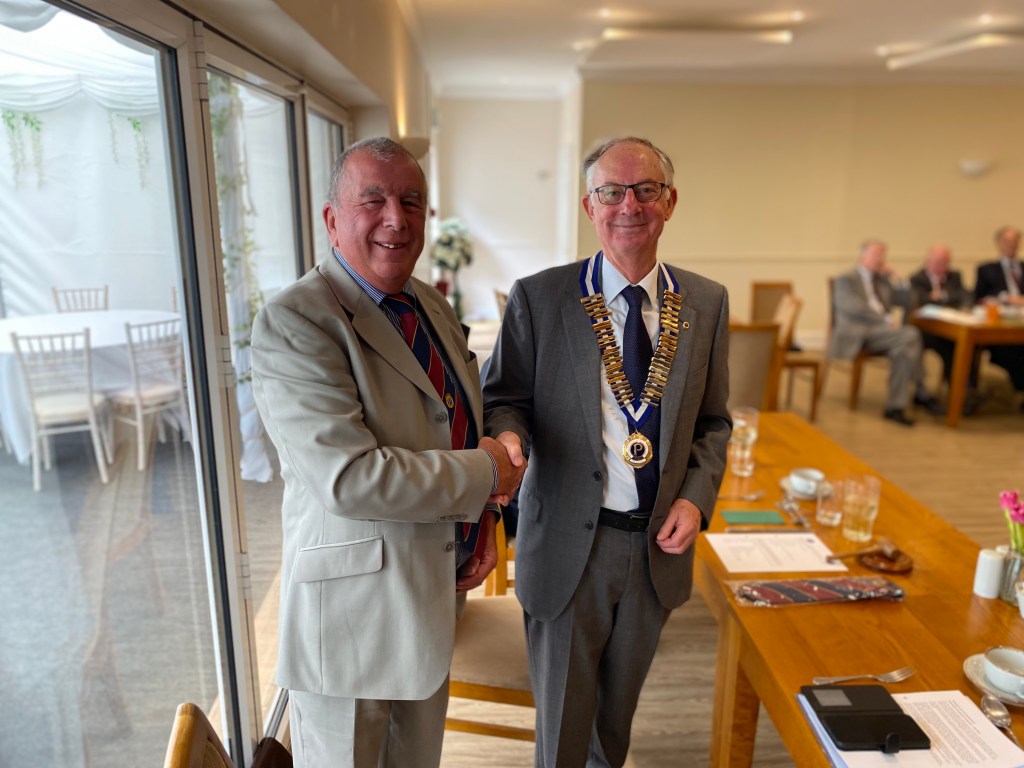
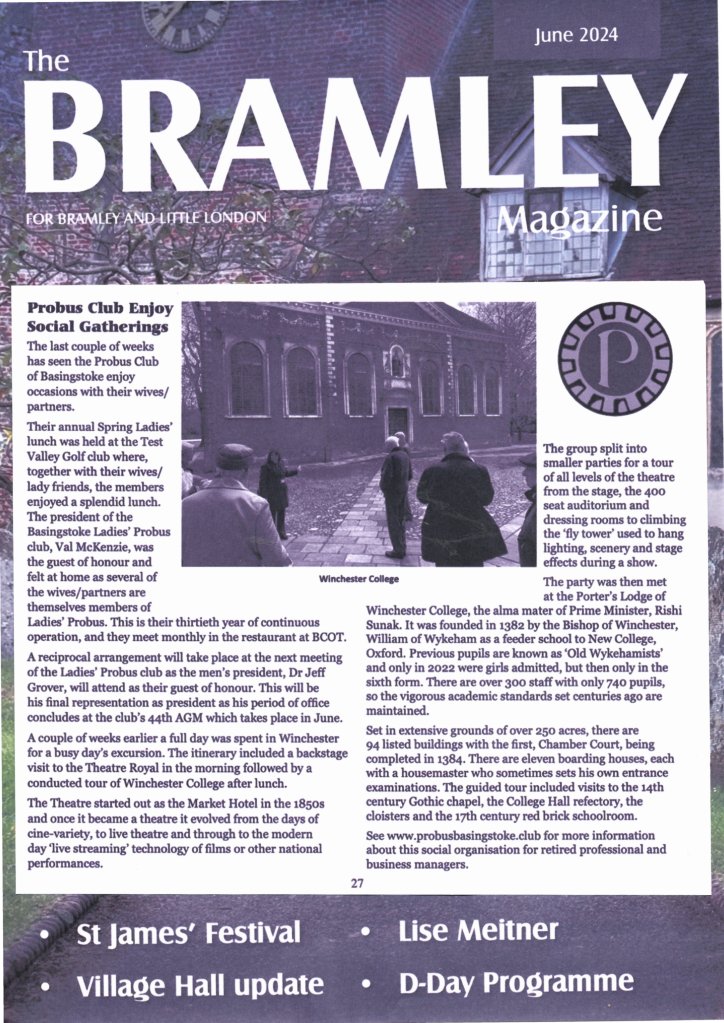
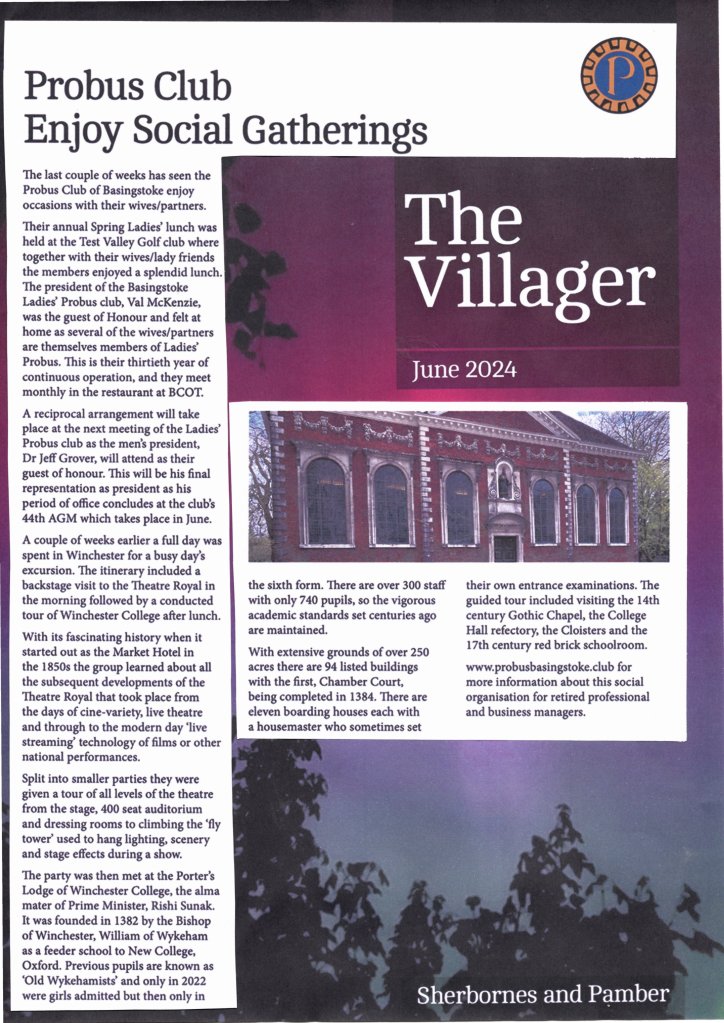
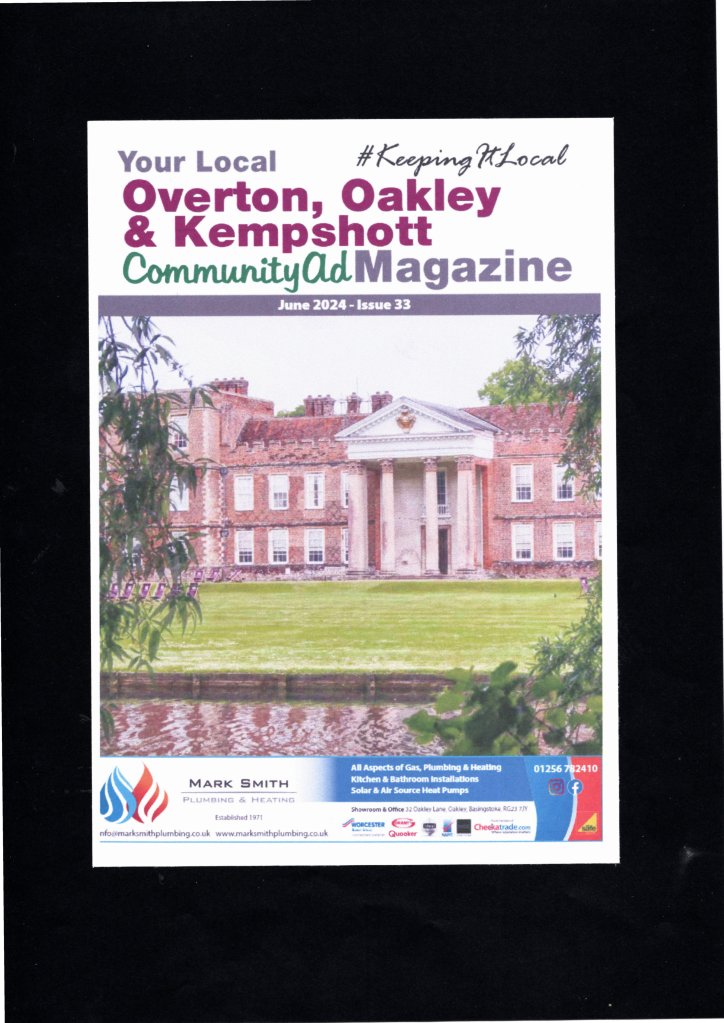
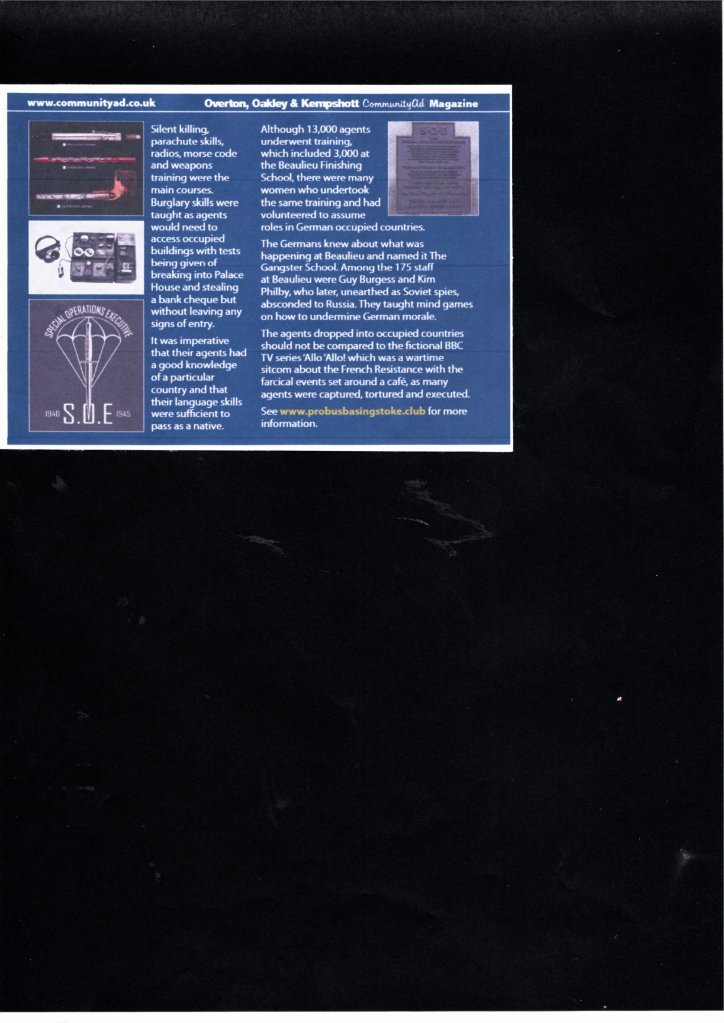
The results of our publicity in the April local magazines were reasonably well received but the Villager and the Loddon Valley Link failed to include our offering. The CommunityAd magazine for Overton, Oakley & Kempshott which is now monthly, gave us one and half pages.
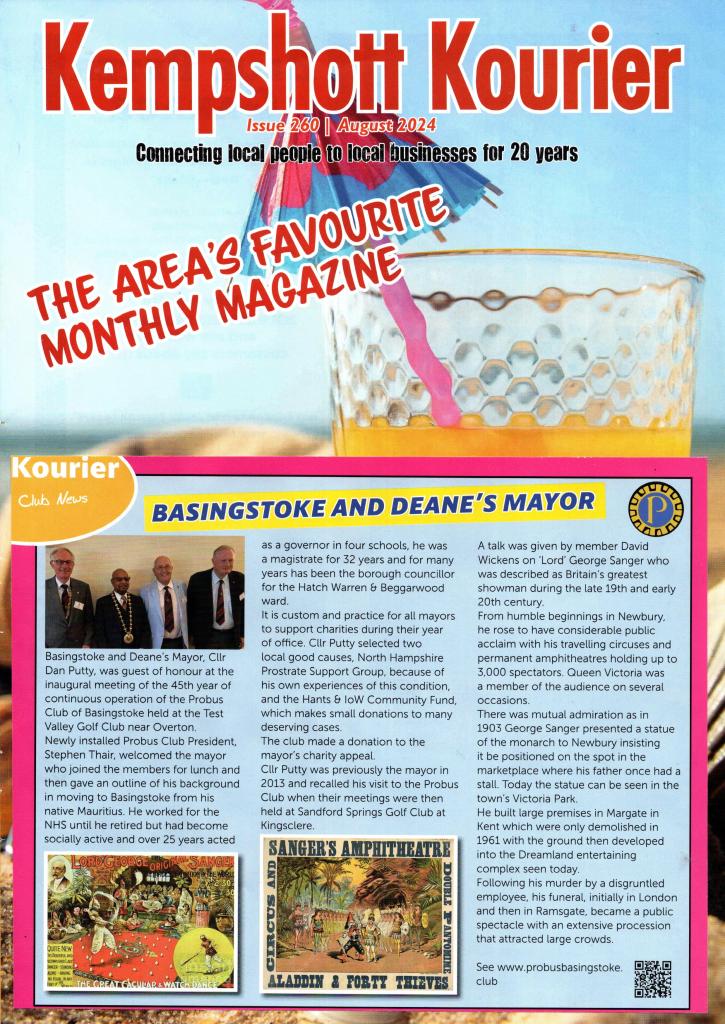
The Kempshott Kourier shown is their March edition.
Probus President Dr Jeff Grover with Dr Stephen Goss
The speaker, Dr Stephen Goss, immersed the members of the Probus Club in his subject as he delved into the background of some of the famous and amusing operettas created by Gilbert and Sullivan in the nineteenth century.
Although one member, as a schoolboy, had taken part in a performance many members had not seen such performances on stage. And yet, most of these works are well known and it came easy to hear renditions of several of the popular songs.
Seeing the words on a large screen brought home the skill of the librettist. The audiences of the day were drawn towards the clever writing rather than the accompanying music of the more famous composer, Arthur Sullivan, that made the credits change to Gilbert and Sullivan.
Arthur Seymour Sullivan had been brought up in a musical household where his father was a band master and as a child Arthur was a chorister in the Chapel Royal. He attended the Royal Academy of Music and following three years at the Leipzig Conservatory, he initially struggled to make a living as a conductor, organist, teacher and choir master. He wrote serious music including for royal occasions and became well known as England’s most promising composer.
William Schwenck Gilbert had a variety of jobs most of which needed a good level of expertise in the English language. He had been a civil servant, a barrister, a comic journalist and became a captain in the militia. He drew on the experiences from these occupations writing four plays a year for ten years.
It was interesting to discover the witty commentary on contemporary society, with a look at the stories behind some of most famous pieces of music. WS Gilbert developed the ‘topsy-turvy’ words that become so familiar, and Arthur Sullivan was able to compose music that suited each situation.
EarlyUSA Programme for Pirates of Penzance
They wrote fourteen comic operas between 1871 – 1896 with the most popular being HMS Pinafore, The Pirates of Penzance and The Mikado. They were hugely successful with HMS Pinafore having an initial run of 571 performances and within a year was on the stage in USA and across the world.
The thinly veiled satire of some of the plots was uncovered to the enjoyment of the audience, along with the unmasking of characters which were deliberate parodies of specific Victorian politicians and notables. Gilbert’s political satire often provoked fun at the wealthy and powerful whom Sullivan sought out for friendship and patronage.
Richard D’Oyly Carte brought Gilbert and Sullivan together and nurtured their collaboration. He built the Savoy Theatre in 1881 to present their joint works which became known as the Savoy Operas and was the first public building in the world to be lit by electricity. The D’Oyly Carte Opera Company was formed just to promote these operettas and performed over 35,000 Gilbert and Sullivan’s creations, only closing in1982.
Gilbert and Sullivan had the attention of Victorian society with the wit and satire appealing to popular audiences but was forecast to be transitory. Today, 140 years later they are still enjoyed throughout the English speaking world.
A good result with all seven local magazines carrying our report. The Kempshott Kourier, late again, is their February edition showing the cricket report while the others are about the visit of the Mayor and Mayoress and the talk about the BBC which even achieved coverage in the Basingstoke Gazette.
Guests of Honour at the latest Probus Club meeting at the Test Valley Golf Club were the Mayor and Mayoress of Basingstoke & Deane, Cllr David and Amanda Leeks. The club made a donation to the mayor’s charity appeal.
A triumvirate of Chains of Office
Before lunch they enjoyed a trip down memory lane as they were entertained by the speaker Jenny Mallin. She gave an insight into how the BBC Television Centre was designed and what TV production life was in the seventies. This was through her experiences gained over seven years working at the BBC Television Centre at White City in Wood Lane.
President Dr Jeff Grover with Jenny Mallin
The name White City came from the 120 white painted buildings and 20 pavilions specially constructed for the Franco British exhibition of 1908 on a site of 140 acres near Shepherds Bush in West London. It was attended by over 8 million visitors. The White City stadium was a last minute addition for use at the 1908 Olympics where for the first time gold, silver and bronze medals were awarded. The stadium was demolished in 1985. Over the years the site was used for other exhibitions and redeveloped for other uses including the building of the BBC Television Centre.
Known as the ‘Donut’ because of the circular central core it was the most technically advanced and fully embracing television production centre with eight studios, full props and wardrobe departments and was the best in the world. The attention to detail in programme making was paramount.
Despite such comprehensive supporting facilities, there was an increasing requirement for some programmes that needed an audience, so the nearby Shepherds Bush Green Empire was used. Eventually the BBC purchased it, becoming then known as the BBC Television Theatre. Programmes broadcast from here included the Billy Cotton Band Show, What’s My Line, Juke Box Jury, Crackerjack, the Black & White Minstrels, That’s Life and the Generation Game among many others.
Jenny recalled her time on the Generation Game as a Contestant Researcher and Games Deviser to three years on Mastermind with Magnus Magnusson and a myriad of disc jockeys on Top of the Pops and whether songs were sung live or mimed.
How news programmes were put together with breaking news events that demanded being featured with split seconds decisions on what to drop from the programme. News film taking up to an hour to process even after arriving at the BBC and then the introduction of ENG, electronic news gathering, with the use of camcorder type recordings taken by outside reporters.
Memories were stirred as Probus members enjoyed this nostalgic view of a simpler life when the only decision to be made about what to watch on the “telly” was whether your choice was on the BBC or on ITV.
A good result for the Cricket report, helped by the addition of some illustrations to give interest. Also included are the Kempshott Kourier which arrived halfway through January and the new monthly from the CommunityAd publishers, again in late January, for their edition for Overton/Oakley/Kempshott. Both these two magazines featured the Probus Christmas lunch.
The memorial service for Derek Roberts, who passed away last November, was held on Saturday 27 January at St Mary’s church, Eastrop, Basingstoke.
The service was well attended with some affectionate tributes from Derek’s family and old friends and a contribution from the Basingstoke Male Voice Choir of which he was a member.
Derek joined our Probus Club in October 2015 and was a loyal supporter of our activities over the years with his wife, Elizabeth, and on many occasions was a member of the golf team.
Elizabeth and Derek at the Spring Ladies’ Lunch May 2023
Probus was represented at the service by Alex Marianos, Ian Nicholson and Stephen Thair and their respective wives.
The fact it was a bitterly cold day encouraged the members of the Probus Club of Basingstoke to think about summer days and hearing the strike of willow on leather as their guest speaker, Mike Brook, reminisced about his interest in that most English of games, cricket. Hampshire is home to the Hambledon Cricket Club, founded in 1750, known as the cradle of cricket, where many of the laws of the game were formulated.
Hambledon Cricket Club the cradle of English cricket
Most people learn something new every day and this occasion was no different. Because this was Mike Brook’s 222 speaking engagement, the cricket aficionados understood that this could be termed a double Nelson.
Apparently, a Nelson in cricket is when the score is on 111 runs and considered unlucky. It was named after Admiral Lord Nelson who, many people recall history incorrectly, had one eye, one arm and one leg. This is not strictly true as he lost his sight but not his eye and had two legs when he died. And when the three wickets are viewed without the bails look like 111 which indicates the person at the crease is dismissed.
Tradition has it that on this score the batters and umpires raise a leg to salute the Admiral. Umpire David Shepherd was most superstitious about Nelson, he didn’t just bend his leg but attempted to keep it off the ground until the score was past 111 or multiples of that number.
Umpire David Shepherd at a Nelson
But many question what it is about cricket that keeps many middle-aged men interested and playing the game long after much younger men have retired from other field team sports.
It certainly is not an easy game and because the fear of physical injury is very common in recent years much protective equipment is worn by the two batters at the crease, the wicket keeper and those fielders positioned close to the batter. These days it is not correct to call them batsmen as more ladies take up the game.
It is said to be character building although each match score book clearly show the failures. The greatest number of wickets being lost is when the score is at zero, so there is real pressure on the opening pair of batters. Pre-game nerves are only sated when the game is won. However, batters would prefer a good personal run total in a losing game than a poor score in a winning team.
The radio programme Test Match Special, which has ball by ball commentary over the five days’ play has changed over the years. The schoolboy humour of Brian Johnston sometimes irked one of the greatest commentators, Basingstoke’s own John Arlott. He was born at the lodge house at the old cemetery on Kingsclere Road. and educated at Queen Mary’s grammar school in the town. He was at the microphone the first time a streaker ran across the pitch and called her a freaker. This activity is something that women find fascinating with many copying this act over the years.
Basingstoke’s John ArlottHome of John Arlott
During wartime a cricket match was abandoned due to fog, but the commentators continued to broadcast this now fictitious game so as not to let the Germans know about the weather.
Mike Brook finished off by considering the closeness of cricket to golf by recalling the story of the radio programme with Eric Sykes coming home frustrated at his performance on the golf course and threw his bag of clubs into the corner. Hattie Jacques questioned why continue playing if it gets him into a bad mood, with the reply coming, “because it’s the only pleasure I get”.
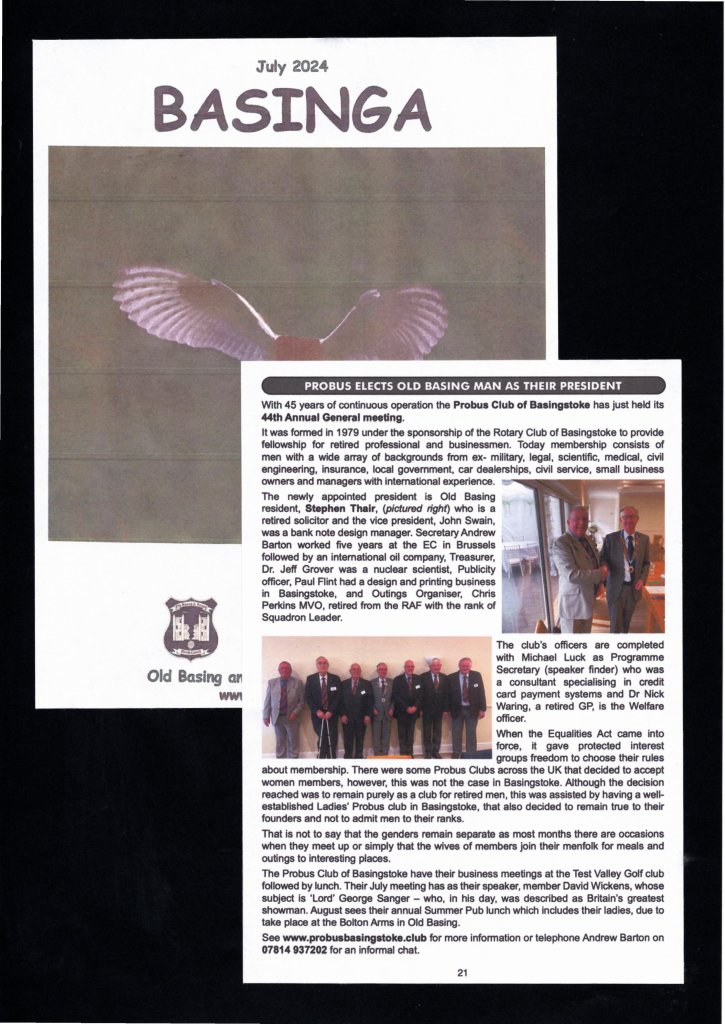
January is typically a quiet month for our publicity as only three of the local magazines have a January edition – the Link (Oakley), the Basinga and Kempshott Kourier.
We had a small piece in the Link, had a two-page spread in the online Basinga Extra and as the Kempshott Kourier is always late the image shown in this month’s display is for their December magazine which featured the talk about WW2 memories of a schoolboy.
For once the Basingstoke Gazette gave us some space but chopped off half of the photograph and wrote most of their own script.
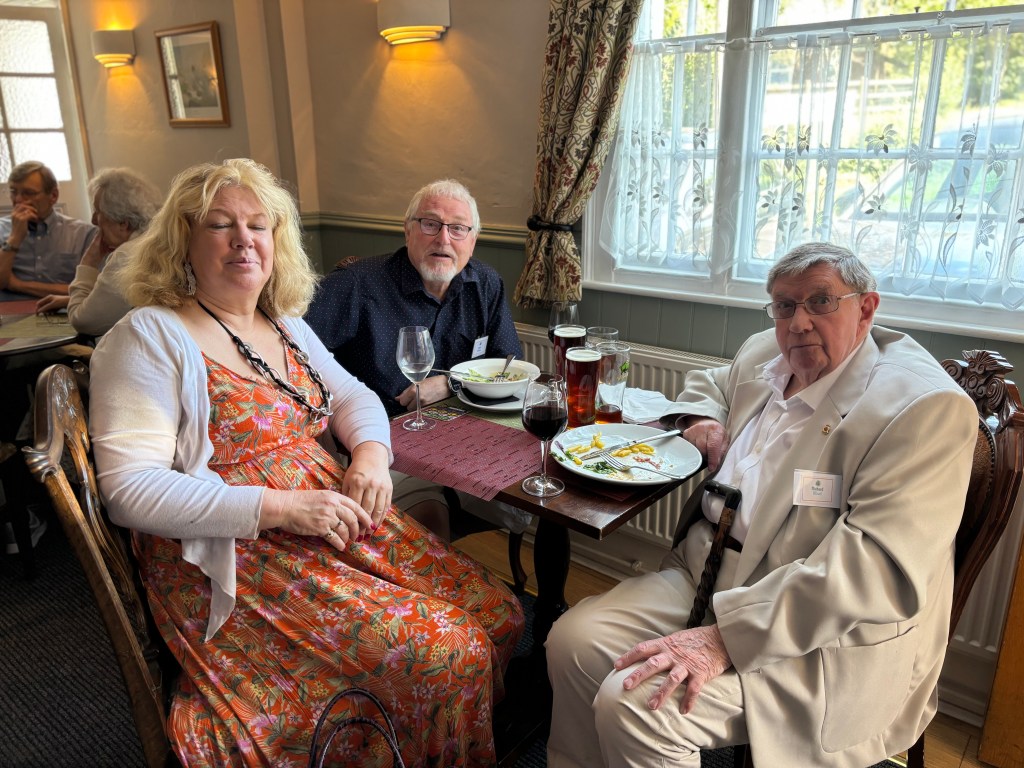
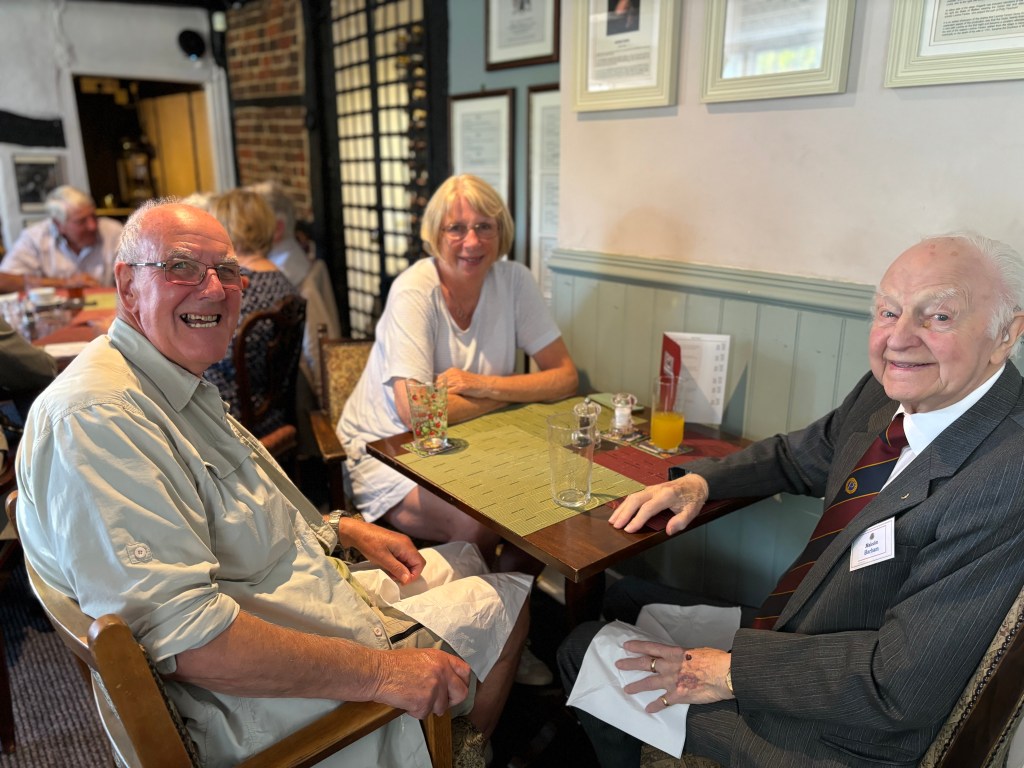
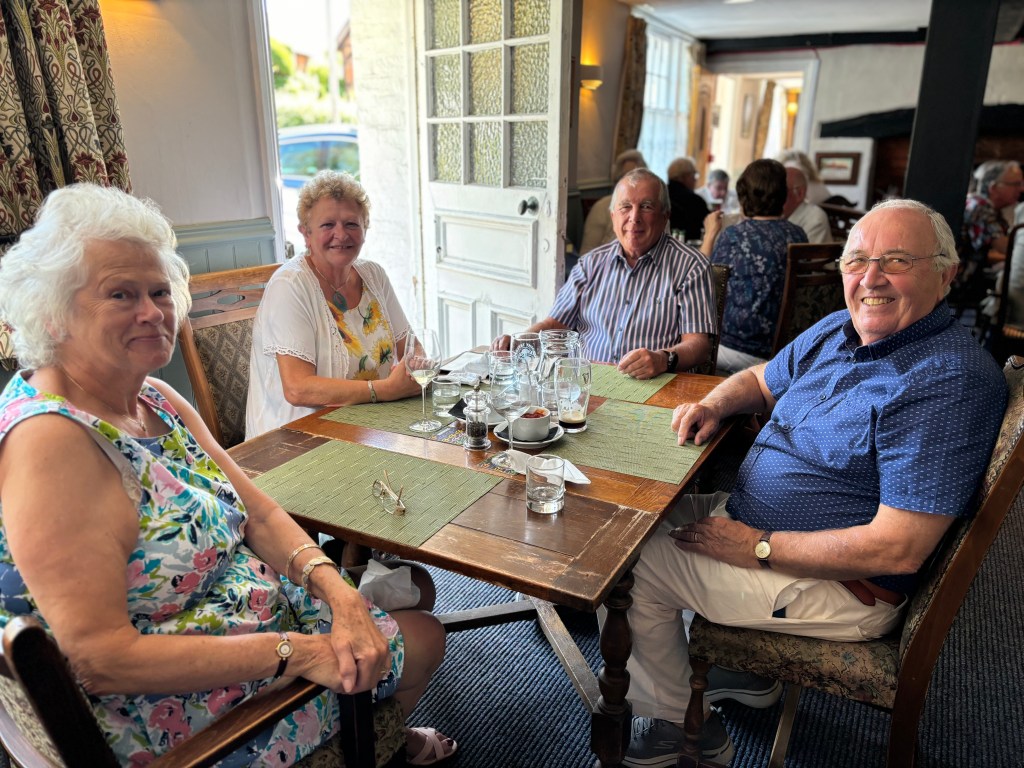
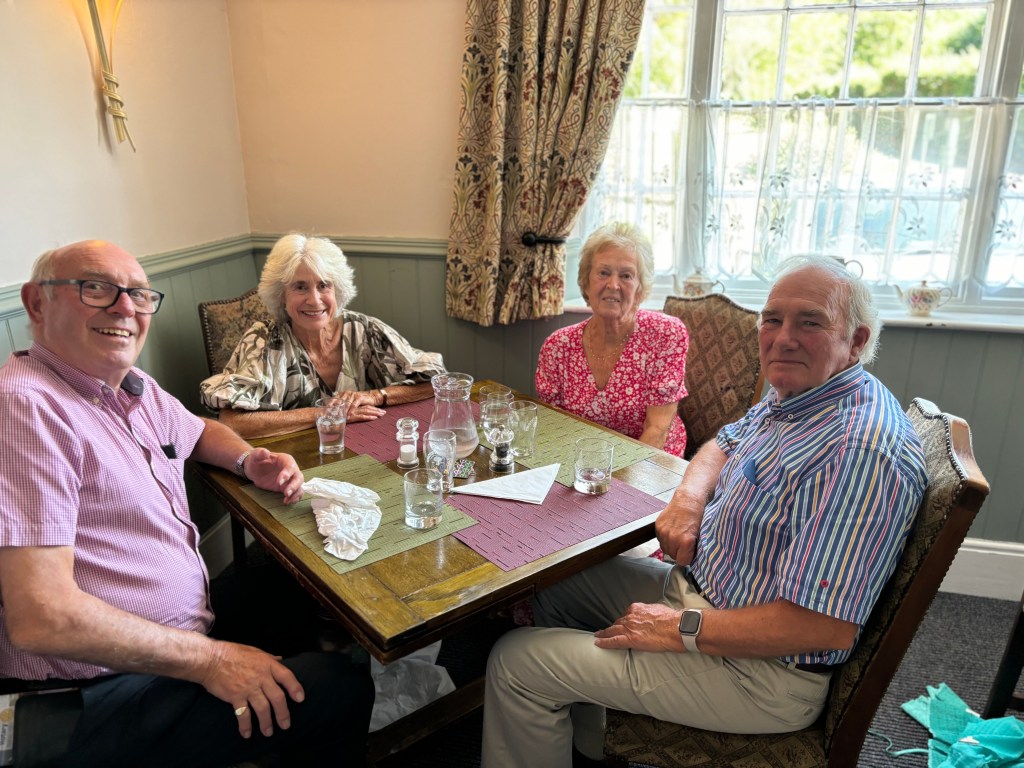
The Mill House hotel at Risley was once again the venue for the annual Christmas lunch. A combination of members, wives, families and friends, totalling thirty-six in all, enjoyed a splendid lunch in delightful surroundings, with good food and great company.
Hosted by President Dr Jeff Grover and his lady, Mary, the arrangements this year were the responsibility of our immediate past president and expert lunch steward, Alex Marianos, who was no doubt ably supported by his good lady wife, Sarah. This meant that everyone had the food of their choice and went away suitably replete with each couple taking home a Christmas gift.
The report on the presentation by our member David Styles accompanied by his partner Jenny Barton about David’s recollections of being a schoolboy in WW2 were well covered in the local magazines.
The CommunityAd publishers are starting to have a monthly edition for Overton, Oakley & Kempshott and once again gave us a double page spread. They have now requested that they receive a report each month which is good news as we have never previously had any sort of publicity in Overton.
The Loddon Valley Link, as usual gave us a miss and the Kempshott Kourier has yet to provide the files to the printer for their December edition as at Monday 11 December.
You must be logged in to post a comment.