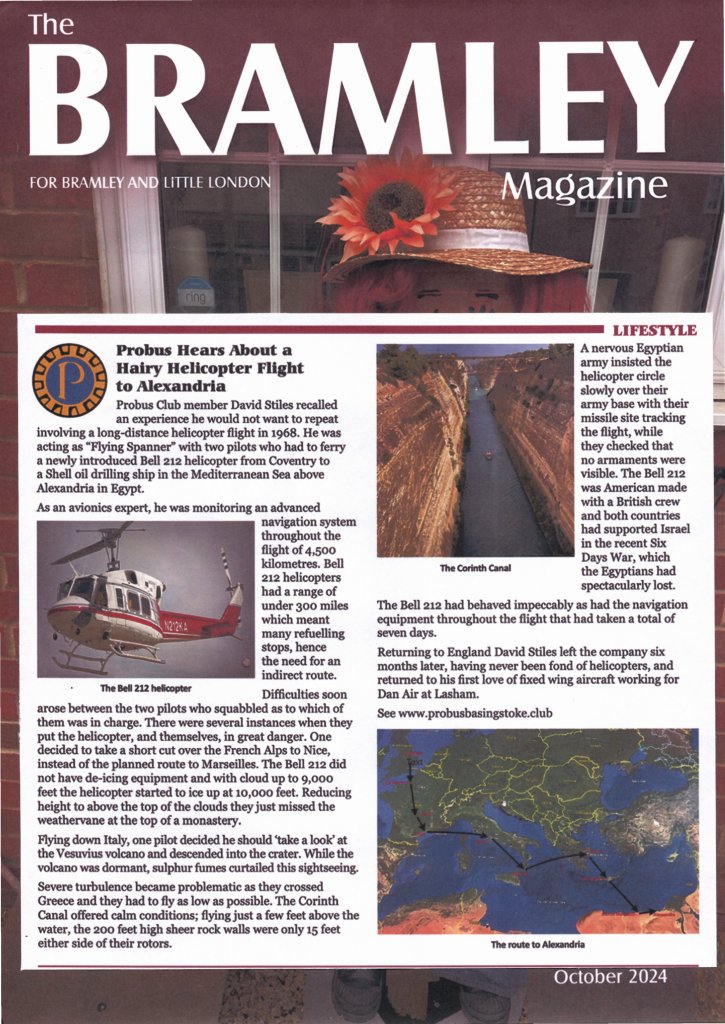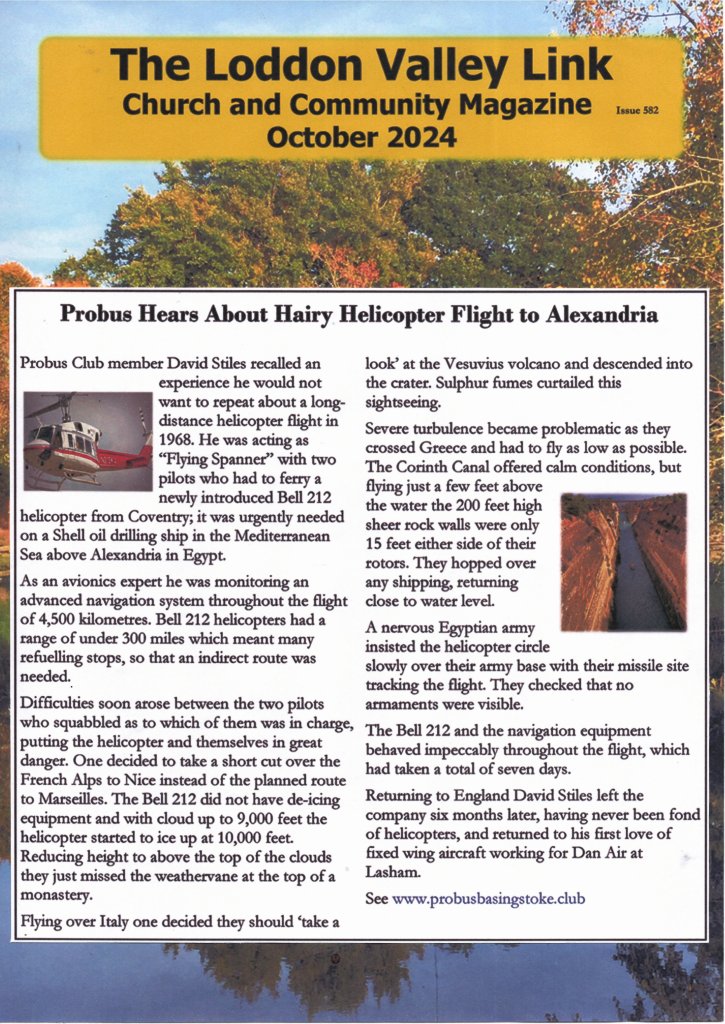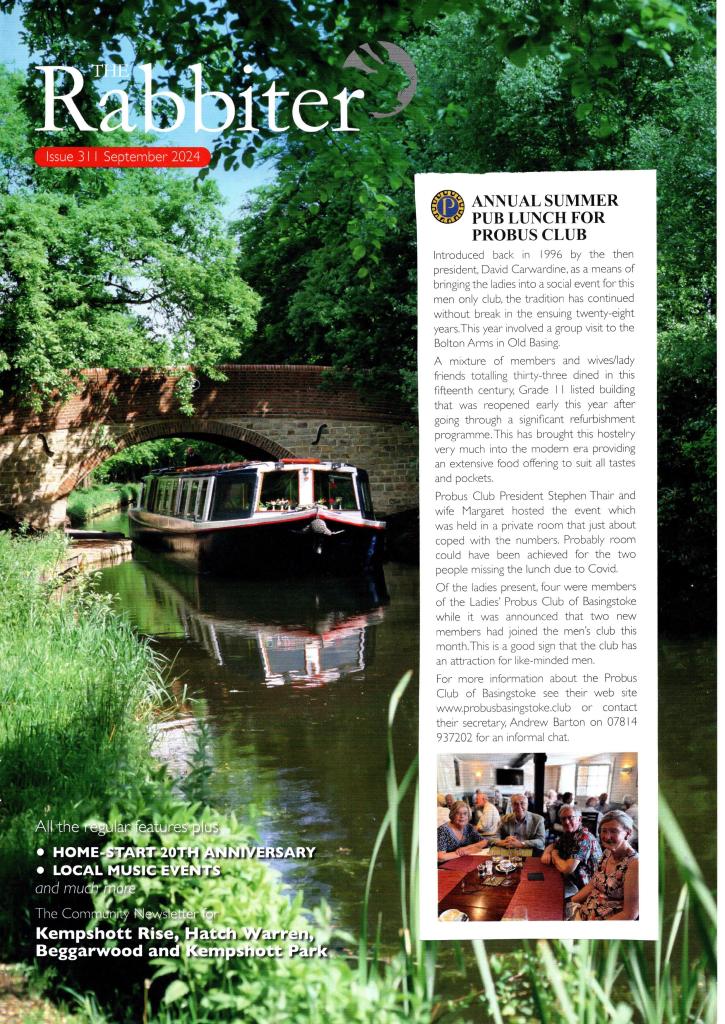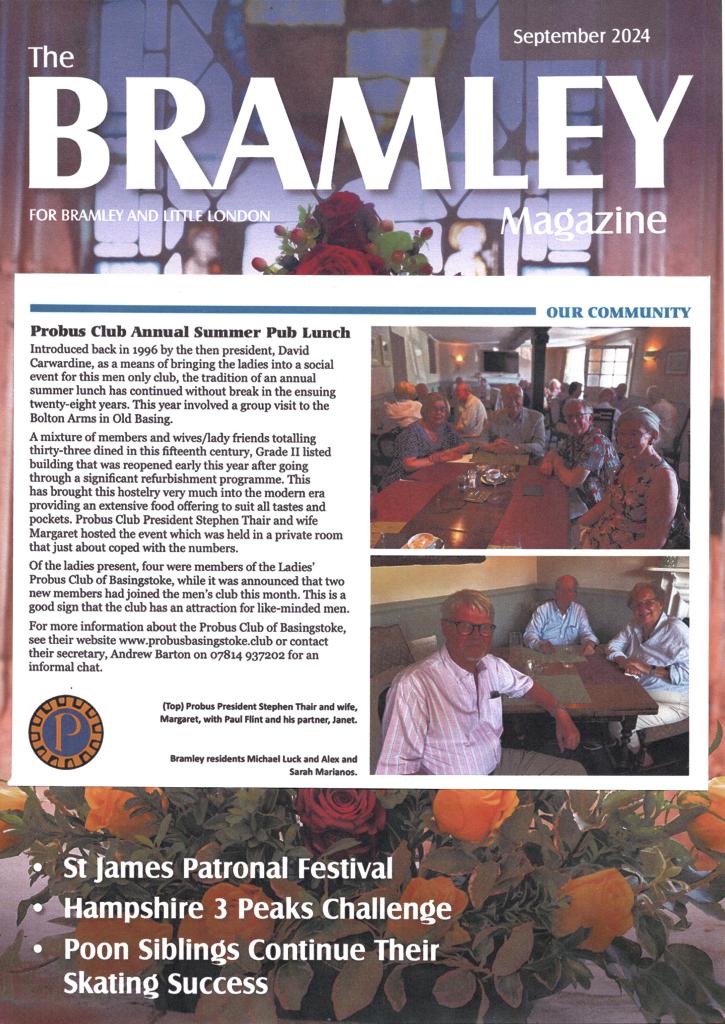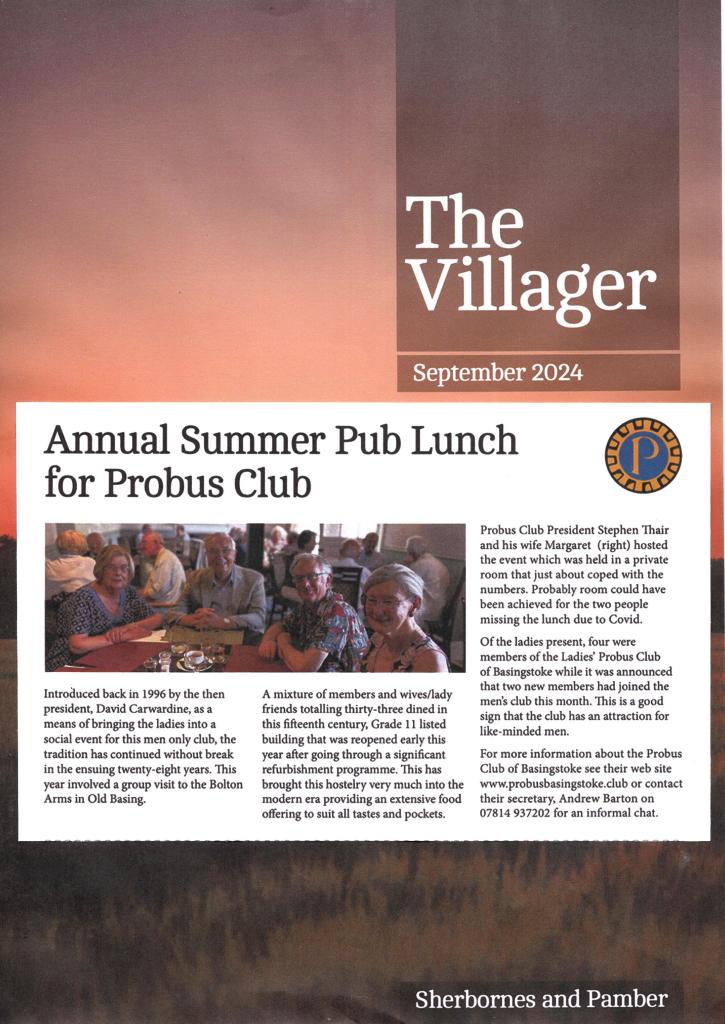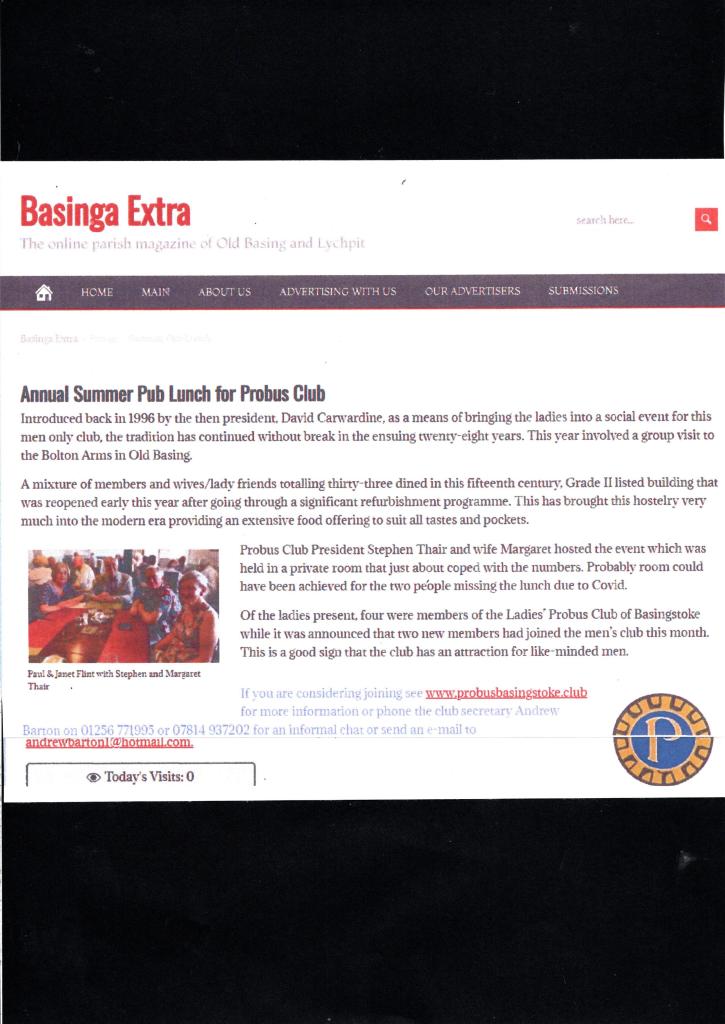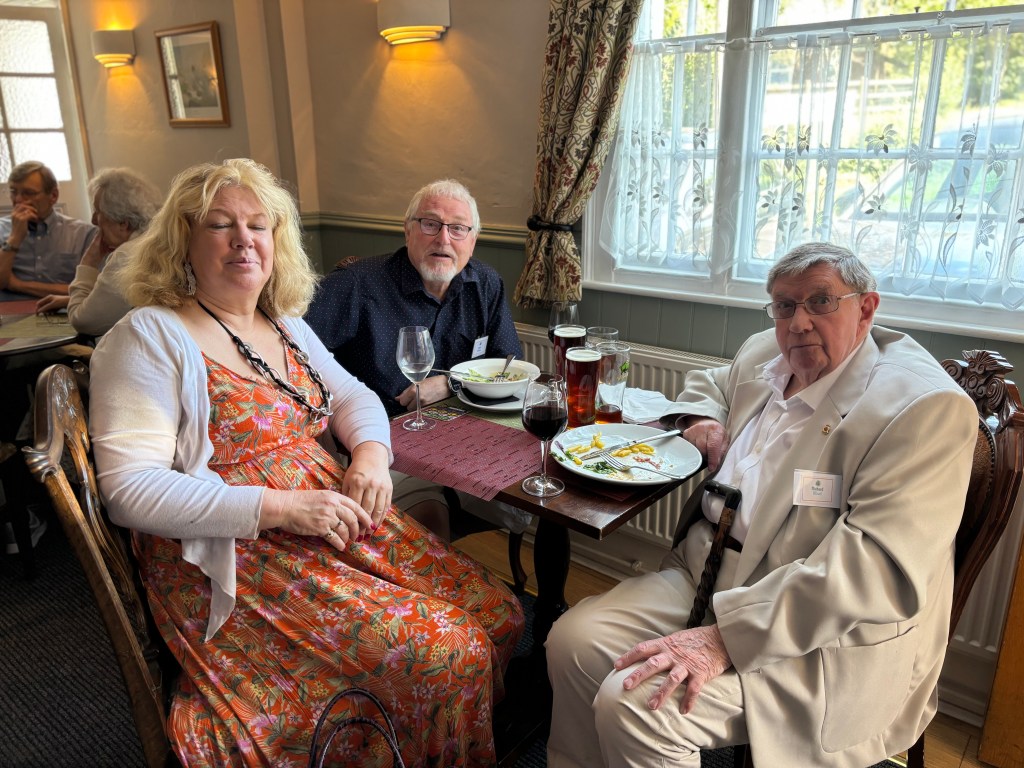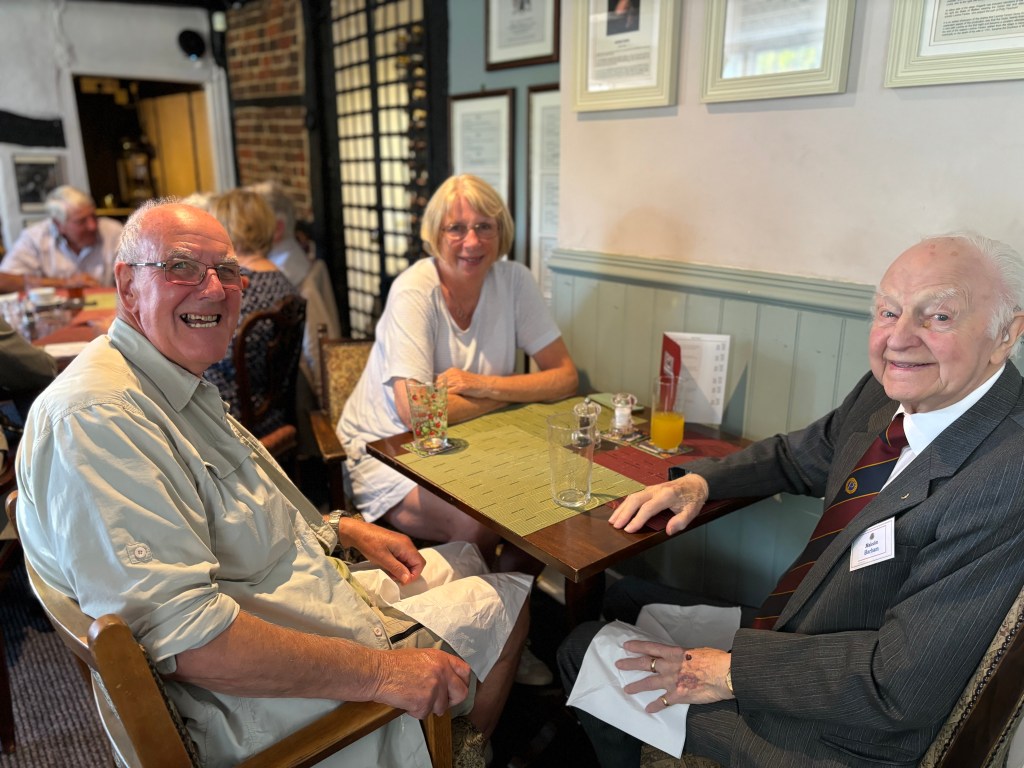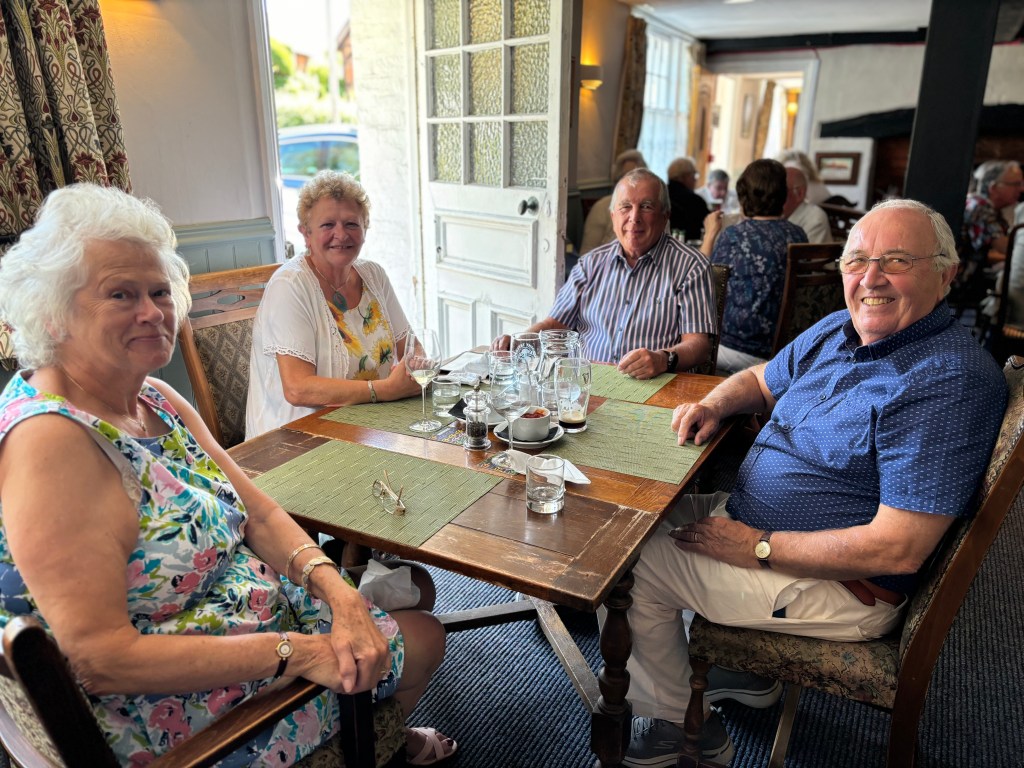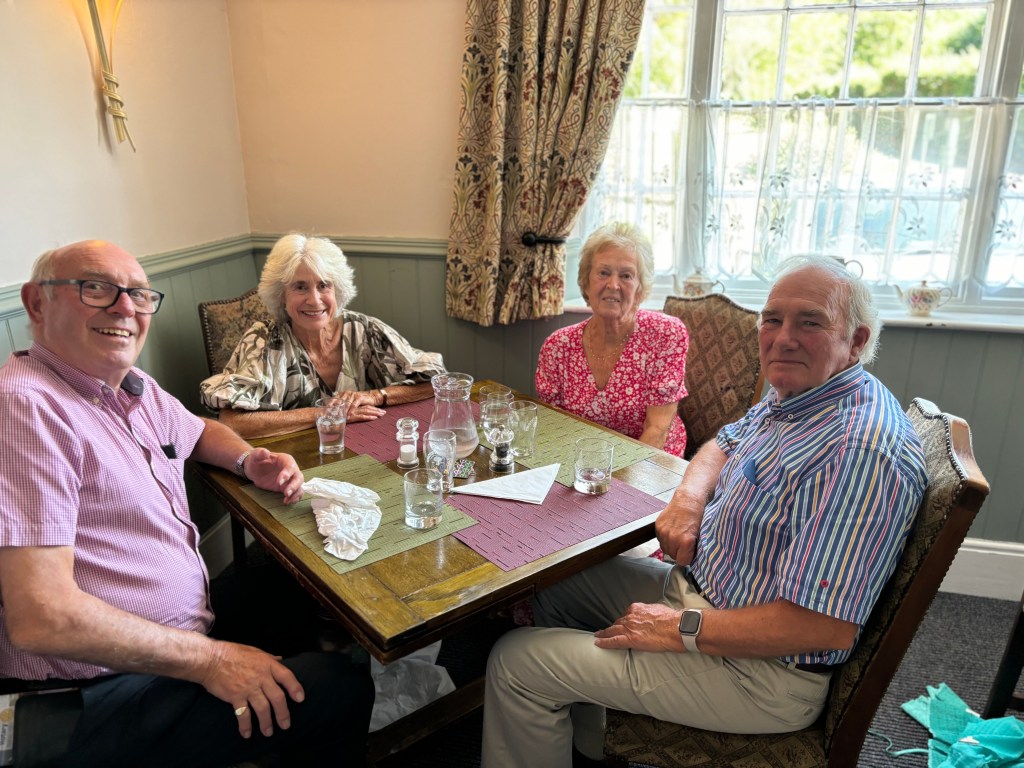
There is a mixture of subjects in the November (October) magazines because of the various publishing times in the month. The Kempshott Kourier showed the helicopter report about its flight to Alexandria and the CommunityAd magazine for Overton, Oakley & Kempshott ran late with our Summer Pub lunch.
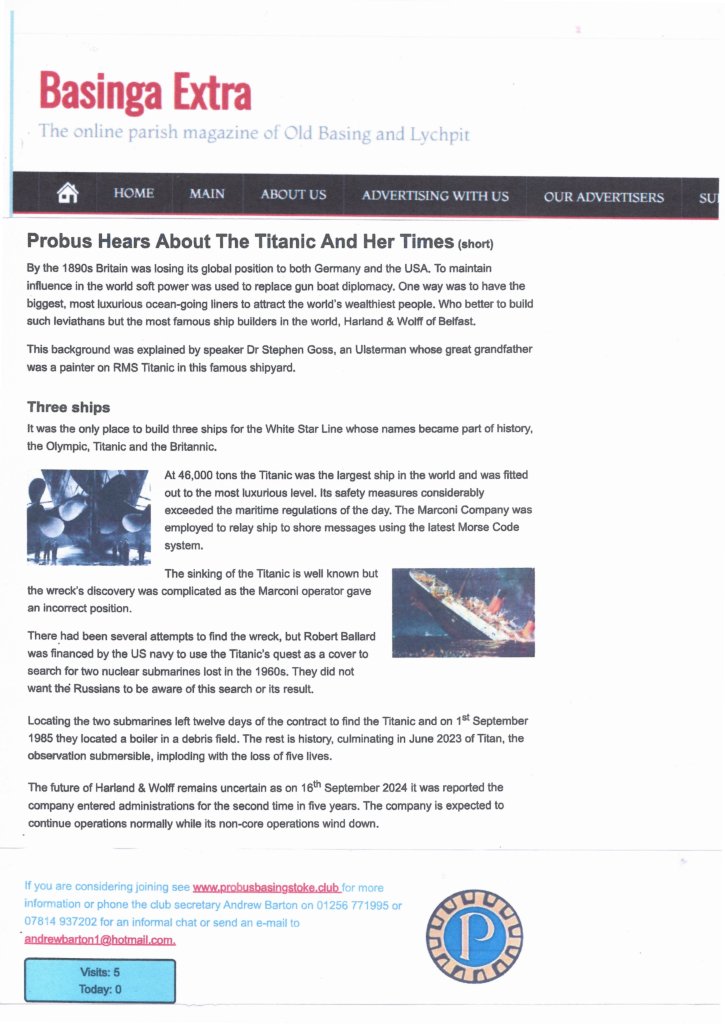
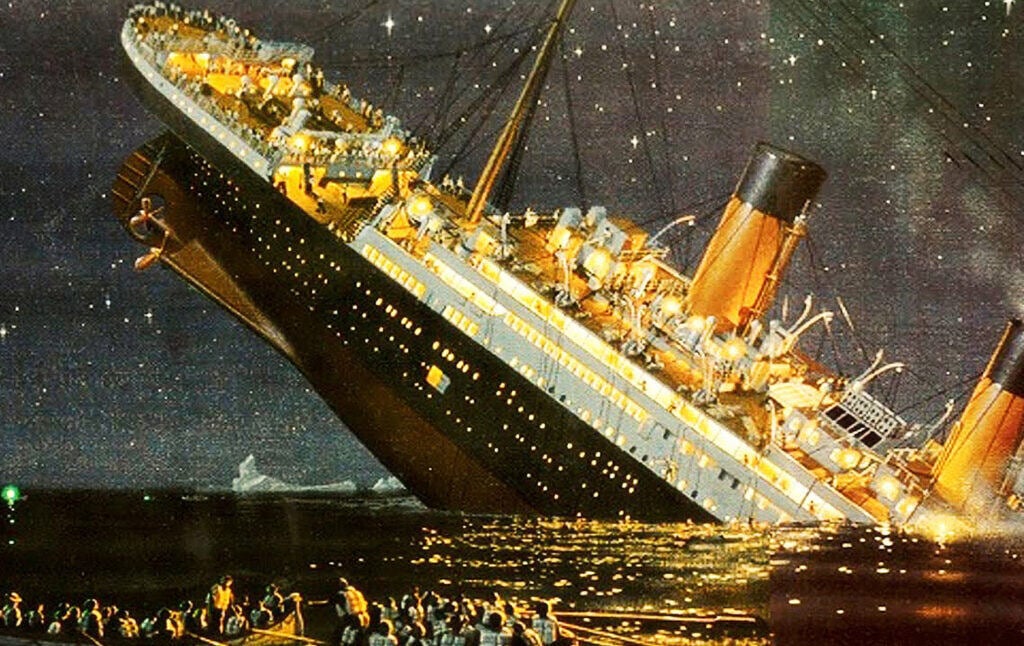
The others all gave a good showing to the Titanic Times in Belfast. Some images have been reduced to fit on to magazine covers.
Probus members and families outside of Southwick House
A group of Probus members and families had an impressive visit to Southwick House (locally pronounced “Suthick”) positioned five miles north of Portsmouth that had a pivotal role in the planning of D-Day, the largest amphibious assault in history.
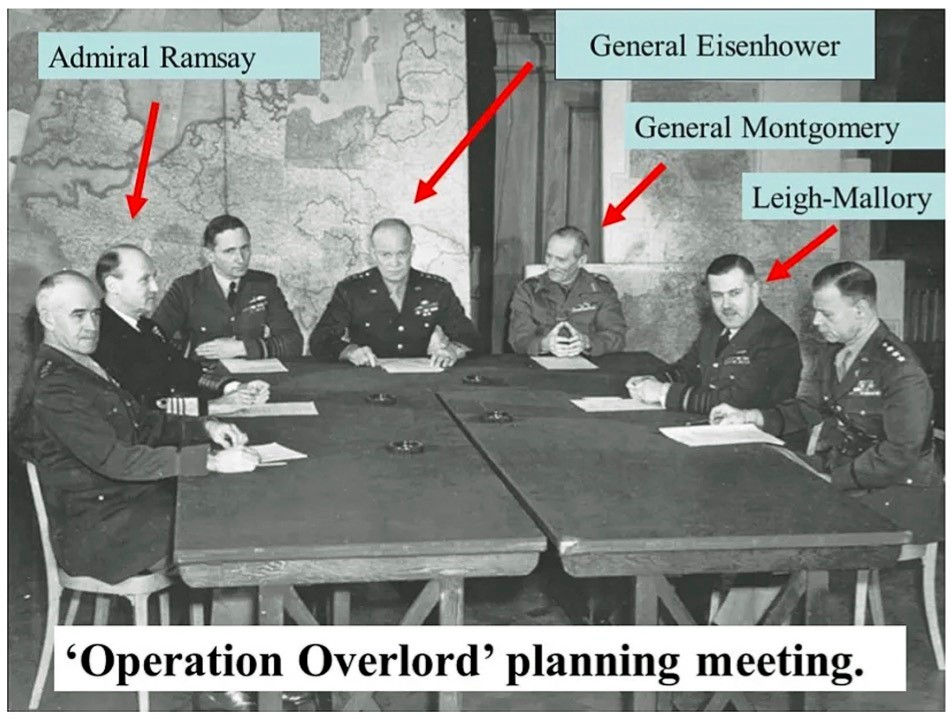
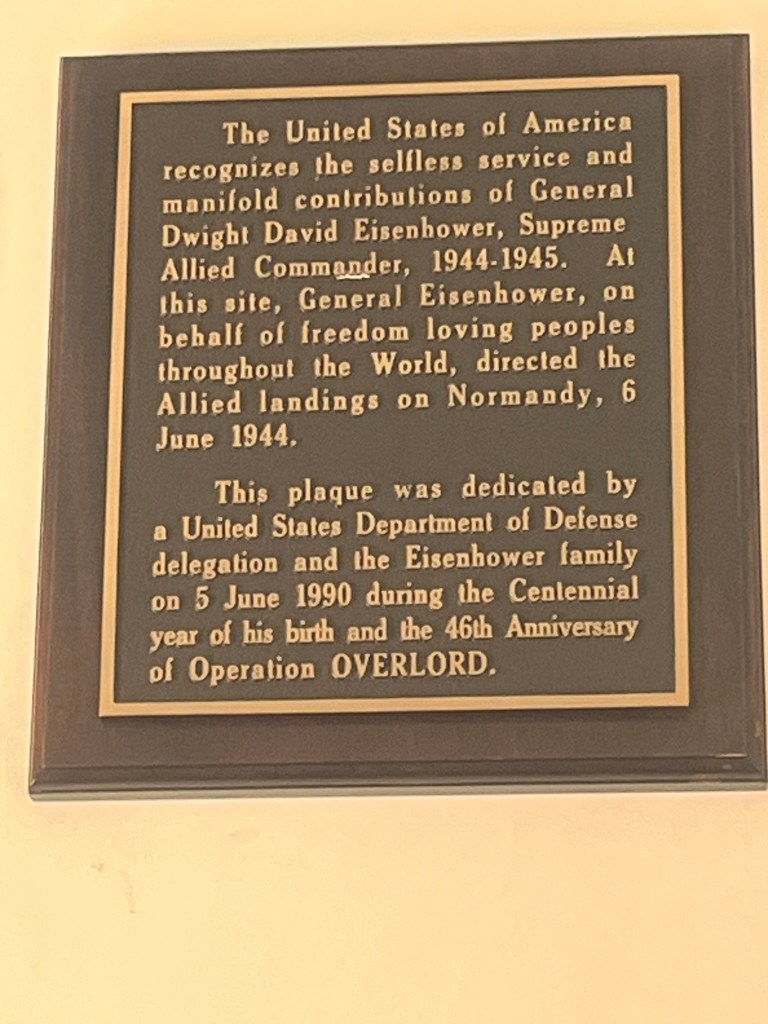
It was the Supreme Headquarters of the main allied commanders, including Allied Supreme Commander General Dwight D Eisenhower, Naval Commander-in-Chief Admiral Ramsey, Army Commander-in-Chief General Montgomery, and Commander-in-Chief Allied Air Force, Air Chief Marshal Leigh-Mallory. The grounds became the Main Tactical Base for the 21st Army Group for their forthcoming invasion plans.
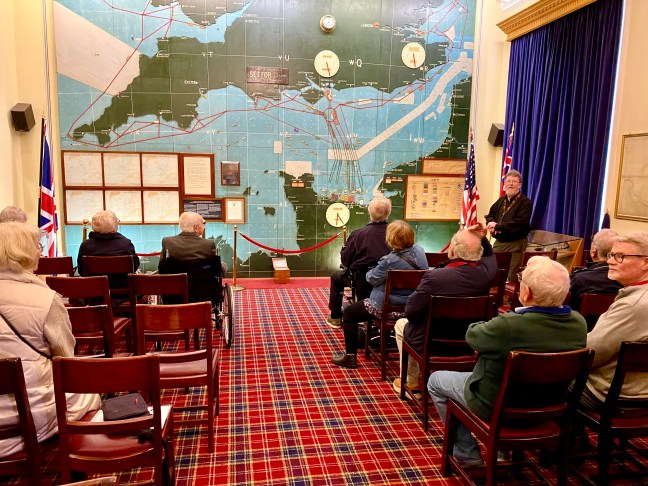
Richard Callaghan, the curator, gave an extensive narrative about the map room that still contains the enormous graphic showing the invasion plans. His talk was interwoven with anecdotes about incidents involving the main characters that gave life to this history lesson.
Map Room with the large wall graphic showing the planning routes
Deception was used to convince the German high command that the invasion would come across the shortest route from Kent to Pas de Calais which caused German divisions to move from the Normandy region.
James Stagg was the meteorologist providing weather forecasts to the senior planning group. As a civilian he would have difficulty in ensuring he would be taken seriously so he was presented with the uniform of a RAF Group Captain. It was Stagg that convinced General Eisenhower to postpone the assault from the planned day of 5th June to 6th June 1944.
Group Captain James Stagg became head of the Meteorological Office post war
Kay Summersby, driver, secretary and “friend” of General Eisenhower
6,000 ships were involved moving from all regions of southern England to the main dispersal area that became known as Piccadilly Circus and then had to pass through corridors cleared through minefields in the Channel. Thanks to detailed planning only seven ships were involved in collisions.
Despite the break in the weather there was still a swell, and the floating Sherman tanks were launched too far out from the shore resulting in only four out of thirty-two reaching the beach. It had been necessary to ensure that the beach would support such vehicles by nighttime investigations in the previous weeks that had not been spotted by the land-based Germans.
LCT (Landing Craft Tank) ships were vital to carrying tanks and heavy equipment to the beaches
In the adjacent bar room, the original weather maps were on the wall along with other memorabilia including models of two LCT (Landing Craft Tank) ships that were the subject of a talk some years ago by Probus member Brian Nagle.
Commemorative plaque on the wall of the Officers’ mess in Southwick House
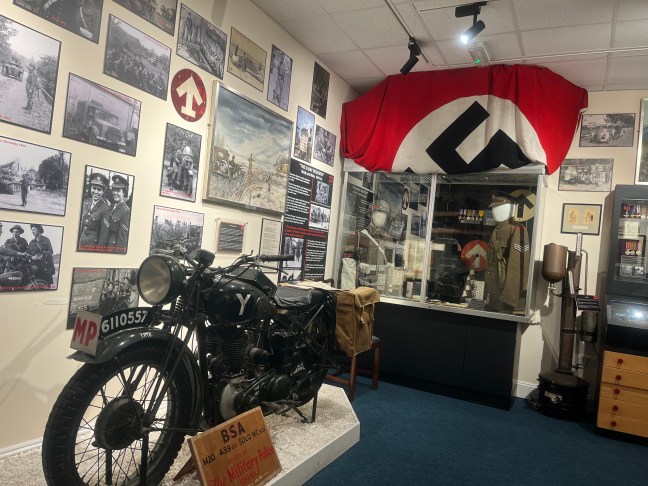
There followed a visit to the Royal Military Police Museum, based on the same military establishment, that showed the development from the early days of the Provost Marshall to the Red Caps known today.
Military Police Museum shows the history of this unit to the present day.
The peaceful period following the end of the Franco-Prussian war in 1871 up to the start of WW1 in 1914 was a time of great advances in social and artistic movements in Europe, centralised in France, and became known as the Belle Époque.
Follies Bergere tipifies the Belle Epoque period
At the same time there were shifting collaborations between nations where Britain, Austria and Prussia were allied against Napoleonic France. The unification of Italy and Germany brought other pressures with the arrangement between France and Russia seen by Germany as a particular threat which they met by re-arming with naval power. This brought them into direct competition with Britain who had the largest navy in history and the UK was also the most successful ship builders in the world.

By the 1890s Britain was losing its global predominance to both Germany and the USA. To maintain influence in the world the use of soft power was recognised as a replacement for gun boat diplomacy. One way was to have the most impressive, biggest and most luxurious ocean-going liners to attract the most wealthy and influential people in the world. Who better to build such leviathans but the most famous ship builders in the world, Harland & Wolff of Belfast.
This background was explained by speaker Dr Stephen Goss, himself an Ulsterman whose great grandfather was a painter on the RMS Titanic in this famous shipyard.
Belfast had boomed from the success of ship building with “Belfast Built” its signature and had become world leaders in ship construction, support services and finance. It was the only place to build three transatlantic liners for the White Star Line whose names are engraved in the annals of history, the Olympic, Titanic and Britannic.
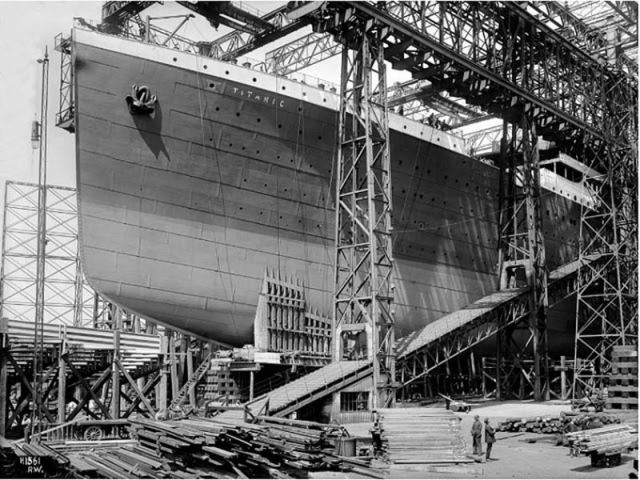
Titanic under constructionTitanic’s three propellers
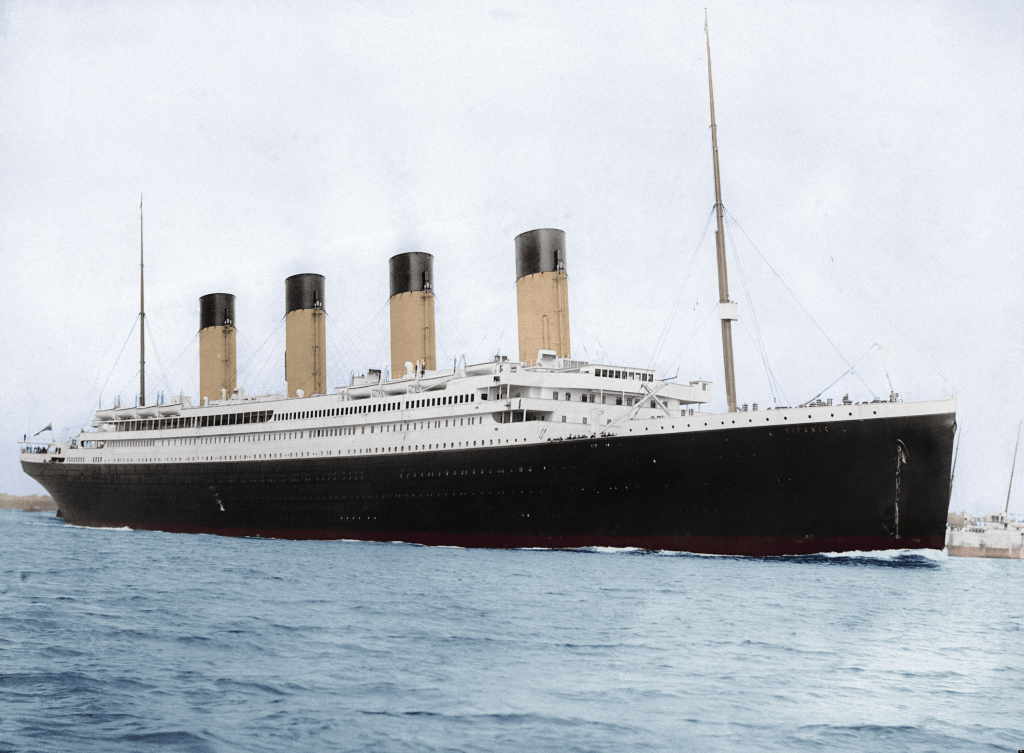
At 46,000 tons the Titanic was the largest ship in the world and was fitted out to the most luxurious level. The staterooms were designed to exceed the expectations of the great and good while the second-class cabins on the Titanic were more than a match for first class on other liners. Its safety measures considerably exceeded the maritime regulations of the day. And to further pander to the wealthy clientele the Marconi Company was employed to relay ship to shore messages via the latest Morse Code signalling system.
The unsinkable RMS Titanic – the most luxurious ship in the world in 1912
During these years the increasing industrial and commercial activity in Belfast meant that there was extensive commercial traffic across the North Channel to Scotland and England as supplies were required from British manufacturers.
The pressure for Irish independence in the 1920s increasingly led to conflicts and to the three-year Irish war of independence between the forces of the Irish Republic – the Irish Republican Army (IRA) and the British Crown forces. This was a major concern to the business community in Ulster where 8,000 mostly Catholic workers had been driven out of the Belfast shipyards sparking sectarian violence in the city. There had been a long held fear an independent Catholic Dublin would negatively influence commercial matters between Belfast and Britain. The shipyards had become a Protestant closed shop and became afraid for the future of ship building and supporting industries that had brought so much prosperity throughout Ulster. The people in Belfast felt they had to protect their interests and in 1913 they had formed the Ulster Volunteer Force with 100,000 members. During WW1 they became the 36th (Ulster) Division and post war became the Ulster Special Constabulary when Northern Ireland was created in 1921.
When Home Rule was granted for Ireland it renamed itself the Irish Free State except the six counties of Ulster remained part of the United Kingdom, but the foundations were laid for generations of problems that in modern times became known as ‘The Troubles’.
The sinking of the Titanic on its maiden voyage is well known but the discovery of the wreck is far from straight forward as the Marconi operator that fateful night gave incorrect information that placed the stricken ship a few miles from its actual position.
RMS Titanic sank 2hrs 40mins after hitting an iceberg 0n 15 April 1912 with the loss of 1500 passengers and crew
Robert Ballard on board survey vessel Knorr
Over the years there had been several attempts to find the wreck, including one by oceanographer Robert Ballard. His ship contained the latest sonar and submersible technology, and he approached the US navy seeking support. While an agreement was reached to finance the search for the Titanic there was another reason for their support which was as cover for a top-secret mission. In the 1960s the US navy had lost two nuclear submarines in the North Atlantic Ocean in the area that supposedly contained the wreck of the Titanic, and they did not want the Russians to be aware of this search or its result.
The two submarines were located but that only left twelve days of the contract to find the Titanic and on 1st September 1985 a boiler was discovered in a debris field that led to the wreck. The survivors were wrong, and the Titanic had broken its back when descending below the waves. The rest, as they say, is history, culminating in June 2023 of the implosion of the observation submersible, Titan, with the loss of five lives.
Titan submersible that imploded in June 2023
Harland & Wolff’s Samson & Goliath Dock Cranes
And the future of Harland & Wolff remains uncertain as on 16th September 2024 it was reported the company entered administration for the second time in five years. The company is expected to continue operations normally while its non-core operations wind down.
Apart from the traditionally late Kempshott Kourier which covered our Summer Pub Lunch the rest might be described as a “Full House” as all six other monthly magazines ran with the report about the helicopter flight to Alexandria. There was a full page in the Villager (reduced for copying on to the front cover) with most of the remainder using at least half pages. It was good to see the Loddon Valley Link giving us some rare space and we made it into the printed version of the Basinga rather than in our usual position in their Extra.
Probus Club member David Stiles recalled an experience he would not want to repeat about a long-distance helicopter flight in 1968. He was acting as “Flying Spanner” with two pilots who had to ferry a newly introduced Bell 212 helicopter from Coventry that was urgently needed on a Shell oil drilling ship in the Mediterranean Sea above Alexandria in Egypt.
Bell 212 Helicopter
As an avionics expert he was monitoring an advanced navigation system throughout the flight of 4,500 kilometres. Bell 212 helicopters had a range of under 300 miles which meant many refuelling stops, hence the need for an indirect route.
Indirect route due to range of 300 miles
Difficulties soon arose between the two pilots who squabbled as to which of them was in charge with several instances putting the helicopter, and themselves, in great danger. One decided to take a short cut over the French Alps to Nice instead of the planned route to Marseilles. The Bell 212 did not have de-icing equipment and with cloud up to 9,000 feet the helicopter started to ice up at 10,000 feet. Reducing height to above the top of the clouds they just missed the weathervane at the top of a monastery.
Flying down Italy one decided they should ‘take a look’ at the Vesuvius volcano and descended into the crater. While the volcano was dormant sulphur fumes curtailed this sightseeing.
Crater of Vesuvius Volcano
Severe turbulence became problematic as they crossed Greece and had to fly as low as possible. The Corinth Canal offered calm conditions, flying just a few feet above the water the 200 feet high sheer rock walls were only 15 feet either side of their rotors. They hopped over any shipping returning close to water level.
Corinth Canal
A nervous Egyptian army insisted the helicopter circle slowly over their army base with their missile site tracking the flight. They checked that no armaments were visible as the Bell 212 was American made with a British crew and both countries had supported Israel in the recent Six Days War which the Egyptians had spectacularly lost.
The Bell 212 had behaved impeccably as had the navigation equipment throughout the flight that had taken a total of seven days.
Returning to England David Stiles left the company six months later, having never been fond of helicopters, and returned to his first love of fixed wing aircraft working for Dan Air at Lasham airfield south of Basingstoke.
The Kempshott Kourier, publishing much later in the month than others, gave half a page to the visit of Mayor Cllr Dan Putty to our July meeting. Five others covered the Summer Pub Lunch held at the Bolton Arms in Old Basing.
The idea of a summer pub lunch was introduced back in 1996 by the then president, David Carwardine and has continued without break in the ensuing twenty-eight years.
He had been a director of the Basingstoke fork truck manufacturer Lansing Bagnall and had a famous father who invented the angle poise lamp. As the president he wanted to bring the ladies into a social event for this men only club.
Selecting the venue traditionally became the responsibility of each president and this year involved a group visit to the Bolton Arms in Old Basing. This was the choice of the current president Stephen Thair, a retired solicitor, who also happens to live in Old Basing.
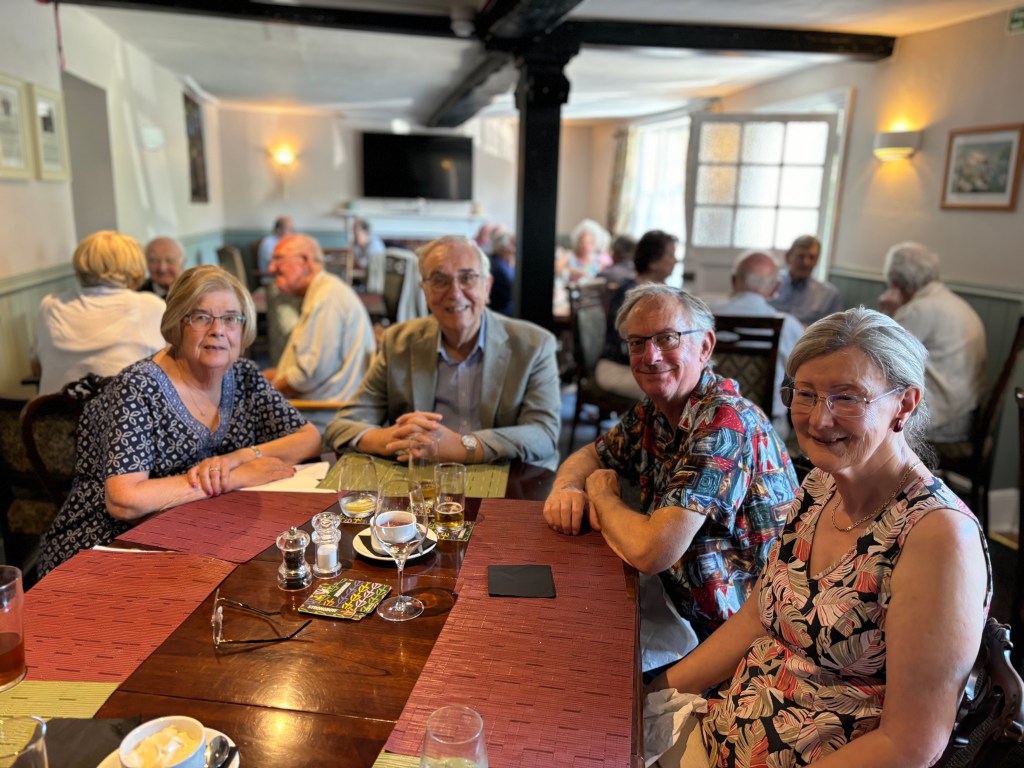
A mixture of members and wives/lady friends totalling thirty-three dined in this fifteenth century, Grade ii listed building that was reopened early this year after going through a significant refurbishment programme. This has brought this hostelry very much into the modern era providing an extensive food offering to suit all tastes and pockets.
Old Basing was the site for the longest siege of Oliver Cromwell during the English Civil War, where Roundhead met Cavalier during the 23 months of the siege of Basing House. It had been built as a Tudor palace by William Paulet, the 1st Marquess of Winchester, to rival Hampton Court palace in its size and opulence.
When the House of Stuart was returned to the throne in 1660, King Charles ii returned the lands of Basing to the Paulet family. As a show of gratitude for his loyalty to the Crown, Charles Paulet became the first Duke of Bolton, hence the name of this pub which is still owned by the Bolton family estate.
President Stephen Thair and wife Margaret hosted the event which was held in a private room that just about coped with the numbers. Of the ladies present, four were members of the Ladies’ Probus Club of Basingstoke while it was announced that two new members had joined the men’s club this month. This is a good sign that the club has an attraction for like-minded men.
Due to their early departures there are no photographs of Andrew & Janice Barton or of Paul & Mary Klinger.
Five publications gave us space in their August magazines which was a good result bearing in mind that the Rabbiter, Bramley and Villager do not have an August edition.
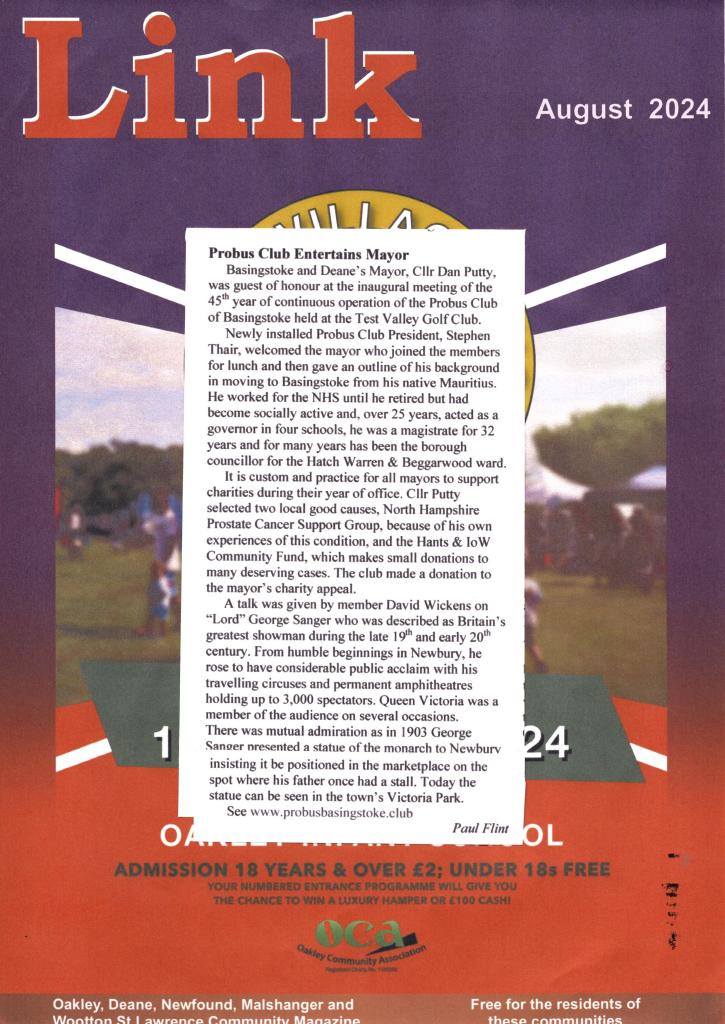
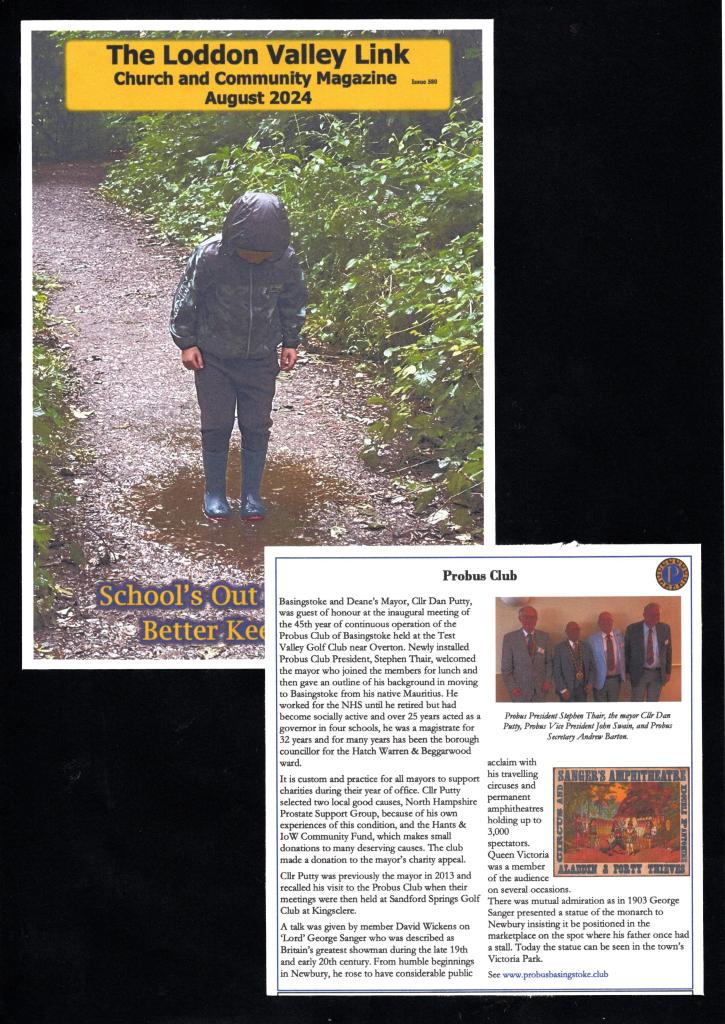
Because of the timing differences of when they actually hit the streets the five magazines share reports about the club’s 44th Annual General meeting or the first meeting of the new Probus year when the Mayor of Basingstoke was our guest of honour.
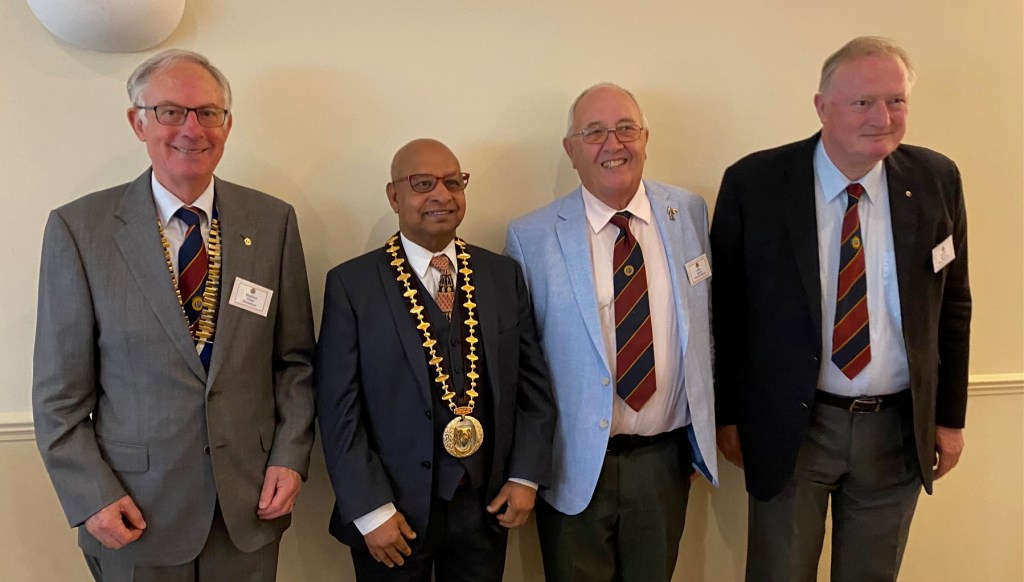
President Stephen Thair, Mayor Cllr Dan Putty, Vice President John Swain & Secretary Andrew Barton
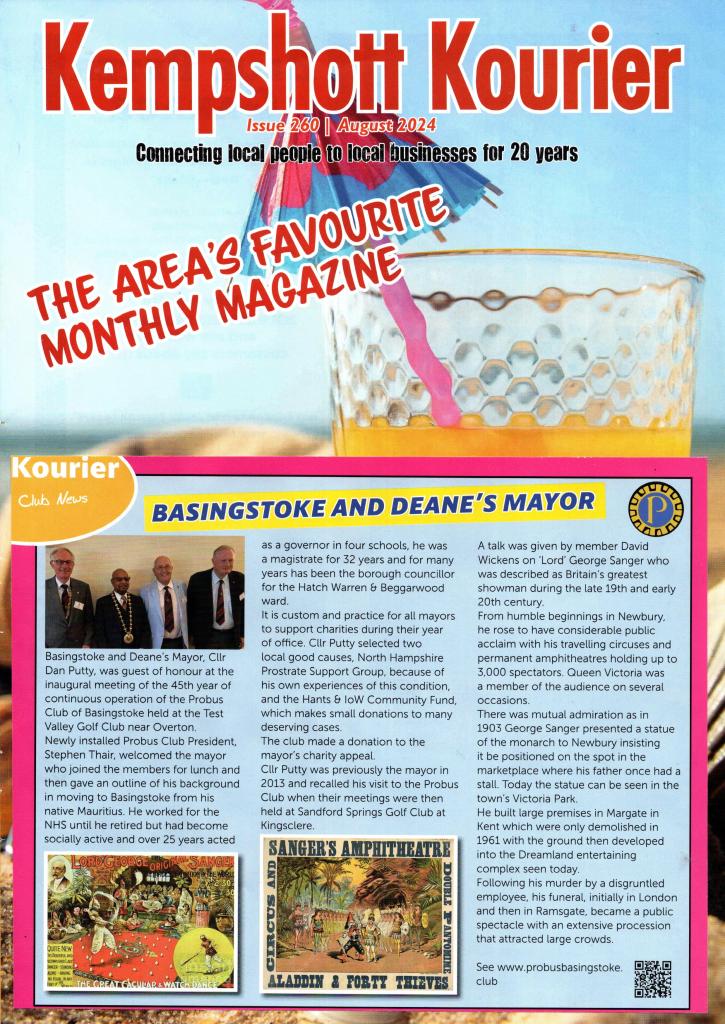
Basingstoke and Deane’s Mayor, Cllr Dan Putty, was guest of honour at the inaugural meeting of the 45th year of continuous operation of the Probus Club of Basingstoke.
Newly installed Probus Club President, Stephen Thair, welcomed the mayor who joined the members for lunch and then gave an outline of his background in moving to Basingstoke from his native Mauritius. He worked for the NHS until he retired but became socially active and over 25 years acted as a governor in four schools, he was a JP for 32 years and is the current councillor for the Hatch Warren & Beggarwood ward of the Borough council being elected many times.
It is custom and practice for all mayors to support charities during their year of office. Cllr Putty selected two local good causes, North Hampshire Prostate Support Group, because of his own experiences of this condition, and the Hants & IoW Community Fund, which makes small donations to many deserving cases.
The club made a donation to the mayor’s charity appeal.
Cllr Putty was previously the mayor in 2013 and recalled his visit to the Probus Club when their meetings were then held at Sandford Springs Golf Club at Kingsclere. Shortly afterwards the Probus Club moved to the Test Valley Golf Club near Overton for their business meetings and lunches.
The Probus Club also have a social pub lunch, which includes wives and friends, on the fourth Thursday of most months at the Queen’s College Arms on the Aldermaston Road at Pamber End.
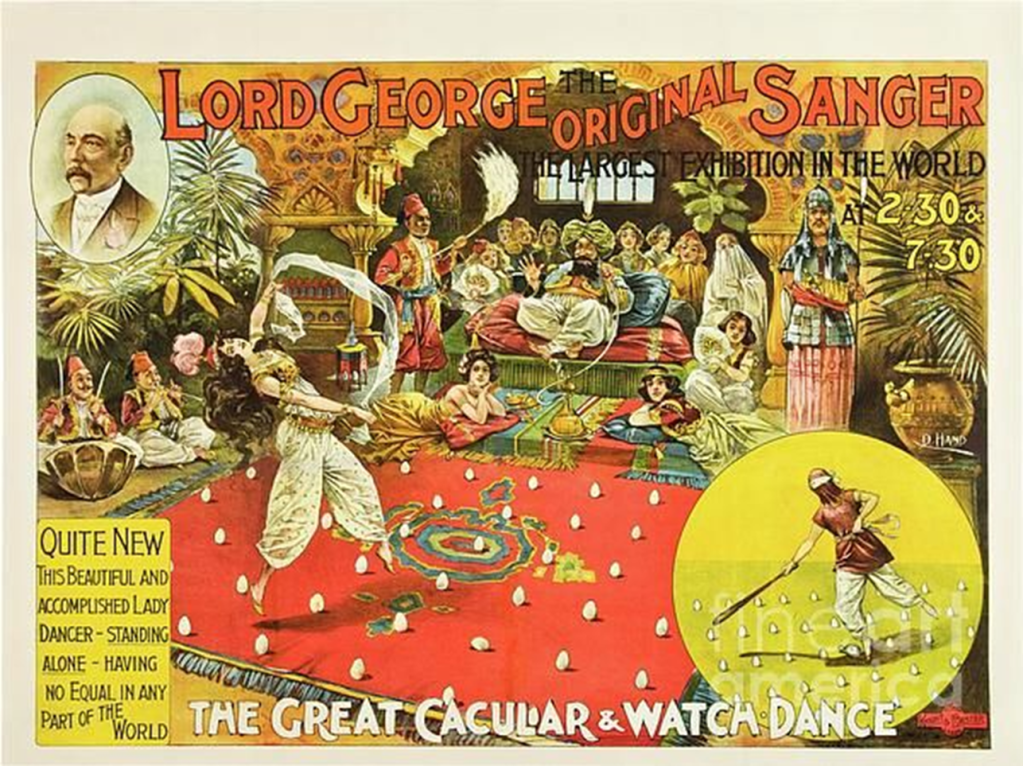
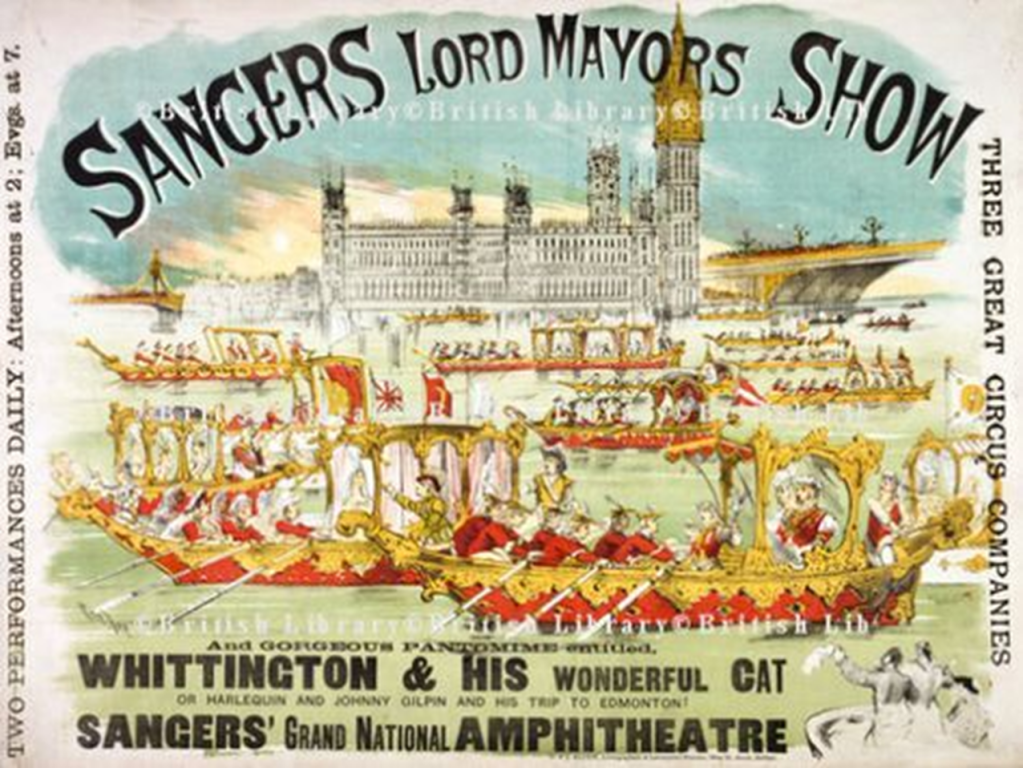
The speaker at this meeting was member David Wickens whose topic was ‘Lord’ George Sanger, who, in his day at the latter part of the 19th and early 20th century, was described as Britain’s greatest showman.
Shows twice dailyof exotic performers
Coming from a showman’s family and being born in Newbury, it was his father who gave him the moniker of ‘Gentleman George’ due to his sartorial elegance. Following a fall as a trapeze artist he started out as an independent travelling showman. He progressed over the years from having peep shows and magic lanterns, being a magician, animal trainer, circus proprietor with elephants, camels, horses and acrobats and married a lady who was a lion tamer.
Lion Tamer Mdme Pauline de Vere wife of George Sanger
He progressed into permanent building in London while continuing with travelling circuses and had many European tours and partook in several royal parades in support of Queen Victoria. He built premises in Margate, Kent, which ran for many years only being demolished in 1961 to make way for the Dreamworld entertainment complex which exists to this day.
One of the permanent amphitheatres that could hold 3,000 spectators. Extensive European circus toursPartaking in national celebrations
Taking legal action against Buffalo Bill Cody and his Wild West circus he noticed the judge referred to his opponent as the Honourable William Cody so he decided that he would elevate himself and became ‘Lord’ George Sanger. He lost the case.
In 1903 he presented a statue of Queen Victoria to the town of Newbury insisting it be positioned in the marketplace over the spot where his father once had a stall. Today the statue is positioned in the town’s Victoria Park.
He sold up in 1905 and retired to Park Farm in East Finchley where, in 1911, he was murdered with an axe by a disgruntled employee, Herbert Cooper, over suspicion that he had stolen fifty pounds. There was a well-publicised manhunt with the miscreant committing suicide on the railway. However later investigations indicated a different scenario of an altercation between two former employees that George Sanger tried to intervene, slipping and falling, killing himself in the process.
In his will, written two years earlier, George Sanger left fifty pounds to the same Herbert Cooper.
The funeral of ‘Lord’ George Sanger became a public spectacle, initially in London and again in Margate with a large procession through the town to be buried next to his late wife.
Funeral procession of ‘Lord’ George Sanger
From humble beginning and with no education George Sanger had made himself probably the most successful showman ever seen in this country, the like of which will probably never be seen again.
An excellent month for coverage in our local media including appearing in the Basingstoke Gazette and within the printed edition of the Basinga and also in the Loddon Valley Link magazines.
Because of calendar variations when some are published means that the Kempshott Kourier and the CommunityAd magazine for Oakley, Overton & Kempshott each carried the trip to Winchester.
You must be logged in to post a comment.