Probus Hears About The History Of Television

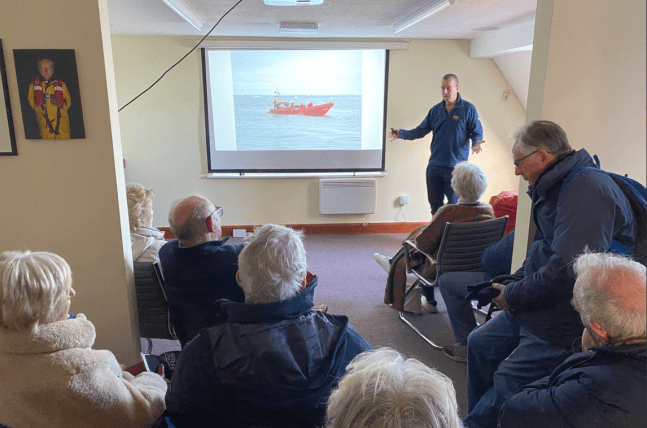
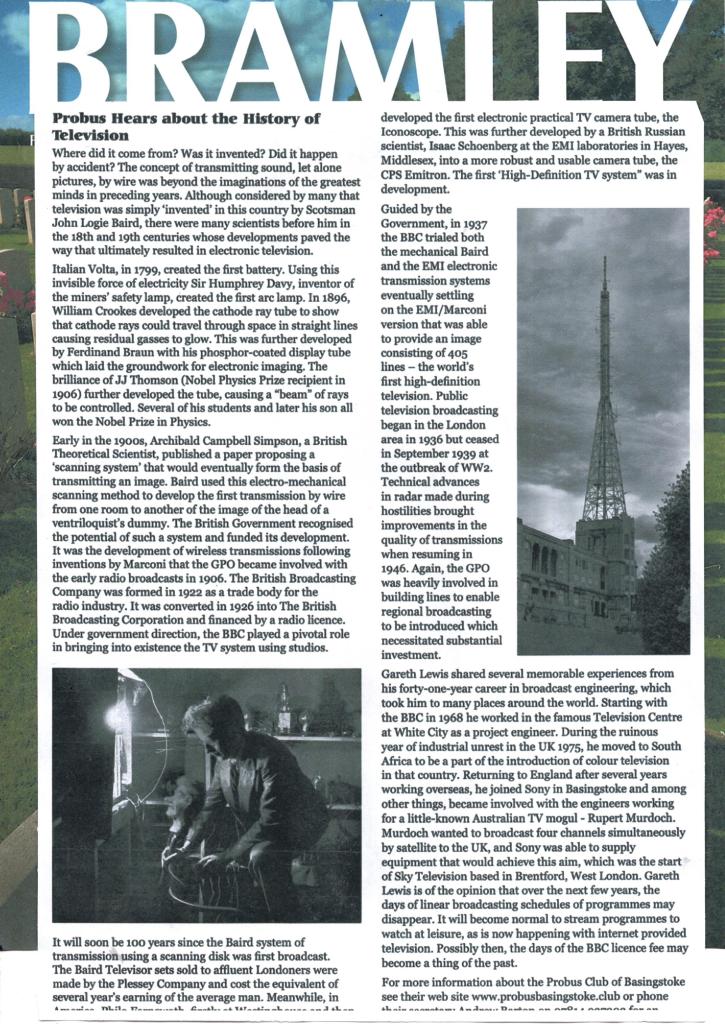
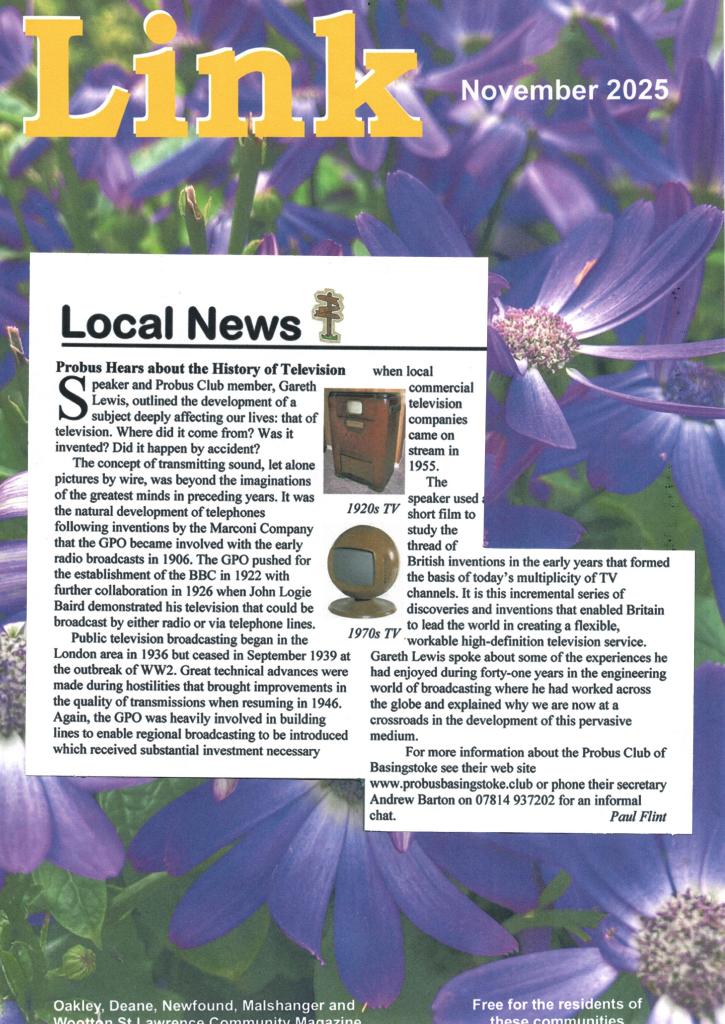
Speaker and Probus Club member, Gareth Lewis, outlined the development of a subject deeply affecting our lives: that of television.

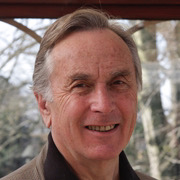
Speaker Gareth Lewis

Where did it come from? Was it invented? Did it happen by accident? The concept of transmitting sound, let alone pictures by wire, was beyond the imaginations of the greatest minds in preceding years.

Although considered by many that television was simply ‘invented’ in this country by Scotsman John Logie Baird, there were many scientists before him in the 18th and 19th centuries whose developments paved the way that ultimately resulted in electronic television.

Italian Volta, in 1799, created the first battery. Using this invisible force of electricity Sir Humphrey Davy, inventor of the miners’ safety lamp, created the first arc lamp. In 1896, William Crookes developed the cathode ray tube to show that cathode rays could travel through space in straight lines causing residual gasses to glow. This was further developed by Ferdinand Braun in Germany with his phosphor-coated display tube which laid the groundwork for electronic imaging.

The brilliance at Cambridge University of JJ Thomson (Nobel Physics Prize recipient in 1906) further developed the tube, causing a “beam” of rays to be controlled. Several of his students and later his son all won the Nobel Prize in Physics.

Early in the 1900s, Archibald Campbell Simpson, a British Theoretical Scientist, published a paper proposing a ‘scanning system’ that would eventually form the basis of transmitting an image.

Baird used this electro-mechanical scanning method to develop the first transmission by wire from one room to another of the image of the head of a ventriloquist’s dummy. The British Government recognised the potential of such a system and funded its development.

John Logie Baird with his first transmission

It was the development of wireless transmissions following inventions by Marconi that the GPO became involved with the early radio broadcasts in 1906.

The British Broadcasting Company was formed 1922 as a trade body for the radio industry. It was converted in 1926 into The British Broadcasting Corporation and financed by a radio licence. Under government direction, the BBC played a pivotal role in bringing into existence the TV system using studios.

It will soon be 100 years since the Baird system of transmission using a scanning disk was first broadcast. The Baird Televisor sets sold to affluent Londoners were made by the Plessey Company and cost the equivalent of several year’s earning of the average man.

Meanwhile, in America, Philo Farnswoth, firstly at Westinghouse and then at RCA, in cooperation with Russian émigré Mr Zworykin, developed the first electronic practical TV camera tube, the Iconoscope. This was further developed by a British Russian scientist, Isaac Schoenberg at the EMI laboratories in Hayes, Middlesex, into a more robust and usable camera tube, the CPS Emitron. The first ‘High-Definition TV system” was in development.

Guided by the Government, in 1937 the BBC trialed both the mechanical Baird and the EMI electronic transmission systems eventually settling on the EMI/Marconi version that was able to provide an image consisting of 405 lines – the world’s first high-definition television.

Public television broadcasting began in the London area in 1936 but ceased in September 1939 at the outbreak of WW2.

Alexandra Palace began transmissions in 1936

Technical advances in radar made during hostilities brought improvements in the quality of transmissions when resuming in 1946. Again, the GPO was heavily involved in building lines to enable regional broadcasting to be introduced which necessitated substantial investment.

Gareth Lewis shared several memorable experiences from his forty-one-year career in broadcast engineering, which took him to many places around the world. Starting with the BBC in 1968 he worked in the famous Television Centre at White City as a project engineer. During the ruinous year of industrial unrest in the UK 1975, he moved to South Africa to be a part of the introduction of colour television in that country.

Returning to England after several years working overseas, he joined Sony in Basingstoke and among other things, became involved with the engineers working for a little-known Australian TV mogul – Rupert Murdoch. Murdoch wanted to broadcast four channels simultaneously by satellite to the UK, and Sony was able to supply equipment that would achieve this aim, which was the start of Sky Television based in Brentford, West London.

Gareth Lewis is of the opinion that over the next few years, the days of linear broadcasting schedules of programmes may disappear. It will become normal to stream programmes to watch at leisure, as is now happening with internet provided television. Possibly then, the days of the BBC licence fee may become a thing of the past.

Probus Publicity in October 2025

The Kempshott Kourier, now publishing in the middle of each month means that they are behind the other local magazines in carrying our reports. Our Summer Pub Lunch is given good exposure with three Kempshott residents looking happy on the day.

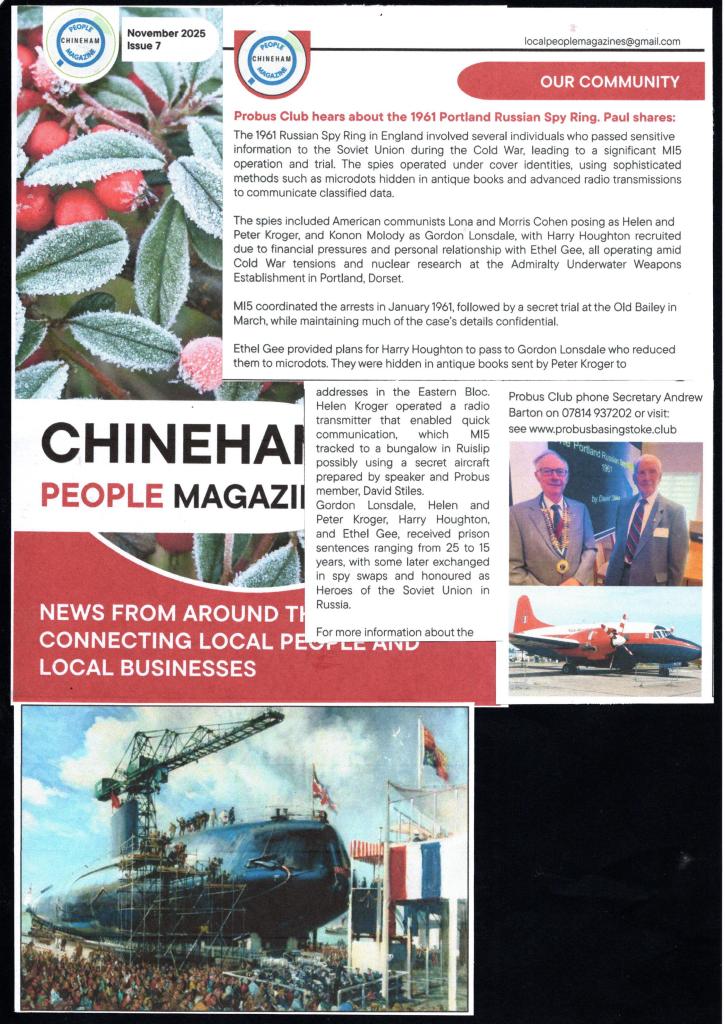
The Rabbiter (Hatch Warren & Beggarwood), Villager (Sherborne St John and villages), and Link (Oakley and surrounds), all gave a full page to the Russian Portland Spy Ring.

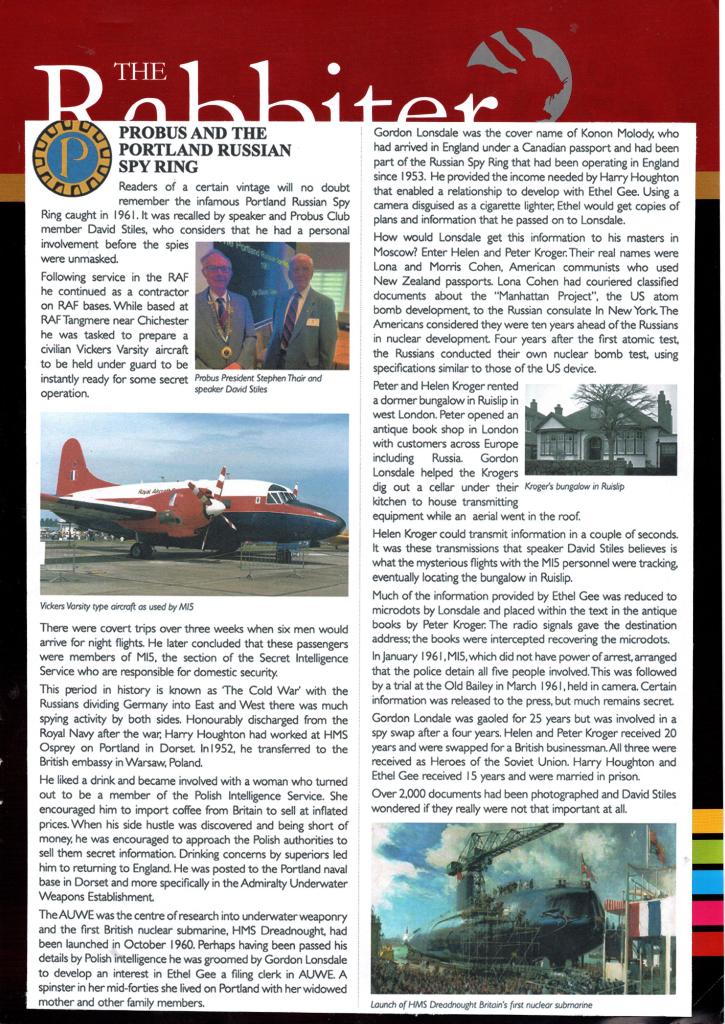
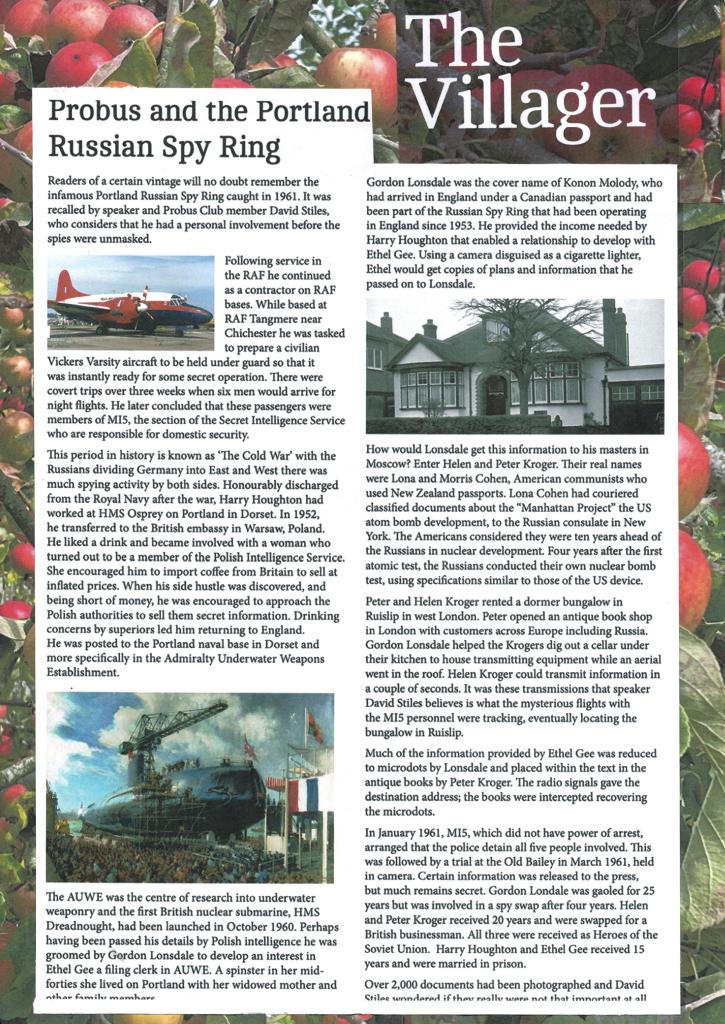
Probus and the Portland Russian Spy Ring

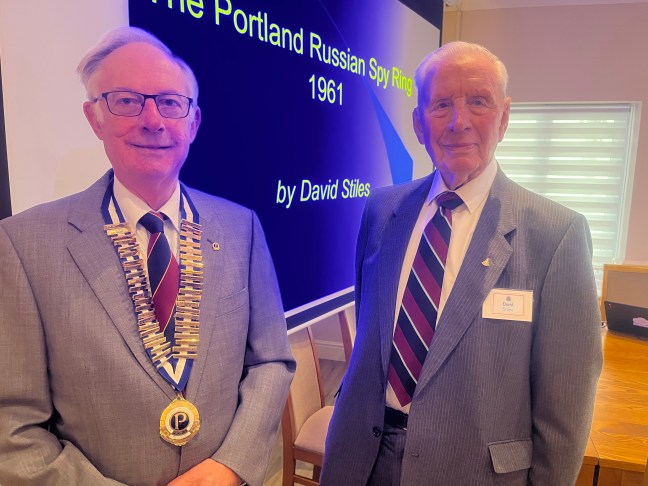
President Stephen Thair and speaker David Stiles

Readers of a certain vintage will no doubt remember the infamous Portland Russian Spy Ring caught in 1961. It was recalled by speaker and Probus Club member David Stiles, who considers that he had a personal involvement before the spies were unmasked.

Following service in the RAF he continued as a contractor on RAF bases. While based at RAF Tangmere near Chichester he was tasked to prepare a civilian Vickers Varsity aircraft to be held under guard to be instantly ready for some secret operation.

Civilian Vickers Varsity aircraft as used by MI5

There were covert trips over three weeks when six men would arrive for night flights. He later concluded that these passengers were members of MI5, the section of the Secret Intelligence Service who are responsible for domestic security.

This period in history is known as ‘The Cold War’ with the Russians dividing Germany into East and West there was much spying activity by both sides. Honourably discharged from the Royal navy after the war, Harry Houghton had worked at HMS Osprey on Portland in Dorset. In 1952, he transferred to the British embassy in Warsaw, Poland.

He liked a drink and became involved with a woman who turned out to be a member of the Polish Intelligence Service. She encouraged him to import coffee from Britain to sell at inflated prices. When his side hustle was discovered and being short of money, he was encouraged to approach the Polish authorities to sell them secret information. Drinking concerns by superiors led him returning to England. He was posted to the Portland naval base in Dorset and more specifically in the Admiralty Underwater Weapons Establishment.

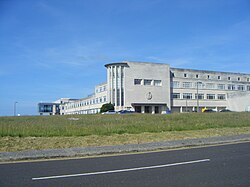
Admiralty Underwater Weapons Establishment, Portland Dorset
Much design work undertaken for HMS Dreadnought nuclear submarine

The AUWE was the centre of research into underwater weaponry and the first British nuclear submarine, HMS Dreadnought, had been launched in October 1960. Perhaps having been passed his details by Polish intelligence he was groomed by Gordon Lonsdale to develop an interest in Ethel Gee a filing clerk in AUWE. A spinster in her mid-forties she lived on Portland with her widowed mother and other family members.

Launch of HMS Dreadnought October 1960

Gordon Lonsdale was the cover name of Konon Molody, who had arrived in England under a Canadian passport and had been part of the Russian Spy Ring that had been operating in England since 1953.  He provided the income needed by Harry Houghton that enabled a relationship to develop with Ethel Gee. Using a camera disguised as a cigarette lighter, Ethel would get copies of plans and information that he passed on to Lonsdale.

How would Lonsdale get this information to his masters in Moscow? Enter Helen and Peter Kroger. Their real names were Lona and Morris Cohen, American communists who used New Zealand passports. Lona Cohen had couriered classified documents about the “Manhattan Project” the US atom bomb development, to the Russian consulate in New York. The Americans considered they were ten years ahead of the Russians in nuclear development. Four years after the first atomic test, the Russians conducted their own nuclear bomb test, using specifications similar to those of the US device.

Peter and Helen Kroger rented a dormer bungalow in Ruislip in west London. Peter opened an antique book shop in London with customers across Europe including Russia. Gordon Lonsdale helped the Krogers dig out a cellar under their kitchen to house transmitting equipment while an  aerial went in the roof.

Kroger’s rented bungalow in Ruislip, west London where a radio transmitter was under kitchen

Helen Kroger could transmit information in a couple of seconds. It was these transmissions that speaker David Stiles believes is what the mysterious flights with the MI5 personnel were tracking, eventually locating the bungalow in Ruislip.

Much of the information provided by Ethel Gee was reduced to microdots by Lonsdale and placed within the text in the antique books by Peter Kroger. The radio signals gave the destination address; the books were intercepted recovering the microdots.

In January 1961, MI5, which did not have power of arrest, arranged that the police detain all five people involved. This was followed by a trial at the Old Bailey in March 1961, held in camera. Certain information was released to the press, but much remains secret.

Gordon Londale was gaoled for 25 years but was involved in a spy swap after a four years. Helen and Peter Kroger received 20 years and were swapped for a British businessman. All three were received as Heroes of the Soviet Union.  Harry Houghton and Ethel Gee received 15 years and were married in prison.

Over 2,000 documents had been photographed and David Stiles wondered if they really were not that important at all.

Funeral of Richard Stettner on Thursday 11 September 2025

President of the Probus Club of Basingstoke 2010/11

The funeral took place today of Richard Stettner at St Bede’s Catholic Church in Popley.

There were around 100 people in attendance.

Supporting the family were members of his old employer, Wiggins Teape, where Richard had been in export sales working for the special products paper mill at Stonehouse near Aberdeen using his language skills in the Eastern Bloc.

Test Valley Golf Club where Richard was a member and we learned at the funeral that he played regularly with his son Damon.

And the Probus Club of Basingstoke where the following members represented our club:
President Stephen Thair, Tony & Lesley Atchison, John Bristow, Paul Flint & Janet Fagg, Jeff Grover, Rob Hopkins, Dave Kitson, Michael Luck, Alan & Liliane May, Paul Miller, John Terry and Nick Waring.

There was a subsequent cremation for close family only followed by a celebration of Richard’s life held at the Test Valley Golf Club to which several Probus members also attended.

Probus Publicity in September 2025

With the usual meeting in August being replaced with the Summer Pub lunch which itself was pushed back until the end of August meant that there was nothing to report to the local magazines in time to meet their copy dates for their September editions.

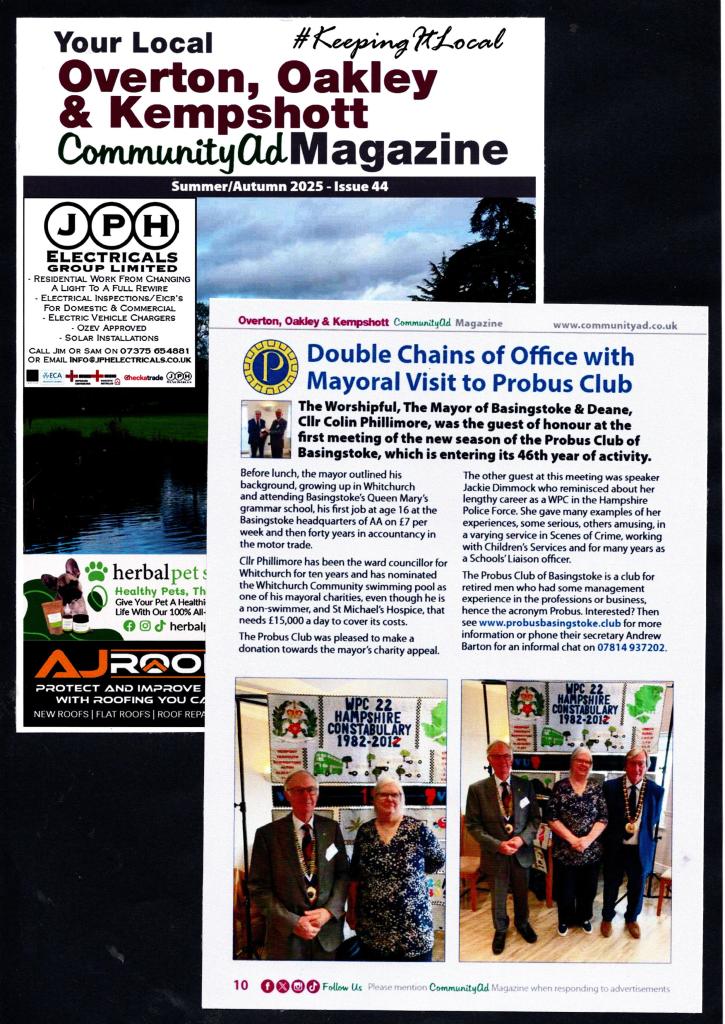
Consequently the only publications that carried anything about our Probus Club were the Kempshott Kourier and the CommunityAd magazine for Overton. Oakley & Kempshott with their Summer/Autumn Issue 44. Both these publications carried our earlier report about the visit of the mayor to our July meeting.

Probus Summer Pub Lunch Thursday 28 August 2025

Barton’s Mill in Old Basing was the picturesque venue this year for the Probus Club Summer Pub Lunch that has been an annual event since its inception in 1996.

A party of twenty eight consisting of members and wives/lady friends was hosted by President Stephen and Margaret Thair. Dining almost al fresco, guests were seated under a large tent like structure no doubt to keep diners cool in this summer’s heat but on our visit proved to be a good shelter against the intermittent but desperately need rain.

Weather concerns aside, our dining steward, Paul Klinger, had worked closely with the pub’s management which ensured everyone received the meal selection of their choice.

Probus Publicity August 2025

August means only two magazines were available for our publicity notice which were the Kempshott Kourier and the Link magazine covering Oakley and surrounding villages. The Mayor’s Facebook page featured his visit to our July meeting, the Basinga Extra ran a previous report about our new Executive Committee and a rare appearance in the Basingstoke Gazette completed this quiet month.

Mayoral Visit To Probus Club 8th July 2025

Mayor of Basingstoke & Deane Cllr Colin Phillimore receives a cheque from President Stephen Thair

Double Chains of Office with Mayoral Visit to Probus Club

The Worshipful, The Mayor of Basingstoke & Deane, Cllr Colin Phillimore, was the guest of honour at the first meeting of the new season of the Probus Club of Basingstoke, which is entering its 46th year of activity.

Before lunch the mayor outlined his background, growing up in Whitchurch and attending Basingstoke’s Queen Mary’s grammar school, his first job at aged 16 at the Basingstoke headquarters of AA on £7 per week and then forty years in accountancy in the motor trade.

Cllr Phillimore has been the ward councillor for Whitchurch for ten years and has nominated the Whitchurch Community swimming pool as one of his mayoral charities, even though a non-swimmer, and St Michael’s Hospice, that needs £15,000 a day to cover its costs.

The Probus Club was pleased to make a donation towards the mayor’s charity appeal.

The other guest at this meeting was speaker Jackie Dimmock who reminisced about her lengthy career as a WPC in the Hampshire Police Force. She gave many examples of her experiences, some serious, others amusing, in a varying service in Scenes of Crime, working with Children’s Services and for many years as a Schools’ Liaison officer.

The Probus Club of Basingstoke is a club for retired men who had some management experience in the professions or business, hence the acronym Probus. Interested? Then see www.probusbasingstoke.club for more information or phone their secretary Andrew Barton for an informal chat on 07814 937202.

Probus Publicity in July 2025

The appointment of the new committee of the Probus Club of Basingstoke was covered by the usual supporting magazines around Basingstoke. The exception was the Loddon Valley Link in Sherfield on Loddon and I failed to see if the Basingstoke Gazette carried our report.

The Bramley magazine also carried a separate report about the funeral of Fred Locke and used part of our photograph when Fred was installed as President in 2016.