Probus members and families outside of Southwick House
A group of Probus members and families had an impressive visit to Southwick House (locally pronounced “Suthick”) positioned five miles north of Portsmouth that had a pivotal role in the planning of D-Day, the largest amphibious assault in history.
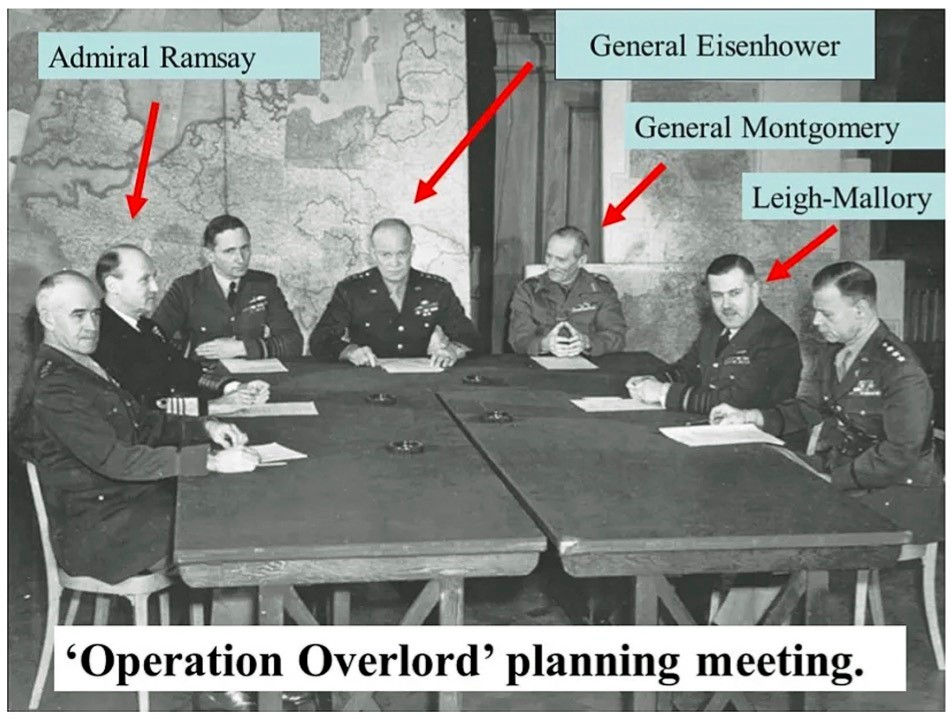
It was the Supreme Headquarters of the main allied commanders, including Allied Supreme Commander General Dwight D Eisenhower, Naval Commander-in-Chief Admiral Ramsey, Army Commander-in-Chief General Montgomery, and Commander-in-Chief Allied Air Force, Air Chief Marshal Leigh-Mallory. The grounds became the Main Tactical Base for the 21st Army Group for their forthcoming invasion plans.
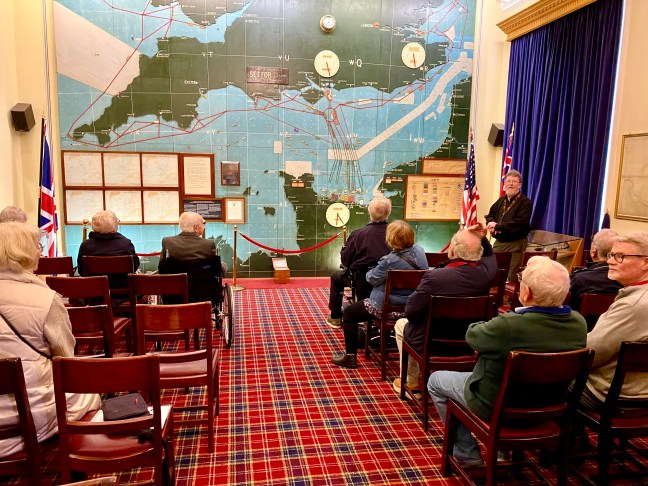
Richard Callaghan, the curator, gave an extensive narrative about the map room that still contains the enormous graphic showing the invasion plans. His talk was interwoven with anecdotes about incidents involving the main characters that gave life to this history lesson.
Map Room with the large wall graphic showing the planning routes
Deception was used to convince the German high command that the invasion would come across the shortest route from Kent to Pas de Calais which caused German divisions to move from the Normandy region.
James Stagg was the meteorologist providing weather forecasts to the senior planning group. As a civilian he would have difficulty in ensuring he would be taken seriously so he was presented with the uniform of a RAF Group Captain. It was Stagg that convinced General Eisenhower to postpone the assault from the planned day of 5th June to 6th June 1944.
Group Captain James Stagg became head of the Meteorological Office post war
Kay Summersby, driver, secretary and “friend” of General Eisenhower
6,000 ships were involved moving from all regions of southern England to the main dispersal area that became known as Piccadilly Circus and then had to pass through corridors cleared through minefields in the Channel. Thanks to detailed planning only seven ships were involved in collisions.
Despite the break in the weather there was still a swell, and the floating Sherman tanks were launched too far out from the shore resulting in only four out of thirty-two reaching the beach. It had been necessary to ensure that the beach would support such vehicles by nighttime investigations in the previous weeks that had not been spotted by the land-based Germans.
LCT (Landing Craft Tank) ships were vital to carrying tanks and heavy equipment to the beaches
In the adjacent bar room, the original weather maps were on the wall along with other memorabilia including models of two LCT (Landing Craft Tank) ships that were the subject of a talk some years ago by Probus member Brian Nagle.
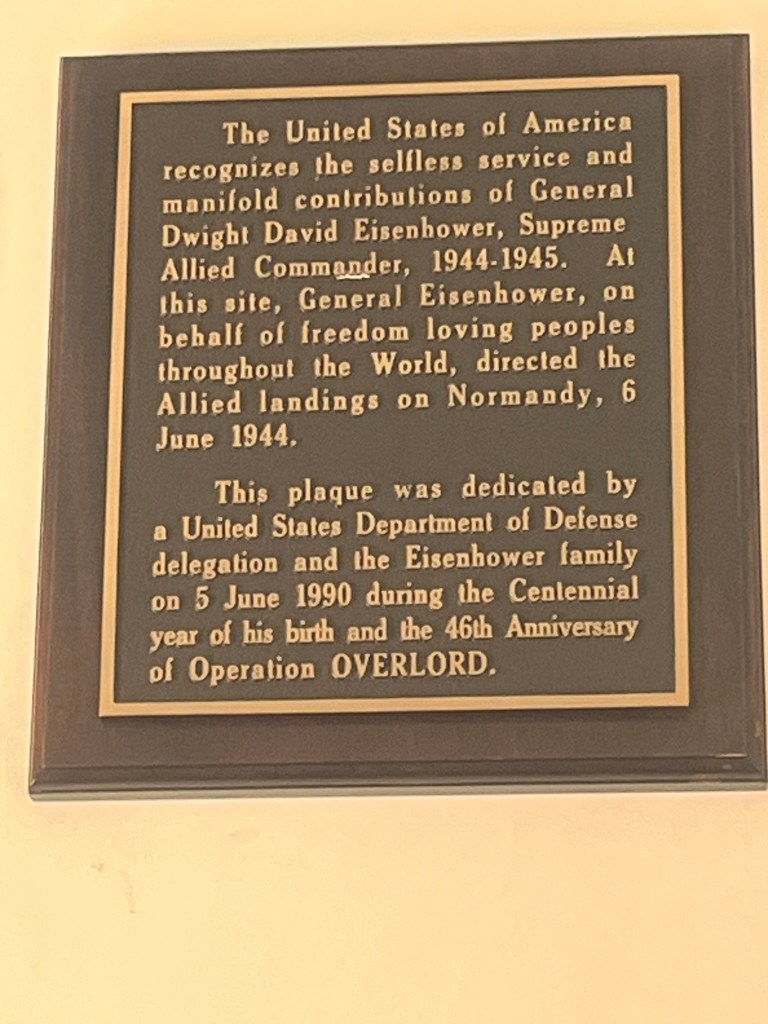
Commemorative plaque on the wall of the Officers’ mess in Southwick House
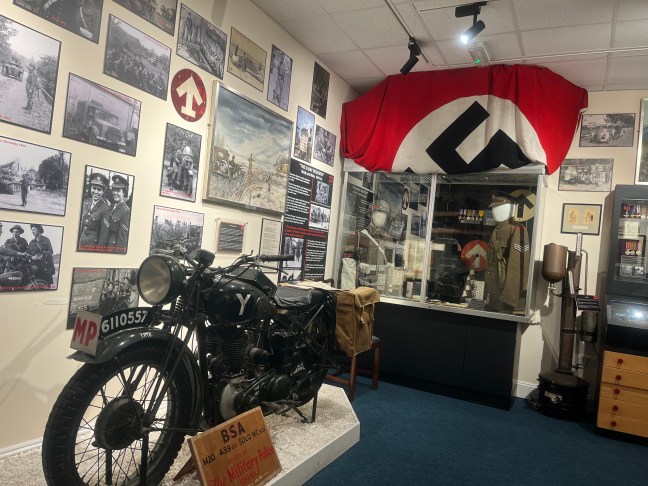
There followed a visit to the Royal Military Police Museum, based on the same military establishment, that showed the development from the early days of the Provost Marshall to the Red Caps known today.
Military Police Museum shows the history of this unit to the present day.
The peaceful period following the end of the Franco-Prussian war in 1871 up to the start of WW1 in 1914 was a time of great advances in social and artistic movements in Europe, centralised in France, and became known as the Belle Époque.
Follies Bergere tipifies the Belle Epoque period
At the same time there were shifting collaborations between nations where Britain, Austria and Prussia were allied against Napoleonic France. The unification of Italy and Germany brought other pressures with the arrangement between France and Russia seen by Germany as a particular threat which they met by re-arming with naval power. This brought them into direct competition with Britain who had the largest navy in history and the UK was also the most successful ship builders in the world.
By the 1890s Britain was losing its global predominance to both Germany and the USA. To maintain influence in the world the use of soft power was recognised as a replacement for gun boat diplomacy. One way was to have the most impressive, biggest and most luxurious ocean-going liners to attract the most wealthy and influential people in the world. Who better to build such leviathans but the most famous ship builders in the world, Harland & Wolff of Belfast.
This background was explained by speaker Dr Stephen Goss, himself an Ulsterman whose great grandfather was a painter on the RMS Titanic in this famous shipyard.
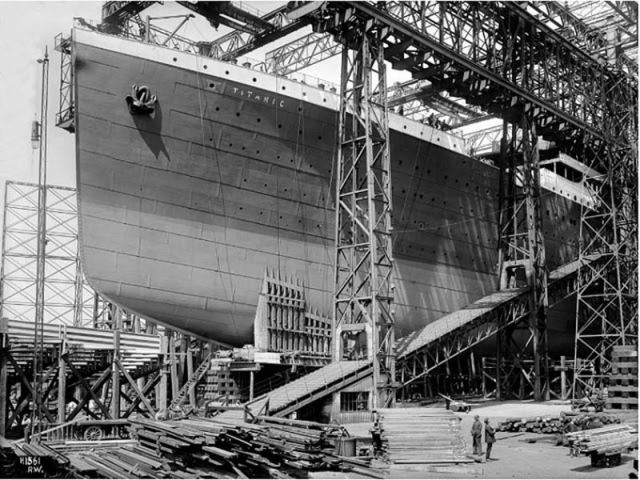
Belfast had boomed from the success of ship building with “Belfast Built” its signature and had become world leaders in ship construction, support services and finance. It was the only place to build three transatlantic liners for the White Star Line whose names are engraved in the annals of history, the Olympic, Titanic and Britannic.
Titanic under constructionTitanic’s three propellers
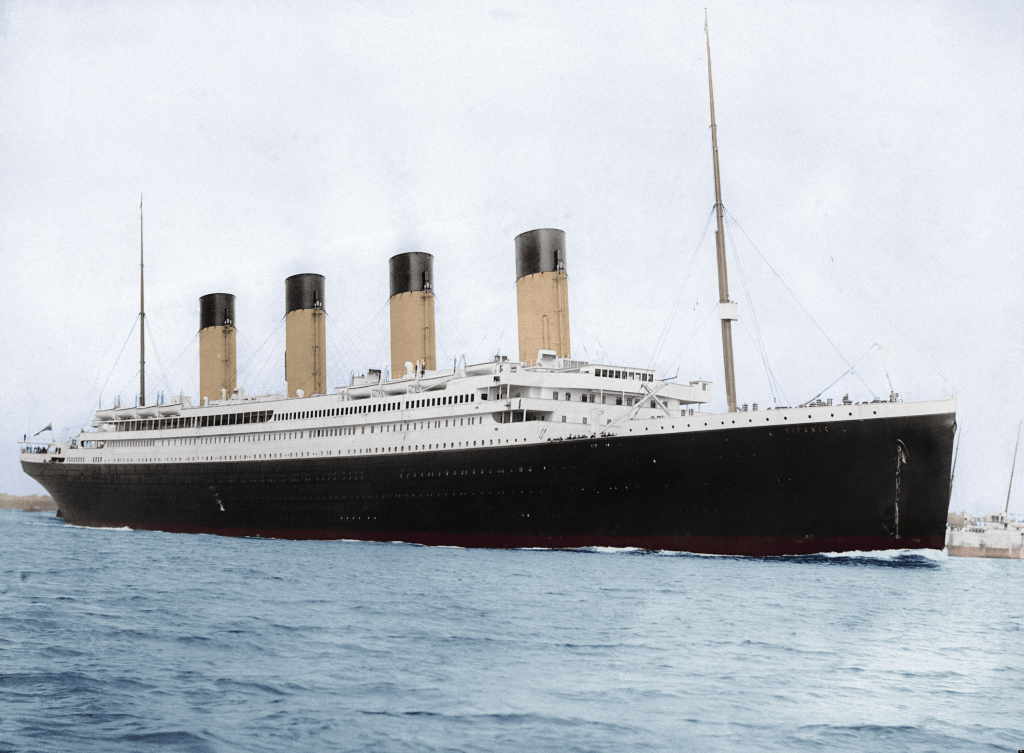
At 46,000 tons the Titanic was the largest ship in the world and was fitted out to the most luxurious level. The staterooms were designed to exceed the expectations of the great and good while the second-class cabins on the Titanic were more than a match for first class on other liners. Its safety measures considerably exceeded the maritime regulations of the day. And to further pander to the wealthy clientele the Marconi Company was employed to relay ship to shore messages via the latest Morse Code signalling system.
The unsinkable RMS Titanic – the most luxurious ship in the world in 1912
During these years the increasing industrial and commercial activity in Belfast meant that there was extensive commercial traffic across the North Channel to Scotland and England as supplies were required from British manufacturers.
The pressure for Irish independence in the 1920s increasingly led to conflicts and to the three-year Irish war of independence between the forces of the Irish Republic – the Irish Republican Army (IRA) and the British Crown forces. This was a major concern to the business community in Ulster where 8,000 mostly Catholic workers had been driven out of the Belfast shipyards sparking sectarian violence in the city. There had been a long held fear an independent Catholic Dublin would negatively influence commercial matters between Belfast and Britain. The shipyards had become a Protestant closed shop and became afraid for the future of ship building and supporting industries that had brought so much prosperity throughout Ulster. The people in Belfast felt they had to protect their interests and in 1913 they had formed the Ulster Volunteer Force with 100,000 members. During WW1 they became the 36th (Ulster) Division and post war became the Ulster Special Constabulary when Northern Ireland was created in 1921.
When Home Rule was granted for Ireland it renamed itself the Irish Free State except the six counties of Ulster remained part of the United Kingdom, but the foundations were laid for generations of problems that in modern times became known as ‘The Troubles’.
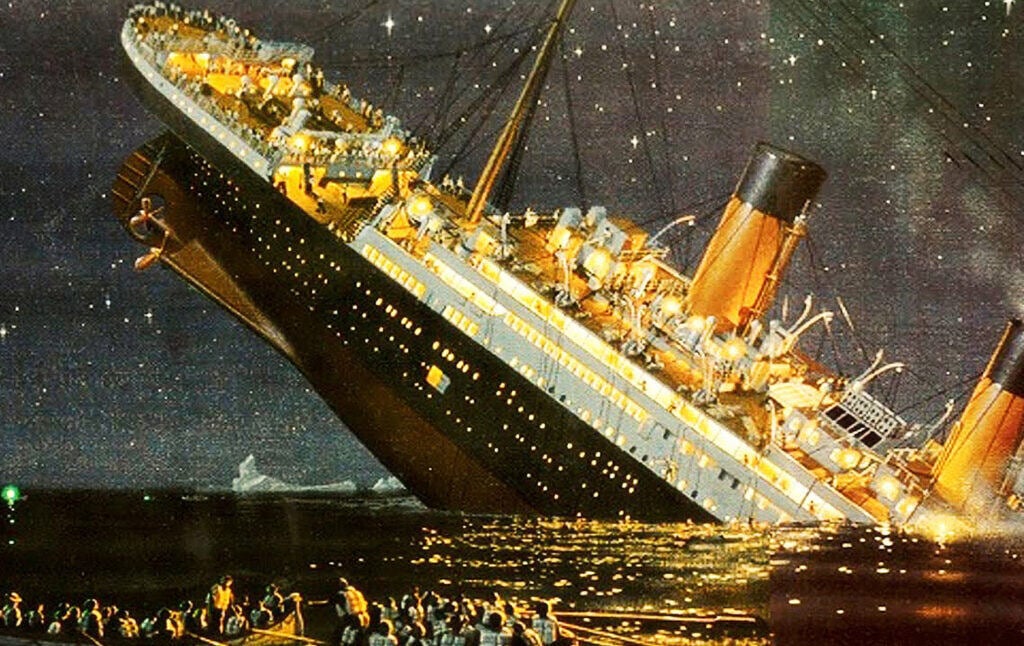
The sinking of the Titanic on its maiden voyage is well known but the discovery of the wreck is far from straight forward as the Marconi operator that fateful night gave incorrect information that placed the stricken ship a few miles from its actual position.
RMS Titanic sank 2hrs 40mins after hitting an iceberg 0n 15 April 1912 with the loss of 1500 passengers and crew
Robert Ballard on board survey vessel Knorr
Over the years there had been several attempts to find the wreck, including one by oceanographer Robert Ballard. His ship contained the latest sonar and submersible technology, and he approached the US navy seeking support. While an agreement was reached to finance the search for the Titanic there was another reason for their support which was as cover for a top-secret mission. In the 1960s the US navy had lost two nuclear submarines in the North Atlantic Ocean in the area that supposedly contained the wreck of the Titanic, and they did not want the Russians to be aware of this search or its result.
The two submarines were located but that only left twelve days of the contract to find the Titanic and on 1st September 1985 a boiler was discovered in a debris field that led to the wreck. The survivors were wrong, and the Titanic had broken its back when descending below the waves. The rest, as they say, is history, culminating in June 2023 of the implosion of the observation submersible, Titan, with the loss of five lives.
Titan submersible that imploded in June 2023
Harland & Wolff’s Samson & Goliath Dock Cranes
And the future of Harland & Wolff remains uncertain as on 16th September 2024 it was reported the company entered administration for the second time in five years. The company is expected to continue operations normally while its non-core operations wind down.
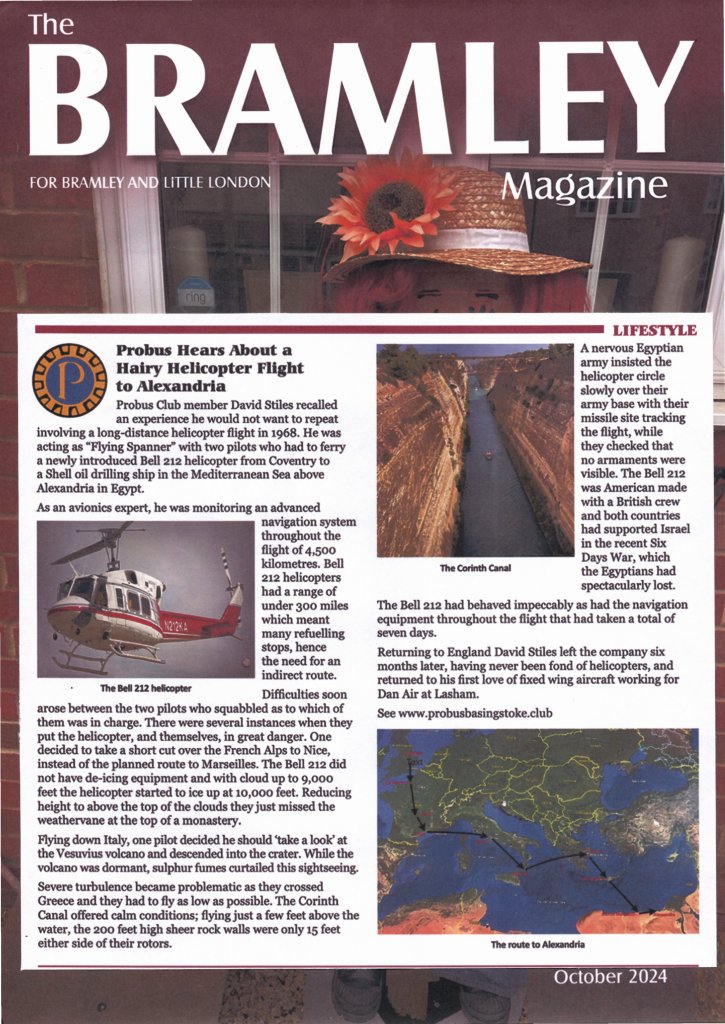
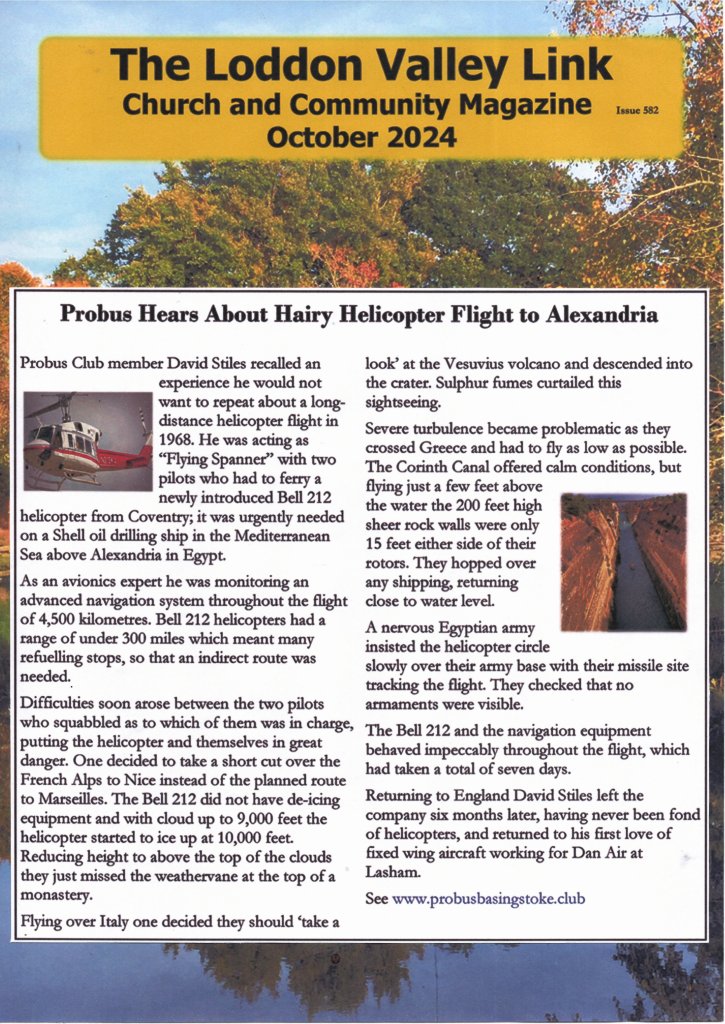
Apart from the traditionally late Kempshott Kourier which covered our Summer Pub Lunch the rest might be described as a “Full House” as all six other monthly magazines ran with the report about the helicopter flight to Alexandria. There was a full page in the Villager (reduced for copying on to the front cover) with most of the remainder using at least half pages. It was good to see the Loddon Valley Link giving us some rare space and we made it into the printed version of the Basinga rather than in our usual position in their Extra.














 Probus Club of Basingstoke
You must be logged in to post a comment.