
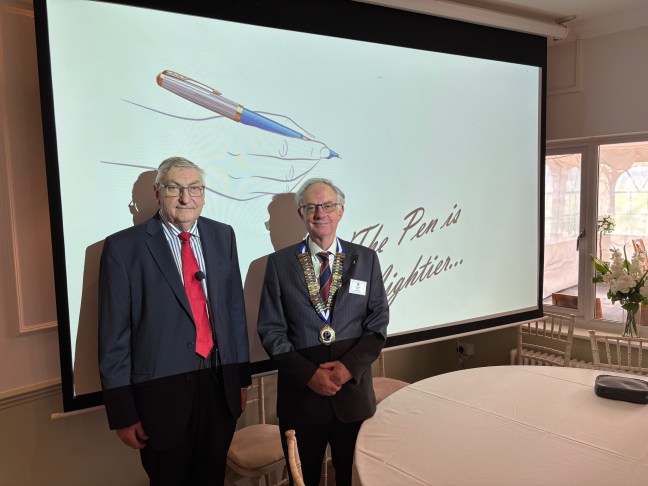
Nigel Thorley, guest speaker at the Probus Club of Basingstoke, took members on a lively journey through the evolution of writing instruments.
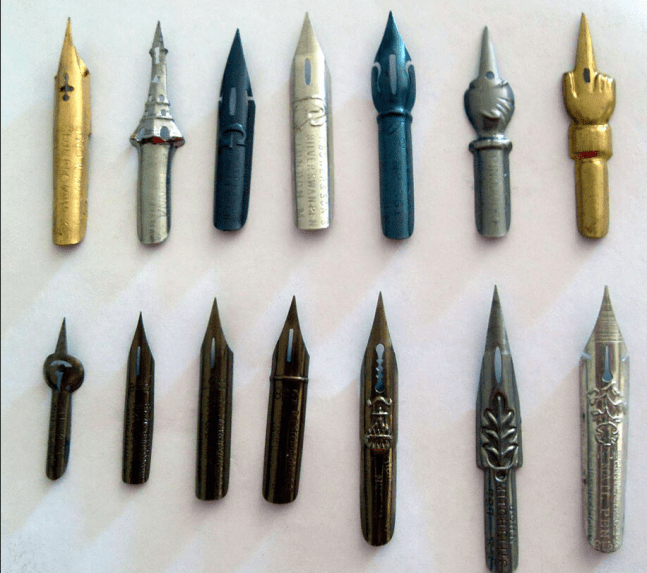
He began with the Egyptians, who 3,000 years ago wrote on papyrus using shaped reeds dipped into ink made from natural materials and insects. These early tools eventually gave way to quills- strong feathers from large birds, slit at the tip to allow ink to flow smoothly without blotting.
Blotting itself changed dramatically in 1801, when blotting paper was invented by accident, replacing the sand traditionally used to dry ink.
By the mid-1850s, the metal nib had been refined for dip pens. A narrow slit in the nib allowed ink to flow by capillary action, and Birmingham became a major centre of production, with one company alone employing two thousand workers. Dip pens remained a classroom staple into the 1950s, when school desks still featured ceramic ink wells refilled daily by the designated “ink monitor” a prized position. Today, steel nibs survive mainly in the hands of artists and calligraphers.
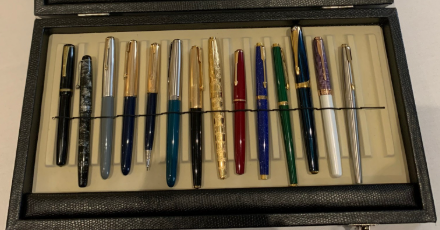
The arrival of fountain pens marked a turning point. Although early versions were made of metal, the invention of Bakelite in 1907 by Leo Baekeland revolutionised production. This mouldable plastic type material allowed pens to be fitted with a lever mechanism that compressed a rubber sac, drawing ink into the reservoir.
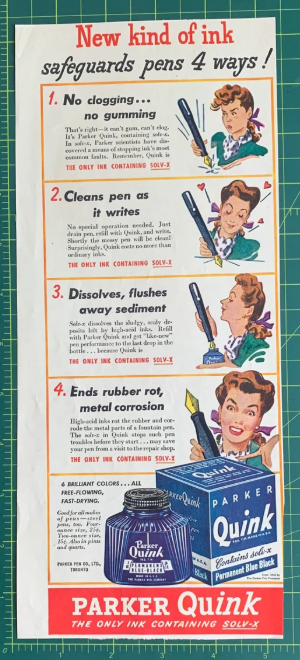
In 1921, the American company Parker launched the now-iconic Duofold and later solved the problem of slow-drying ink with the introduction of Quink-quick drying and fountain pen friendly. Parker’s advertising dominated in the 1930s, and in 1941 the company unveiled the “Parker 51” named to mark the firm’s 51st anniversary and to signal that the pen was a decade ahead of its rivals.
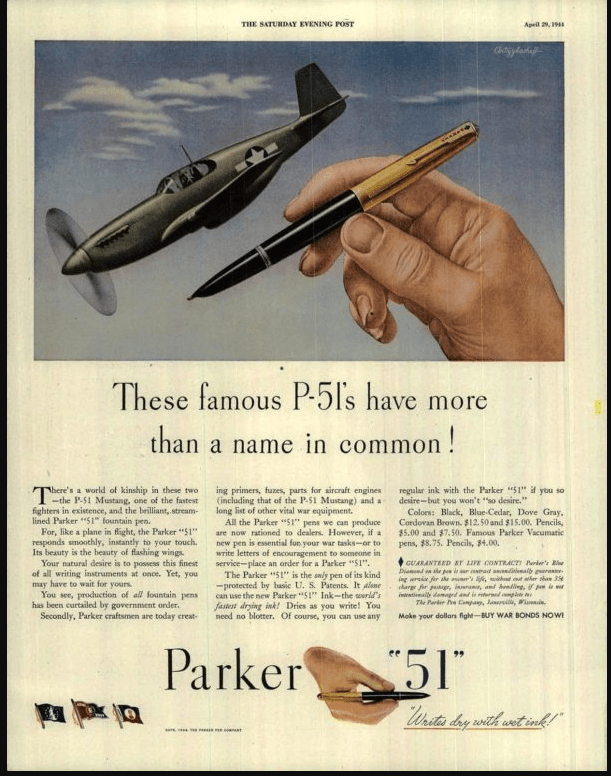
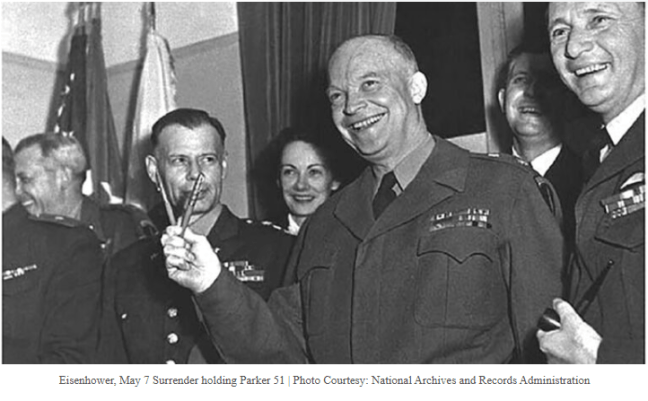
With eight patents and a lifetime guarantee, it became a symbol of innovation. Its fame was sealed when General Eisenhower held up two Parker 51s in a victory gesture after signing the documents that ended the Second World War.
The ball point pen, however, would change every day writing forever. Hungarian inventor Laszlo Biro and his brother created a thicker, fast drying ink that didn’t smudge. Granted a patent in London in 1938, the brothers later fled to Argentina during the war. The RAF quickly recognised the value of their invention, ordering 30,000 pens because fountain pens leaked at altitude.
Manufacturing of this ball pen took place from 1945 in USA where a New York store placed an order for 50,000 and sold 30,000 in the first week of this new style pen that did not need refilling for two years. Originally priced at $12.50 today it has become a throwaway pen costing pennies.
In the meantime Parkers continue with fountain pen manufacture together with their roller ball and propelling pencil variants marketed as a luxury item to be treasured and second-hand versions fetch good money on auction sites.
 Probus Club of Basingstoke