
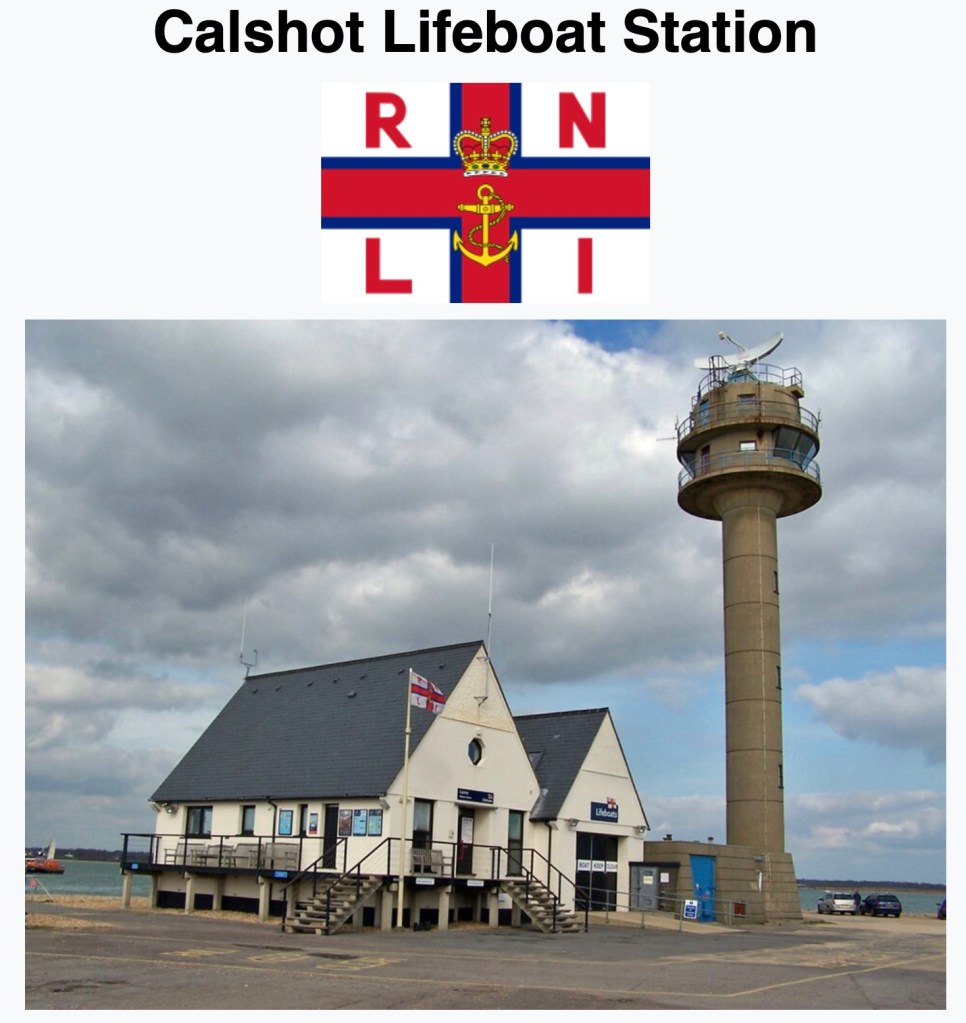
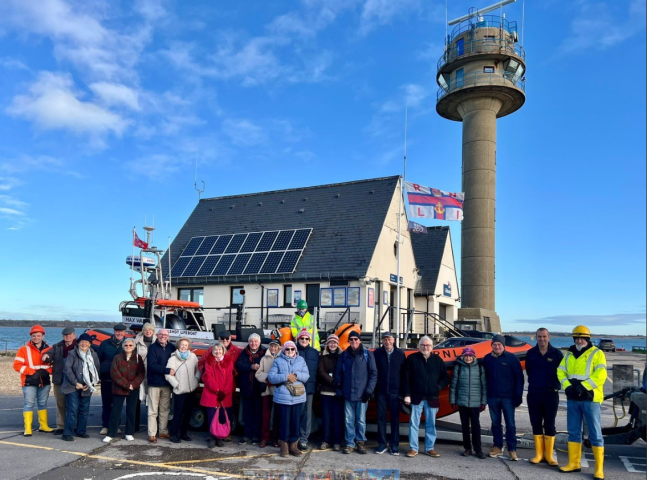
An extremely chilly but very sunny day greeted our group of twenty-one members and families of the Probus Club of Basingstoke for a visit to the RNLI Station at the very end of Calshot Spit.
The RNLI is the charity that saves lives at sea. Its volunteers provide a 24-hour search and rescue service around the United Kingdom and Republic of Ireland coasts. The RNLI operates 238 lifeboat stations in the UK and Ireland and more than 240 lifeguard units on beaches around the UK and Channel Islands. The RNLI is independent of Coastguard and government and depends on voluntary donations and legacies to maintain its rescue service.
l
Since the RNLI was founded in 1824, its lifeboat crews and lifeguards have saved over 146,700 lives. Until its closure in 1961, Calshot Spit had been the site of RAF Calshot, which was the primary seaplane/flying boat development and training unit in the United Kingdom.


After the departure of the RAF, Hampshire County Council opened an educational activities centre on the site. The centre was regularly being asked by HM Coastguard to use its boats, to go out and rescue people in trouble off shore. The huge increase of maritime call-outs were such, that, negotiations were established with the RNLI, with a view to there being a more formalised rescue service for this busy stretch of water. A year was spent evaluating this proposition and as a result, a RNLI lifeboat station was established on the site in 1970.
In 1996, the RNLI funded the construction of new shore facilities for Calshot Station, constructed on concrete stanchions to prevent flooding. Hampshire County Council provided a new boarding jetty for use jointly by the lifeboat station and the Calshot Activity Centre.
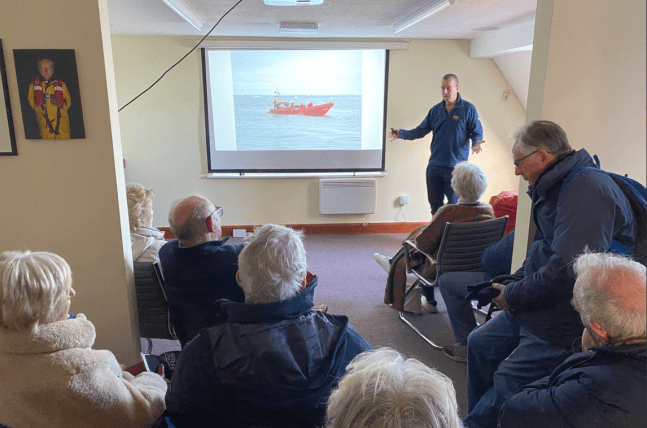
Various all-weather lifeboats have seen service at Calshot over the years, but in 2012, the Calshot board of trustees decided that the base would cease to be an all-weather facility. Consequently, the last larger Tyne class lifeboat was withdrawn on 4th of April of that year. Since then, Calshot has been officially re-designated as an Inshore lifeboat station with a responsibility stretching from the River Itchen bridge in Southampton, all the way down the Solent to the Isle of Wight. As such, it has necessitated keeping pace with improvements in facilities both for lifeboats and crews: not to mention the constantly evolving changes in equipment and operational procedures. Calshot at present, is equipped with both ‘D’ and ‘B’ class lifeboats. The D-class lifeboat is of an inflatable type serving the RNLI lifeboat fleet as well as a number of Independent Lifeboats around the UK and Ireland. It is one of the smallest lifeboats operated by the RNLI, and unlike other members of the inshore lifeboat fleet, does not have a rigid hull. At Calshot, it normally has a crew of three or and is primarily used for surfer/swimmer incidents as well as assisting in cliff or mud bank rescues. The very nature of its work requires a swift response, and the D-class can normally be deployed very quickly.

The much larger “Atlantic 85” B-class lifeboat named ‘Max Walls’ is stationed at Calshot. It is a fast inshore rescue craft and is named after Atlantic College in South Wales where it was designed. Capable of reaching a useful 35 kts, it can be deployed in shallow waters as well as handling challenging, open sea conditions. It is equipped with powerful twin 115hp Yamaha outboard engines and has a self-righting mechanism. It is also equipped with modern advanced navigation and communication systems.

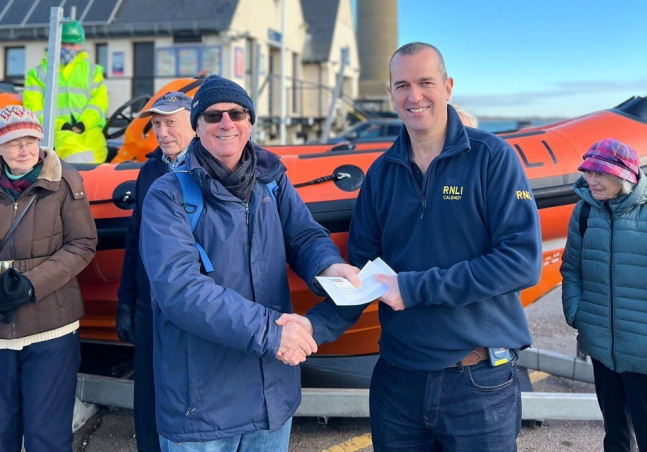
An incredible visit was had by all and we were royally treated to the fine hospitality afforded by the RNLI Calshot Crew. Due to the restricted space within the base, we were limited in party size. However, the Probus Club of Basingstoke has booked for a return trip in the spring of 2026
Report by Chris Perkins MVO
 Probus Club of Basingstoke
You must be logged in to post a comment.