

This presentation was aimed at the members of the Probus Club of Basingstoke, especially those interested in British cars and Jaguar in particular.
Speaker Nigel Thorley possesses extensive knowledge about Jaguar cars, having owned over 70 of them, including sixteen Mk 2s. He has been the editor of the Jaguar Enthusiasts monthly magazine for over forty years.
The company originated in Blackpool in 1920, initially refurbishing motorcycles before evolving into manufacturing side cars. Bill Lyons and his partner Bill Walmsley each borrowed £200 from their fathers to form the Swallow Side Car Company.
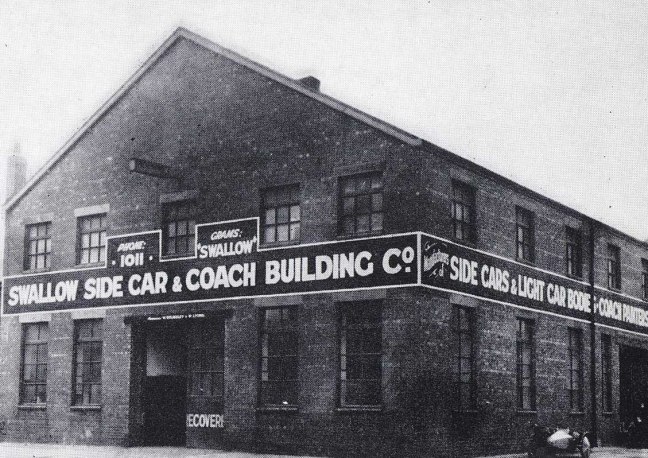
In 1924, they exhibited at the motorcycle show in London and received numerous orders including those from George Brough the manufacturer of the world-famous motorcycles.
A customer requested them to repair his crashed Austin Seven car using their fabrication skills. After examining the bodywork, Bill Lyons decided to improve it and created a new style of two-seater sports car. Although Austin refused to supply chassis directly, Lyons managed to secure an agreement with the largest distributor of Austin cars, allowing Swallow to manufacture both a four-seater saloon and under their Swallow name, the two-seater sports car.

The company relocated to Coventry to be closer to motor industry manufacturers and began producing bodies for the Standard 16. Despite sharing running gear, the vehicle design created an impression it would go faster. In 1934, Bill Walmsley departed to build caravans, prompting Lyons to rebrand the company as SS Cars, reflecting their transition to car body production. The SS Jaguar 100 luxury sports car featured a Wilmot Breeden chassis and a six-cylinder engine from the Standard Car Company. Before World War II, the company sold these 100 miles per hour cars priced from £360.
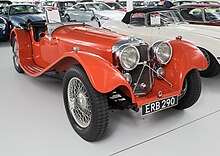
During hostilities, the Swallow Side Car Company supplied 10,000 side cars to the military, ceasing car manufacturing and repurposing factories to refurbish aircraft. Post-war, Lyons renamed the company Jaguar Cars, distancing themselves from the negative association with Nazi Germany’s Waffen-SS.
Admirer of Alfa Romeo and Maserati engines, Lyons developed their own straight 6-cylinder engine, designed to reach 120 miles per hour. The Jaguar XK120 sports car debuted at the 1948 London motor show, receiving critical acclaim and substantial interest from American distributors.

Jaguar achieved considerable success at the Le Mans 24 hours races, between 1954 – 57 featuring the C type and then the D type body but using the latest XK engine. The MK 7 saloon launched during the 1950s used the same engine.
The company moved to the Browns Lane factory in Coventry, which later burned down and was retooled to become Britain’s second-longest assembly line. Engine production transferred to Birmingham.
In 1962, the MK 2 saloon was introduced at £1,530, becoming popular among bank robbers. Police adopted the same model to pursue offenders.

The XK150 engine powered the 1961 introduction of the Jaguar E Type, capable of reaching 150 miles per hour. Enzo Ferrari described the Jaguar E Type as the most beautiful car in the world.

Following the introduction of the Jaguar MK10 large saloon, Jaguar Cars acquired Daimler in 1962. Daimler specialized in cars for royalty and bus chassis, holding the royal warrant. Lyons produced a Daimler version of the Jaguar MK 2 saloon with a 2.5 litre V8-cylinder engine, featuring premium enhancements and much walnut veneer making this a success in a different market sector.
Jaguar Cars merged into British Motor Corporation (BMC) in 1966, later part of British Leyland, consisting of 194 companies. Jaguar was eventually privatized, leading to Bill Lyons’ retirement.
In 1980, Jaguar returned to saloon car racing and competed in the 1992 Le Mans with the Jaguar 220, capable of reaching 220 miles per hour. Jaguar raced in Formula 1 Grand Prix before selling the team to Red Bull.
Subsequently, Ford acquired Jaguar, incorporating a modified Mondeo floor pan in the small Jaguar X Type saloon and estate car. Despite criticism from purists, Jaguar’s production reached unprecedented levels by 1998.
Ford sold Jaguar Cars to the Indian conglomerate TATA, forming Jaguar Land Rover. After launching the Jaguar F Type sports car and I-Pace crossover saloon, Jaguar acknowledged the pressure to produce electric vehicles, halting production in 2024 for a complete relaunch in 2026. Future Jaguar models will include four-door saloons, cross overs and sports cars.
The December 2024 publicity launch unveiled blue and pink sports saloon concepts identified as Jaguar Type 00 cars with updated branding of the name style which sparked controversy but gained significant exposure.
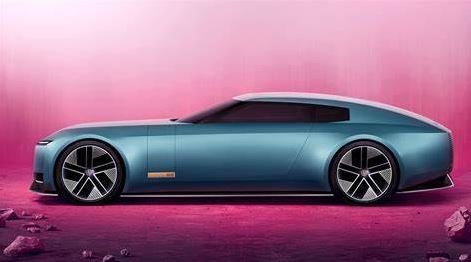
The automotive community eagerly anticipates the release of these electric models in 2026 keen to see if Jaguar continues to set standards in style and performance.





 Probus Club of Basingstoke
You must be logged in to post a comment.