

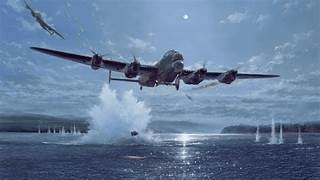
Many will have seen the 1955 film, “The Dambusters” and speaker Rhydian Vaughan MBE explained that scenes involving the bouncing bomb were subject to the Official Secrets Act and what was shown was not like the shape of the real thing.
The creation of designer Barnes Wallis, code named ‘Upkeep’ was in fact drum shaped, weighing more than four tons. It was engineered to spin backwards at 500 RPM so that when it hit the dam wall its reverse spinning would ensure it would hug the wall as it descended the depths.
The three dams of the industrial heartland of the Ruhr valley. the Mohne, Eder and Sorpe had been identified in 1937 as potential targets, but it took until May 1943 for ‘Operation Chastise’ to come to fruition.
The scheme had several detractors, mainly from head of RAF Bomber Command, Arthur ‘Bomber’ Harris but was overruled by the then head of the RAF, Sir Charles Portal (of our local Portal’s family bank note paper manufacturer}. Nineteen of the newly introduced AVRO Lancaster bombers, each costing £42,000 and needing a crew of seven, would have to be modified to carry the experimental weapon that had originally been thought was to be used against the German battleship, Tirpitz.

Wing Commander Guy Gibson, DSO & Bar, DFC & Bar, a twenty-four-year-old bomber flying ace, known unaffectionately as ‘The Boy Emperor’ due to his unfortunate manner in dealing with subordinates, was asked to form Squadron X, soon to be renamed 617 Sqn to perform one specific task. He had only eight weeks to form and train a new squadron to carry out the raid on the dams. By the 16/17 May the dams would be at full capacity. It was known that it took one hundred and fifty tons of water to make 1 ton of steel.
Barnes Wallis had calculated that his rotating mine would need to be dropped at a specific speed, height and distance from the dam for several bounces to reach the wall. And at night, facing defending fire from the dam wall.

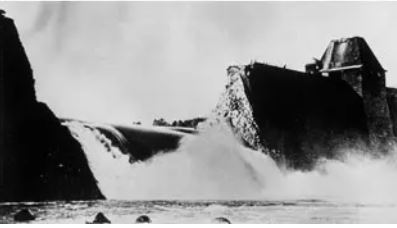
Eight Lancasters, along with 53 airmen, did not return to RAF Scampton. Guy Gibson was awarded the Victoria Cross – his response to this was subdued as he felt responsible for those he had recruited and who had not returned.
While the raid on the dams was a great morale booster, within a few months they had had been repaired as there was no follow up missions to prevent them being rebuilt. However, the labour needed was brought in from building the Atlantic Wall the German construction across the northern French coastline and it was subsequently recognised that had this delay not occurred the D-Day landings would have not succeeded.
 Probus Club of Basingstoke
You must be logged in to post a comment.