

The speaker, Dr Stephen Goss, immersed the members of the Probus Club in his subject as he delved into the background of some of the famous and amusing operettas created by Gilbert and Sullivan in the nineteenth century.
Although one member, as a schoolboy, had taken part in a performance many members had not seen such performances on stage. And yet, most of these works are well known and it came easy to hear renditions of several of the popular songs.
Seeing the words on a large screen brought home the skill of the librettist. The audiences of the day were drawn towards the clever writing rather than the accompanying music of the more famous composer, Arthur Sullivan, that made the credits change to Gilbert and Sullivan.
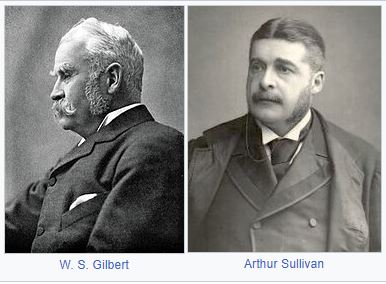
Arthur Seymour Sullivan had been brought up in a musical household where his father was a band master and as a child Arthur was a chorister in the Chapel Royal. He attended the Royal Academy of Music and following three years at the Leipzig Conservatory, he initially struggled to make a living as a conductor, organist, teacher and choir master. He wrote serious music including for royal occasions and became well known as England’s most promising composer.
William Schwenck Gilbert had a variety of jobs most of which needed a good level of expertise in the English language. He had been a civil servant, a barrister, a comic journalist and became a captain in the militia. He drew on the experiences from these occupations writing four plays a year for ten years.
It was interesting to discover the witty commentary on contemporary society, with a look at the stories behind some of most famous pieces of music. WS Gilbert developed the ‘topsy-turvy’ words that become so familiar, and Arthur Sullivan was able to compose music that suited each situation.
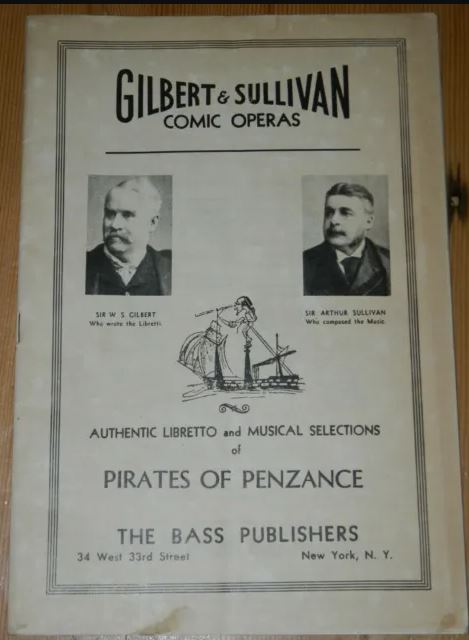
They wrote fourteen comic operas between 1871 – 1896 with the most popular being HMS Pinafore, The Pirates of Penzance and The Mikado. They were hugely successful with HMS Pinafore having an initial run of 571 performances and within a year was on the stage in USA and across the world.

The thinly veiled satire of some of the plots was uncovered to the enjoyment of the audience, along with the unmasking of characters which were deliberate parodies of specific Victorian politicians and notables. Gilbert’s political satire often provoked fun at the wealthy and powerful whom Sullivan sought out for friendship and patronage.
Richard D’Oyly Carte brought Gilbert and Sullivan together and nurtured their collaboration. He built the Savoy Theatre in 1881 to present their joint works which became known as the Savoy Operas and was the first public building in the world to be lit by electricity. The D’Oyly Carte Opera Company was formed just to promote these operettas and performed over 35,000 Gilbert and Sullivan’s creations, only closing in1982.
Gilbert and Sullivan had the attention of Victorian society with the wit and satire appealing to popular audiences but was forecast to be transitory. Today, 140 years later they are still enjoyed throughout the English speaking world.
 Probus Club of Basingstoke
You must be logged in to post a comment.